
Abu Simbel: Ancient Monument, Modern Marvel
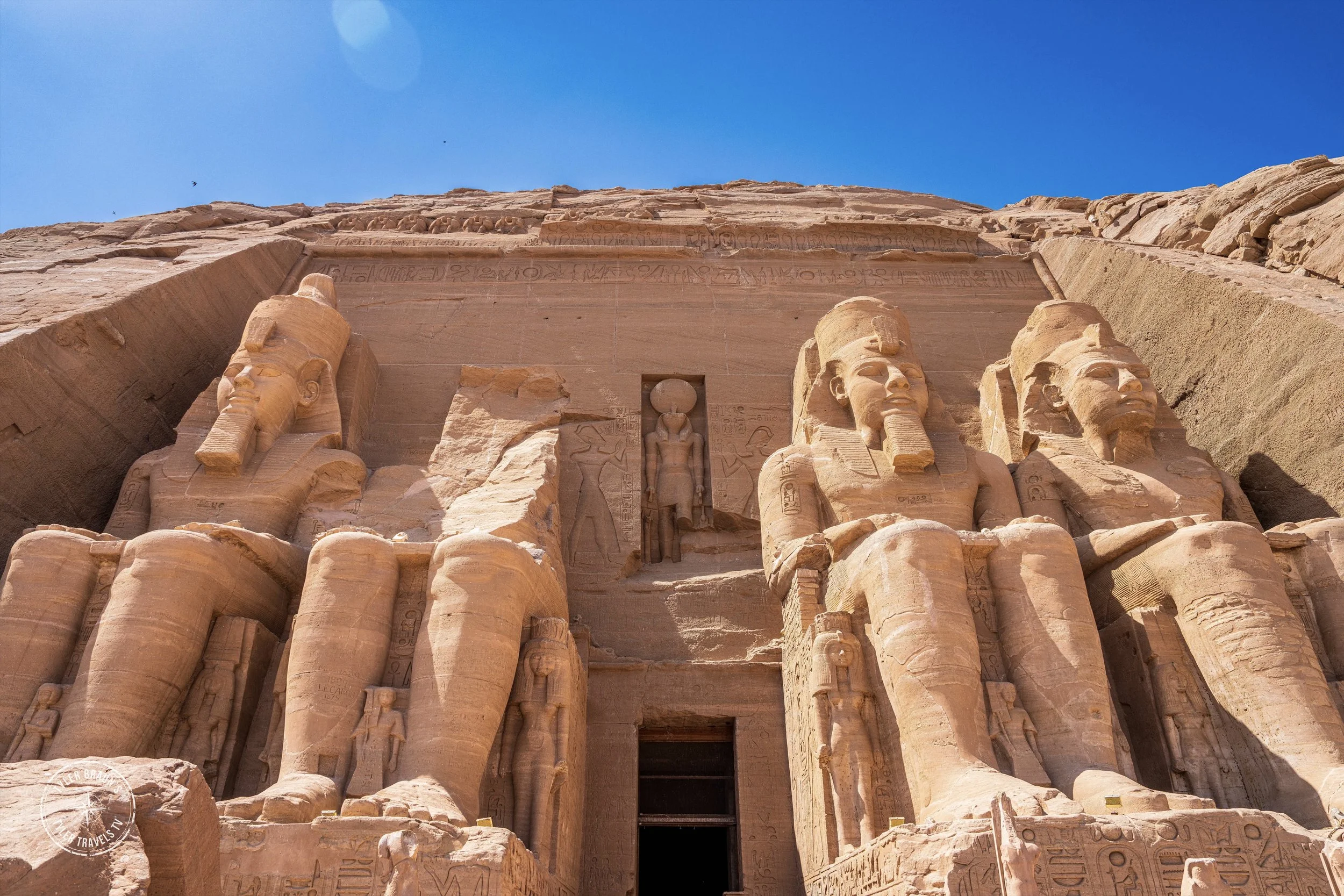
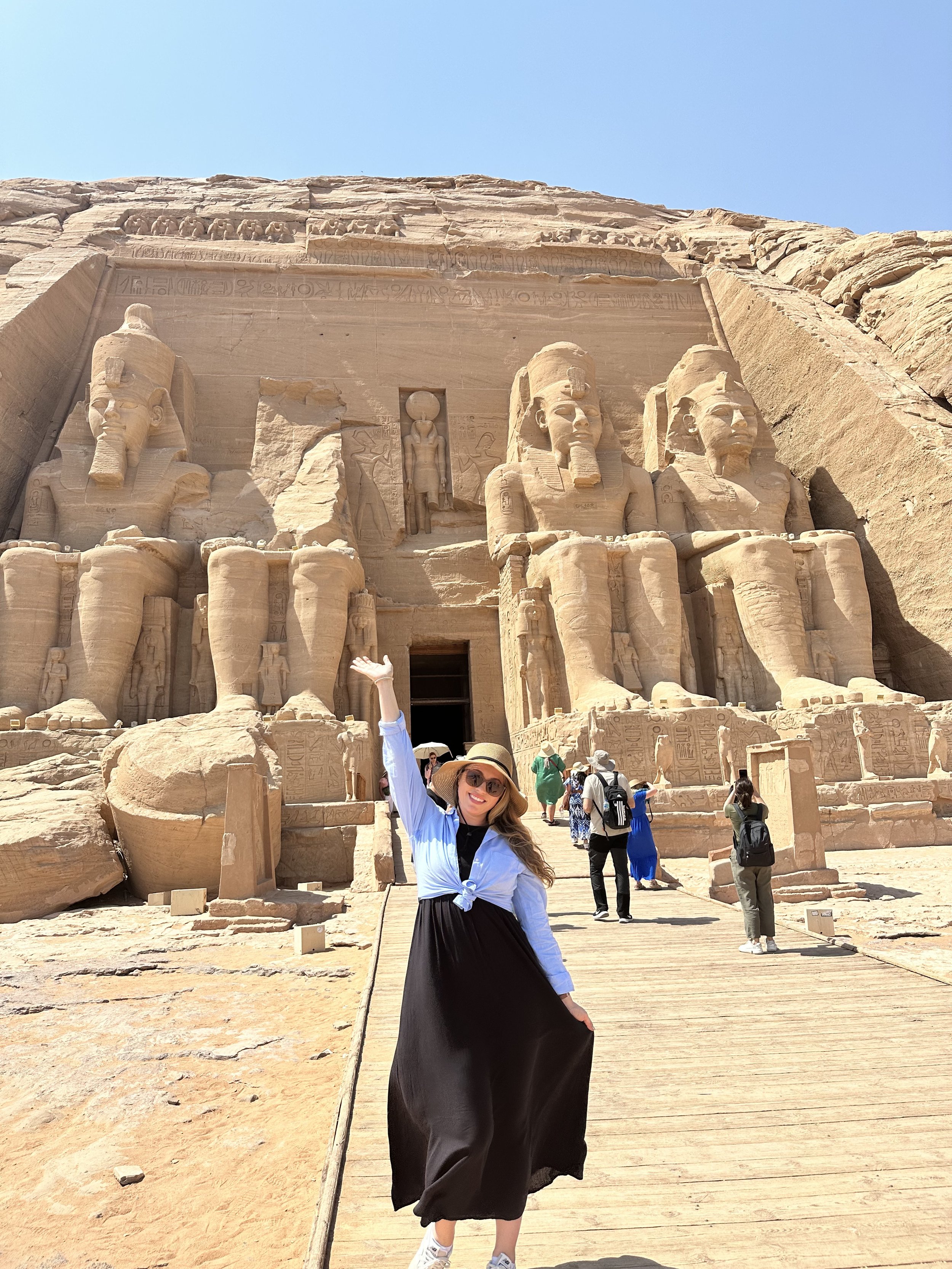
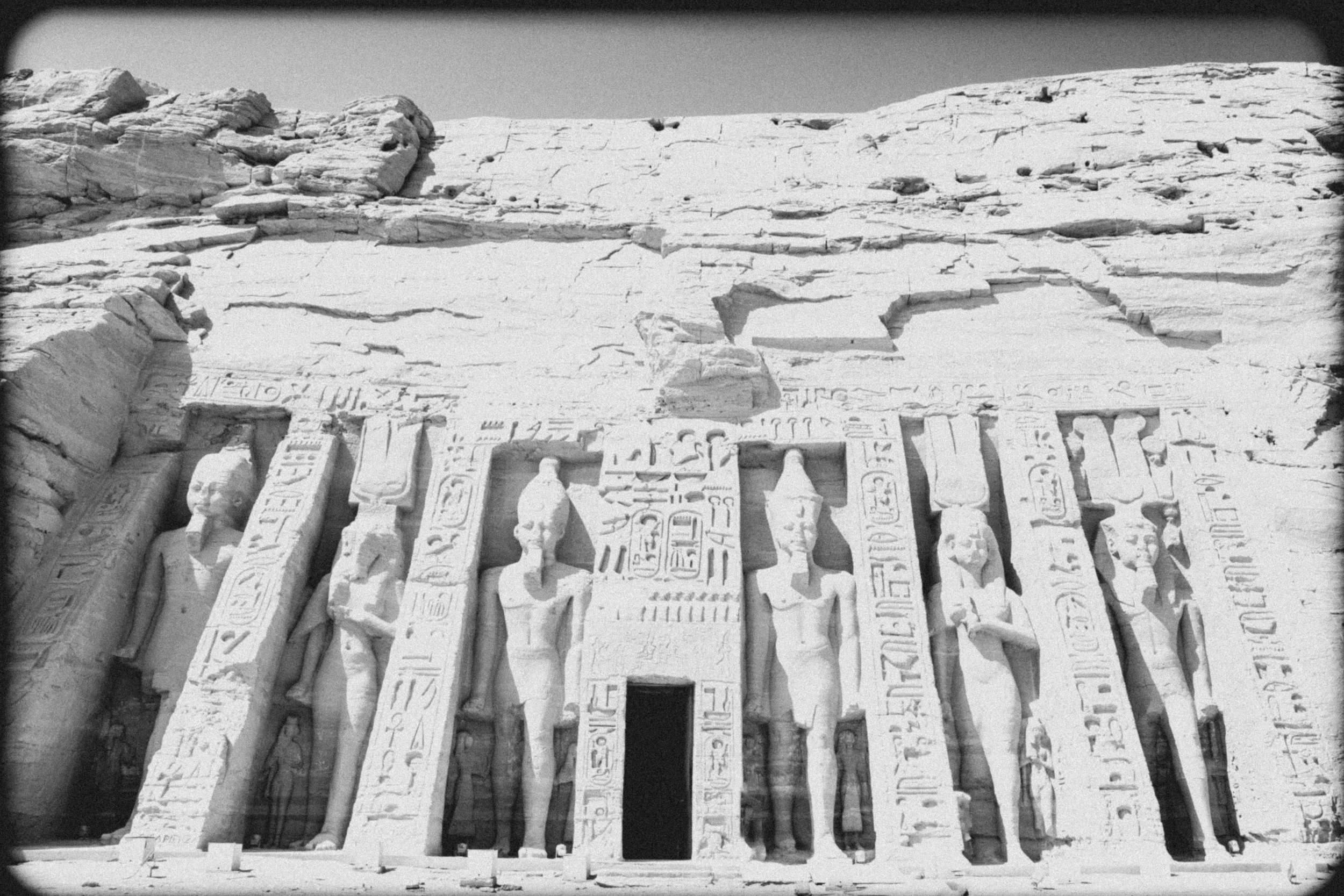
Abu Simbel has two temples: the smaller Temple of Queen Nefertari (right), and the larger Great Temple of Ramses II (left).
Besides perhaps the pyramids, the place I was most excited to see in Egypt was Abu Simbel. Not only is it an incredible ancient monument, it has a fascinating modern story as well.
Traveling to Abu Simbel and Lake Nasser
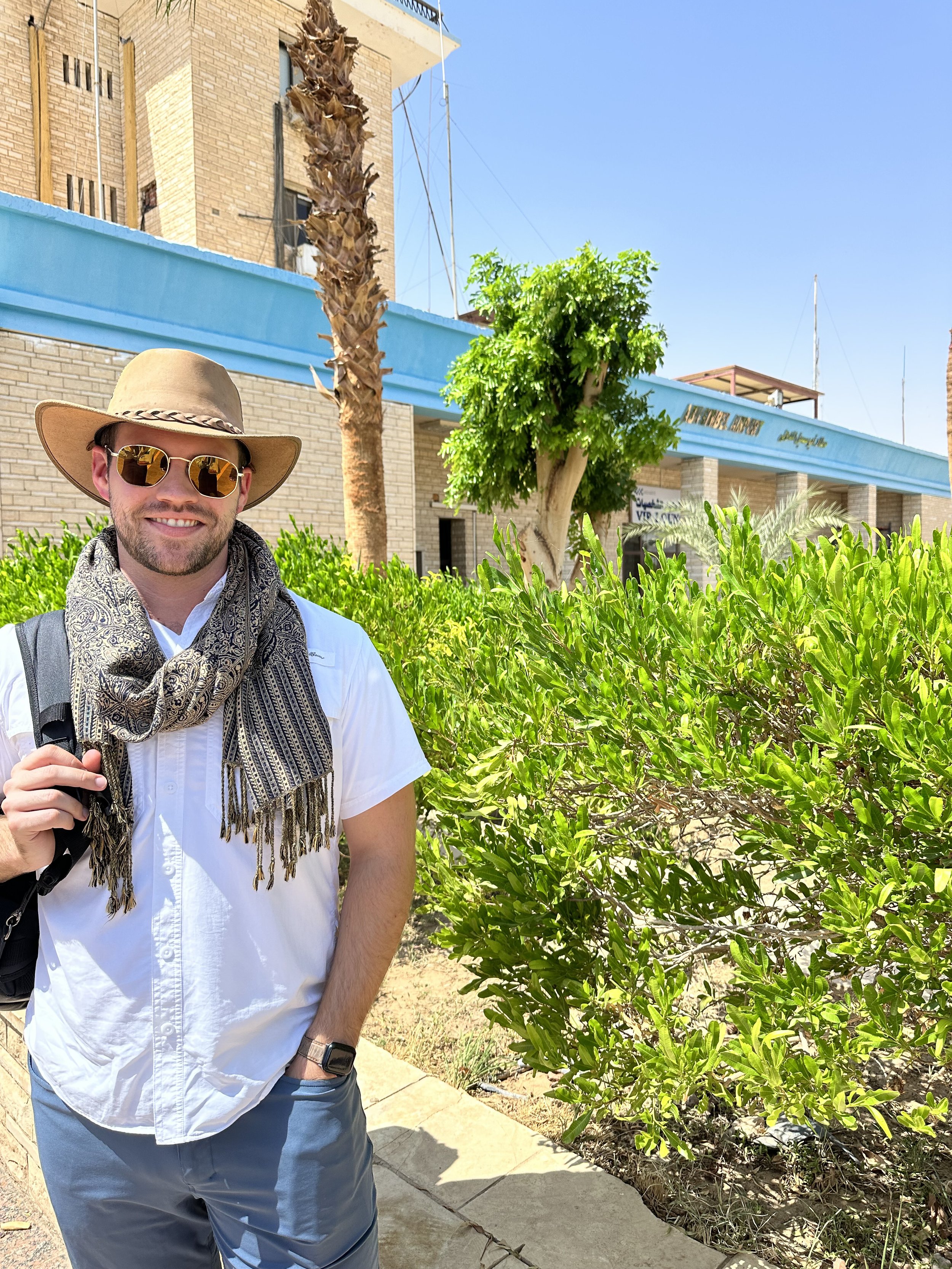
A short flight from Aswan takes us to Egypt’s southernmost village, Abu Simbel, right along the border with Sudan. We fly over what was once Nubian homeland for thousands of years, but since 1971, has been the domain of Lake Nasser.
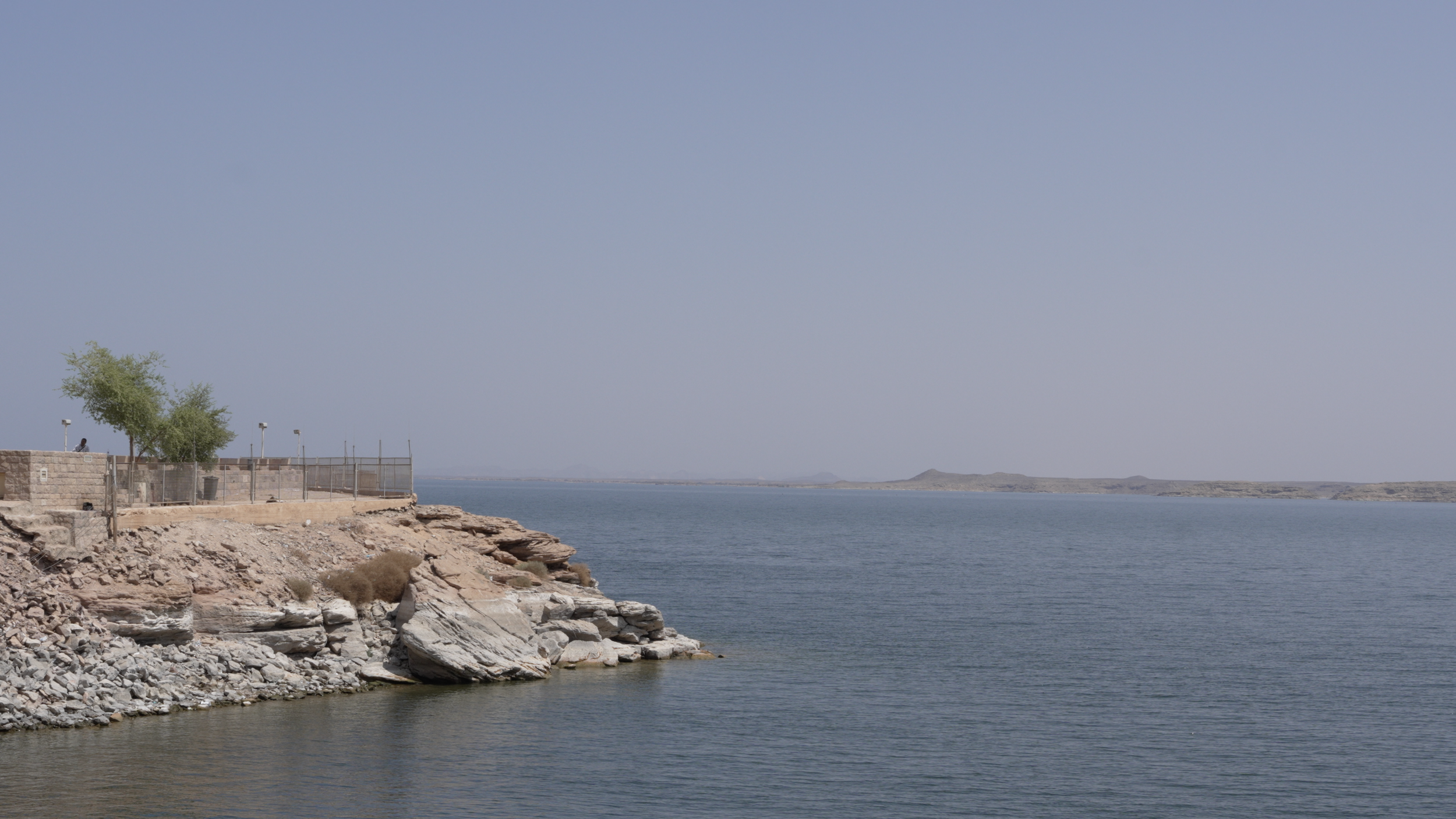
Lake Nasser is rather hauntingly beautiful in its own way. It’s a striking anomaly to see a massive lake in the heart of the Sahara Desert.
For thousands of years, the Nile rose and fell annually. The flood would deposit water and minerals on the farmland around the edges of the Nile, leaving in place rich, fertile soil. Without these annual floods, there would have been no farmable land. It is because of the Nile that you see a great stretch of green snaking through Egypt when you look at a satellite map of the country, with harsh barren desert standing in stark contrast on all sides. Egypt lived and died by the floods of the Nile. While they were often predictable, stretches of time would find Egyptians with no rising waters, and therefore no farmland, leading to droughts and deadly famines.
Tired of living at the whims of nature, over the course of the last century and a half, this situation was rectified and two dams have been built: the Aswan Dam and the Aswan High Dam. The result is one of the world’s largest man-made bodies of water: Lake Nasser. Lake Nasser stretches more than 310 miles and reaches depths of nearly 600 feet. It covers an area larger than the size of Rhode Island. It is rather hauntingly beautiful in its own way. It’s a striking anomaly to see a breathtakingly massive lake in the heart of the Sahara Desert.
One of the numerous consequences of building the Aswan High Dam and the creation of Lake Nasser was that dozens of ancient Egyptian temples and monuments were going to be lost forever, drowned in the newly formed lake. This brings us to the remarkable site of Abu Simbel.
Abu Simbel - A Massive Monument with an Even Larger Story
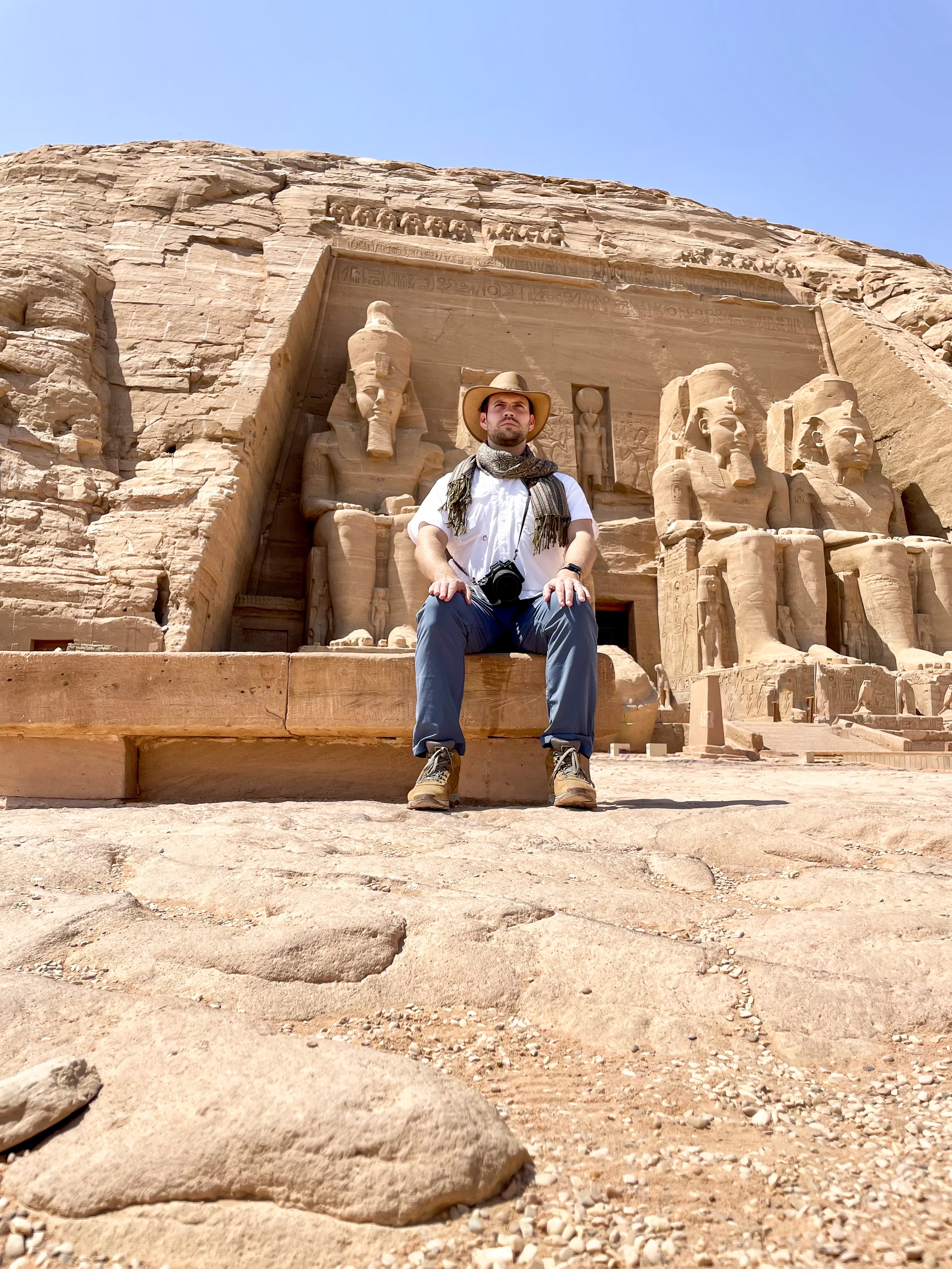
Each colossus stands 66 feet tall. One of the four heads fell off in an earthquake around 27 BCE and was never restored, even after moving this monument to its new home. The broken head still sits at the base of the monument.
Let’s first talk about Abu Simbel in the context of its ancient history. Abu Simbel is a temple complex that was hewn out of solid rock in about the 13th century BCE. It has two temples: the smaller Temple of Queen Nefertari, and the larger Great Temple of Ramses II.
The Great Temple of Ramses II is one of the most striking and awe-inspiring monuments in all of Egypt. It stands as a colossal testament to Ancient Egyptian artistry and their precision in architecture and engineering. Although ostensibly dedicated to the ancient gods Amun, Ptah, and Ra-Harakhty, it was, in reality, an egotistical show of power commissioned directly by and for Pharaoh Ramses II (also known as Ramses the Great). He’s the star of the show, with his likeness on four imposing colossi, shown worshipped as a god. Would-be invaders from the south would see this bit of towering propaganda, turn tail, and run the other way. It was intended to both frighten enemies and stoke admiration from his people.
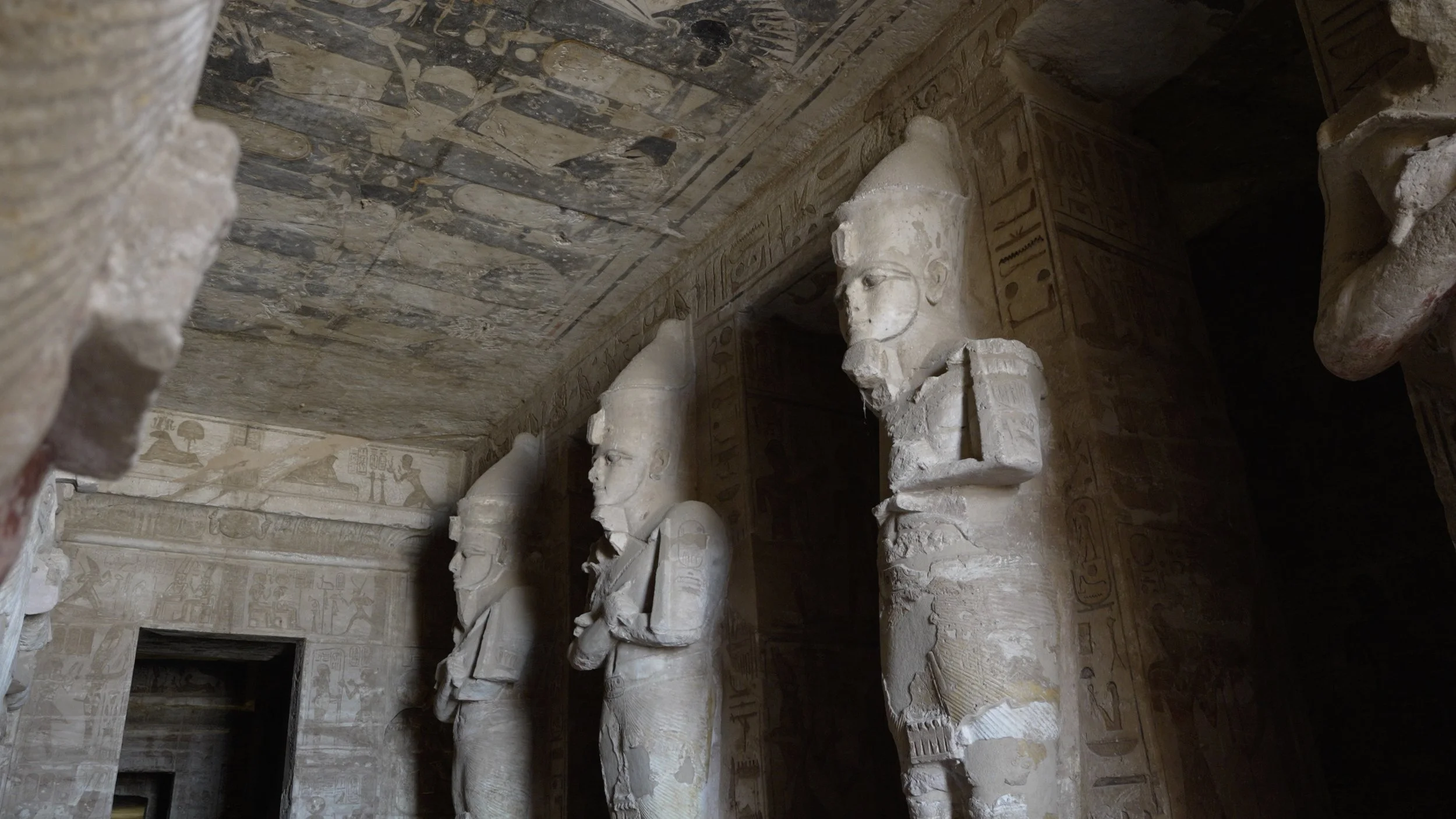
Inside, you’re greeted by a hypostyle hall, adorned with eight more statues of Ramses II, his arms crossed in the style of Osiris, the god of the afterlife, reinforcing once again his divine status.
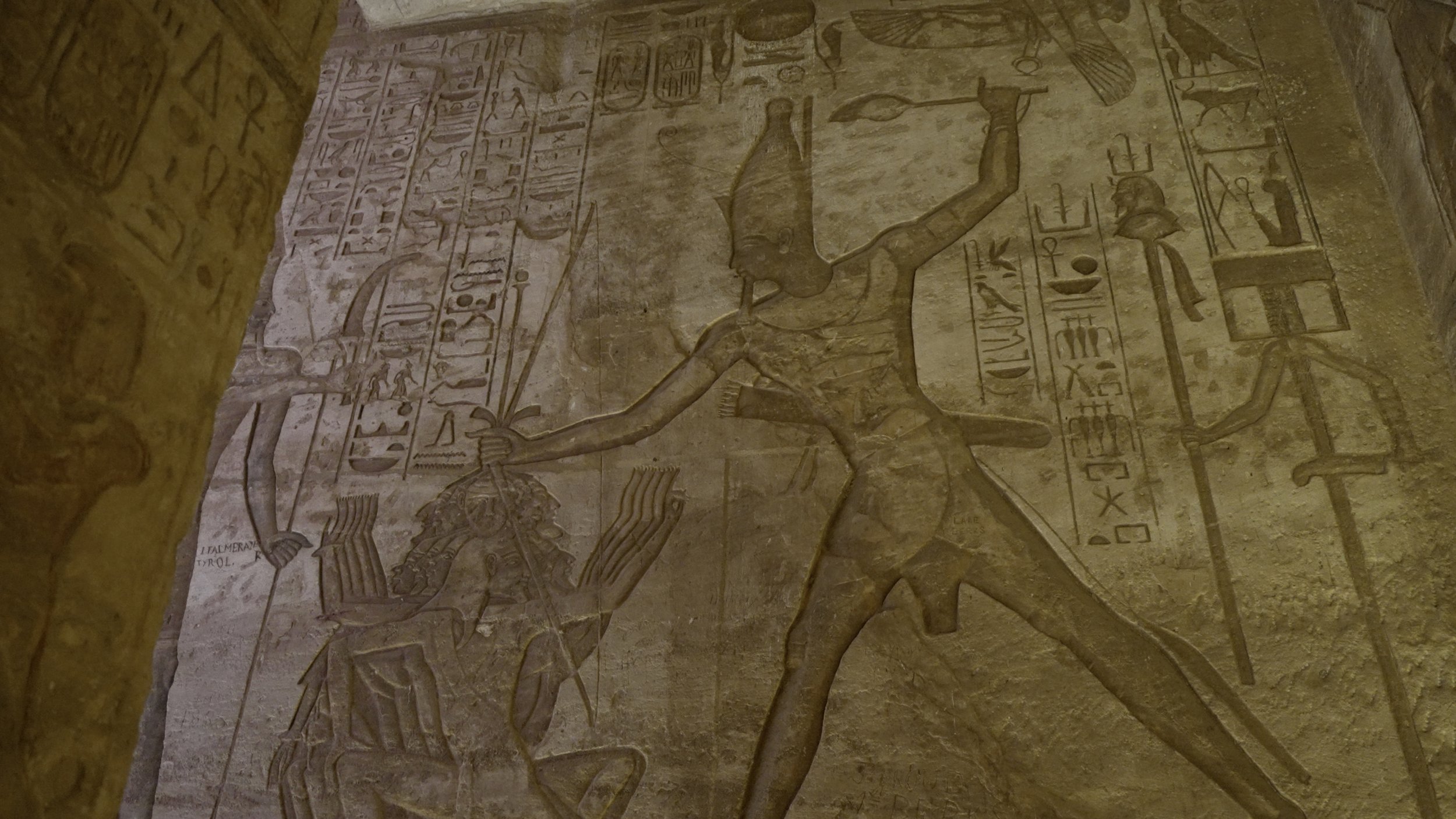
On either side, intricate reliefs depict military victories of Ramses II at the Battle of Kadesh…a battle he may or may not have actually won in real life, but hey, when you’re the pharaoh, you decide what goes on the walls.
Inside, you’re greeted by a hypostyle hall, adorned with eight more statues of…three guesses who….Ramses II.
As is usually the case, the Pharaoh is shown three to four times larger than everyone else - often times as large or larger even than the gods.
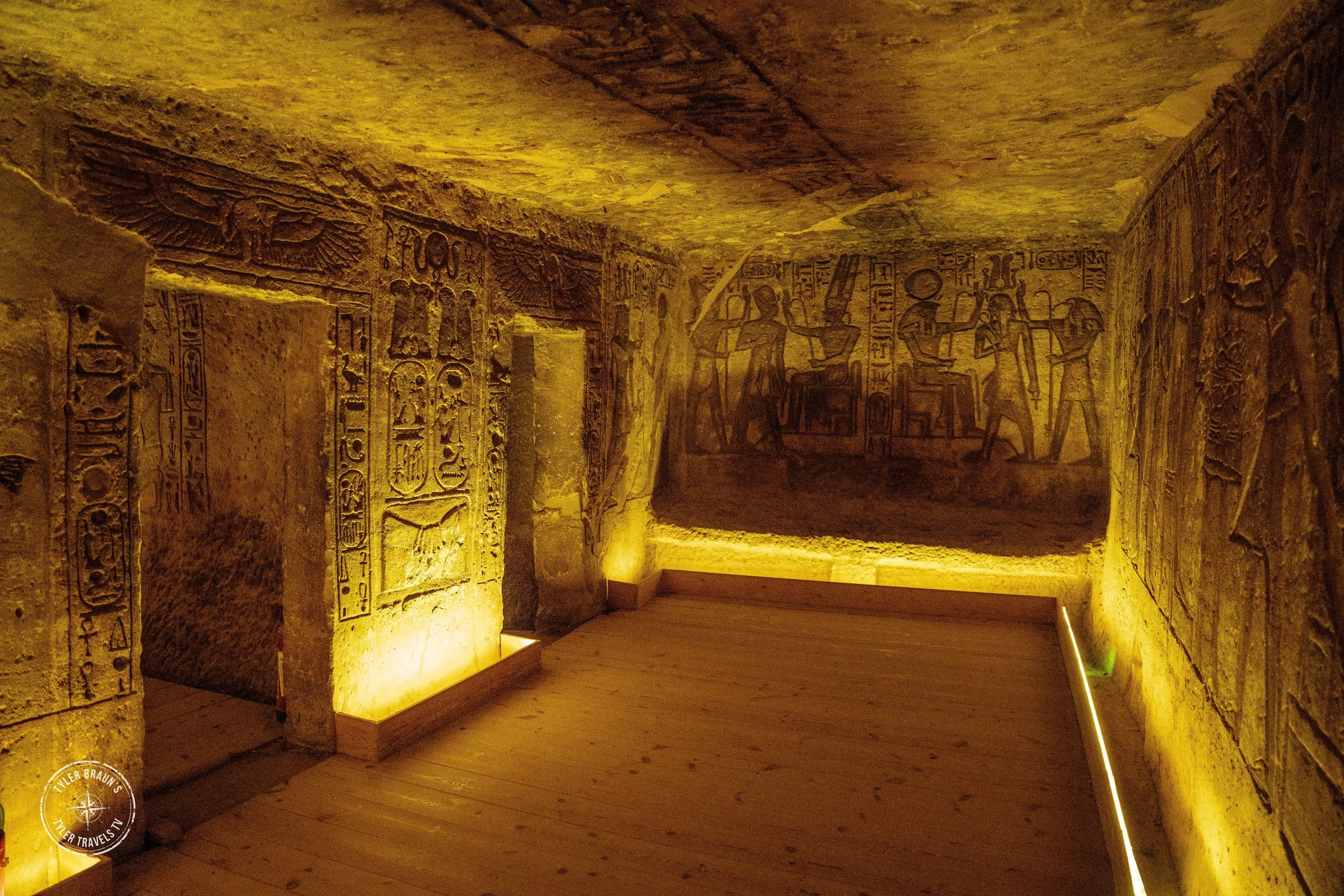
In the very back of the temple, the deified Ramses sits with Re-Horakhty, Amun-Re, and Ptah. The temple was built and oriented to such an exacting degree that twice a year, on February 21 and October 21, the first rays of the sun would come into the temple and shine on the gods who were once completely covered in gold. Nowadays, the sun hits on February 22 and October 22, one day later than it used to.
Temple of Queen Nefertari
Next door, you’ll find the Temple of Queen Nefertari, dedicated to the goddess Hathor.
Next door, you’ll find the Temple of Queen Nefertari, dedicated to the goddess Hathor. The facade is ornamented with alternating statues of Ramses II and Nefertari. Nefertari was Ramses II’s favorite wife, and mother to of a few of his reportedly more than 100 children. Because she was his favorite wife, Nefertari and Ramses II are both depicted as the same size, a very rare occurrence in Egyptian art at this time. The inside of this temple is laid out in a similar fashion to the larger temple, but this one is smaller and more intimate. Reliefs of Nefertari adorn the hypostyle hall here, and in the back sanctuary, although it is mostly worn away now, she is depicted as the goddess Hathor in the form of a cow. More color remains on the walls here, reminding us that these temples were once awash in bright, vibrant art.
In some images, Nefertari stands approvingly behind Ramses II, as he once again is seen smiting his enemies.
Nefertari is not to be confused with Nefertiti. Nefertiti was the wife of King Akhenaten, “The Heretic King”, who defied norms and was the father of King Tut. Nefertari is the wife of Ramses II, and many scholars believe her to be of Nubian descent, though her exact origins are uncertain.
Moving Abu Simbel
Standing in front of Abu Simbel, the mind marvels at its ancient history as well as it’s modern story.
As amazing as the temples of Abu Simbel are in their own right, that’s only half the story. In a land of remarkable ruins, this may just be the most remarkable, not only because of the ancient history, but also because of what has happened over the course of the last century.
Here’s the short version of the story. Abu Simbel was nearly lost forever.
The temples were re-discovered in 1813. Over the course of about 3,000 years, they had been completely submerged in sand. Only the head of one of the Ramses II colossi was sticking out. It was excavated and by 1817, you could once again walk inside.
Then, things really got interesting in the 1960s.
Very basically, when the Aswan High Dam was being built, Abu Simbel and many other ancient temples in Upper Egypt were going to be submerged under the new manmade lake, lost forever. Once historians learned of the imminent threat of Lake Nasser, an international coalition formed to save several ancient monuments and temples that were to be doomed in the flooding. Tons of ideas were thrown around to save them, including leaving them at the bottom of the lake to become a scuba-diving destination. In the end, the idea to move them to a new location won the day.
Many temples were saved, including Abu Simbel in great part due to one woman’s efforts: Christiane DeRoche Noblecourt. To learn more about the moving of Abu Simbel, and Christiane DeRoche Noblecourt’s efforts to make that happen, check out the wonderful book Empress of the Nile by Lynne Olson.
Amazingly, they cut apart this colossal temple piece by piece and moved the entire monument back by about 200 meters and 60 meters higher, to get it out of harm’s way. It had to be cut by hand because electric saws could have caused damage and the blades would have been too thick. It was then moved, and reassembled. For the most part, you can’t find any of the offending incisions, but if you look closely at a few places, especially on some of the faces, you’ll find the lines where they were cut and reassembled.
Abu Simbel, on its own, without any backstory, would take the breath out of anyone who visits. By its sheer magnitude and beauty, it would stop anyone in their tracks. But painting on the additional layers of history from the last century and this monument takes on an entirely new respect. The four colossi of Ramses, moved to their new home, are still staring out into eternity, just as they have for 3,000 years. Honestly, they were probably pretty happy about the move - even a slight change of scenery after 3,000 years has to be welcomed.
It is an incredible monument that cuts right to the heart of the human experience: humankind’s eternal quest for immortality.
Watch the Video
Gallery







Travel Store
Visit my travel store for my travel essentials!

People Mover Travel Agency
Work with the incredible travel advisors at my travel agency, People Mover Travel. For 10 years, we've been making traveler's dreams come true. We are experts in destinations worldwide including Alaska, Disney Parks, Europe, Cruises, All-Inclusive Resorts, Hawaii, Asia and more! Find out how we can personally help you plan & book your next trip for FREE!

Where are you heading?
Check out my Destination Page for travel tips, must-see sights, and hidden gems from all over the world. Start your adventure today!
Related Blog Posts


Recent Blog Posts
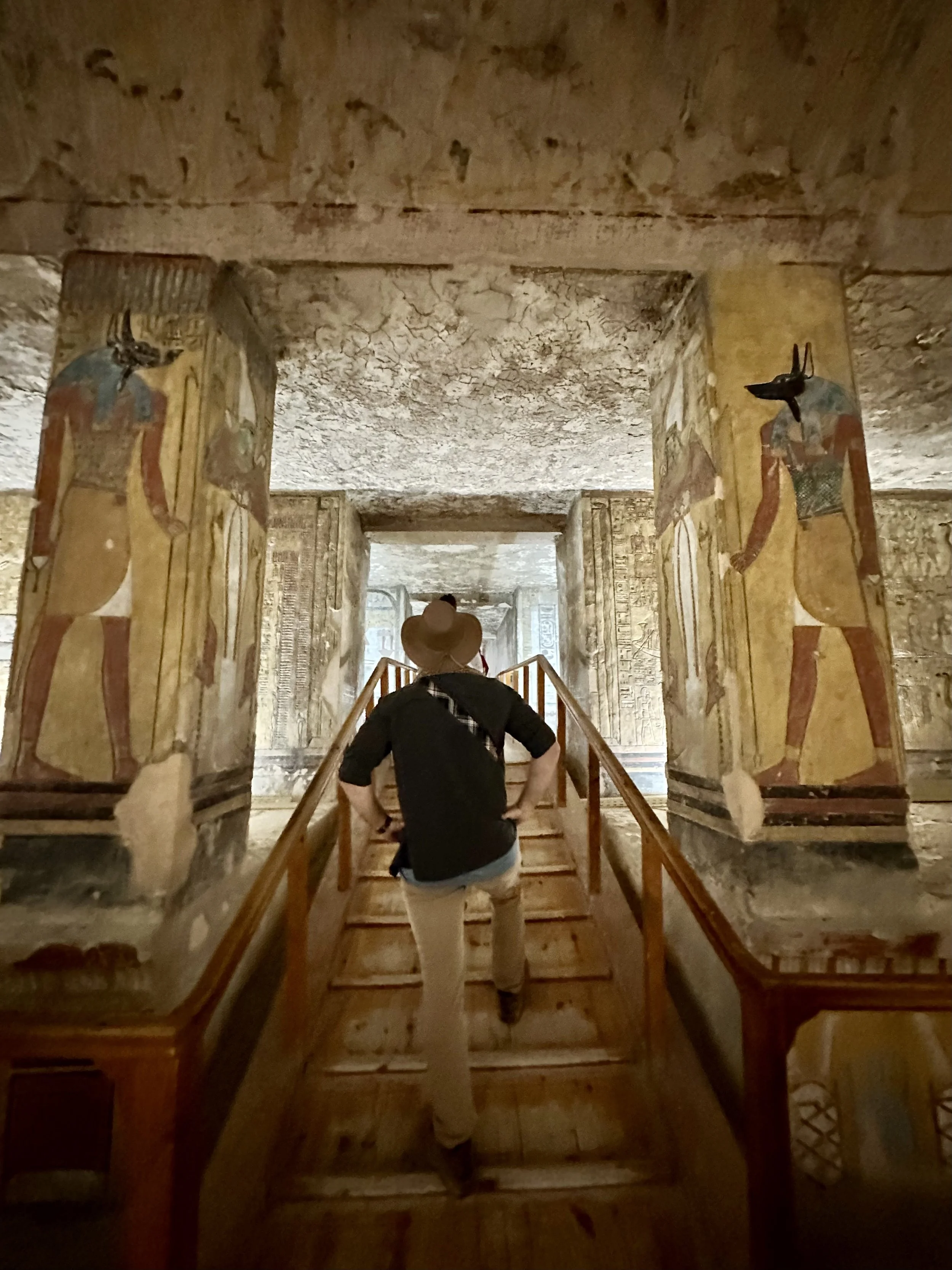
The Valley of the Kings is the place where the world changed what it thought it knew about ancient Egypt.