
A photo tour of the original Egyptian Museum
The original Egyptian Museum in Cairo’s Tahrir Square opened in 1902 and is still worth a visit. It houses some of Egypt’s most important antiquities - just be prepared for a lack of modern amenities, like air conditioning.
Now that the billion-dollar Grand Egyptian Museum is open, you may be wondering if the original Egyptian Museum is still worth a visit. I contend that it is, and here are just a few of my favorite artifacts on display here that I think make the trip worth it. The original Egyptian Museum that opened in 1902 is housed in a beautiful salmon-pink building right in the heart of Tahrir Square in Cairo. Although there is the brand-new Grand Egyptian Museum, commonly referred to as the GEM, in Egypt (more on that below), there is still a great number of antiquities worth seeing at the original Egyptian Museum. So come with me and let’s take a tour through thousands of years of history at the original Egyptian Museum!
Highlights on Display
Exterior of the Egyptian Museum in Cario.
Antiquities found in this article include:
Intro
Narmer’s Palette
Statue of Djoser
Tiny Khufu
Khafre Enthroned
Colossal Statuary of Amenhotep III
Priest called Ka-Aper
Scribes
Statue of Seneb & his Family
Rahotep & Nofret
Papyrus Room & Book of the Dead
Notes on the Egyptian Museum and the new Grand Egyptian Museum (GEM).
Narmer’s Palette
Dynasty 0, Reign of Narmer (ca. 3000 BC).
Upon entering, the first thing you’ll see, in a glass display case in the middle of the lobby, is an object that most people will pass right by. But pass by it, you should not, as it is arguably the most important relic in the entire museum. This 2-foot-tall, rather innocuous slate palette is one of the oldest known historical documents in the world. Around 3200 BC, Upper and Lower Egypt are run by two independent kings. It becomes unified when a king from the south conquers the north. His name was Narmer, and he is the first Pharaoh. This palette tells of the unification of Egypt at that time. In it, the king is holding a mace in one hand and in the other, the head of an enemy. It is a symbol of strength and power that will be replicated in Egyptian art for the next 3000 years.
Statue of Djoser
Third Dynasty, Reign of Djoser (2592 – 2566 BC)
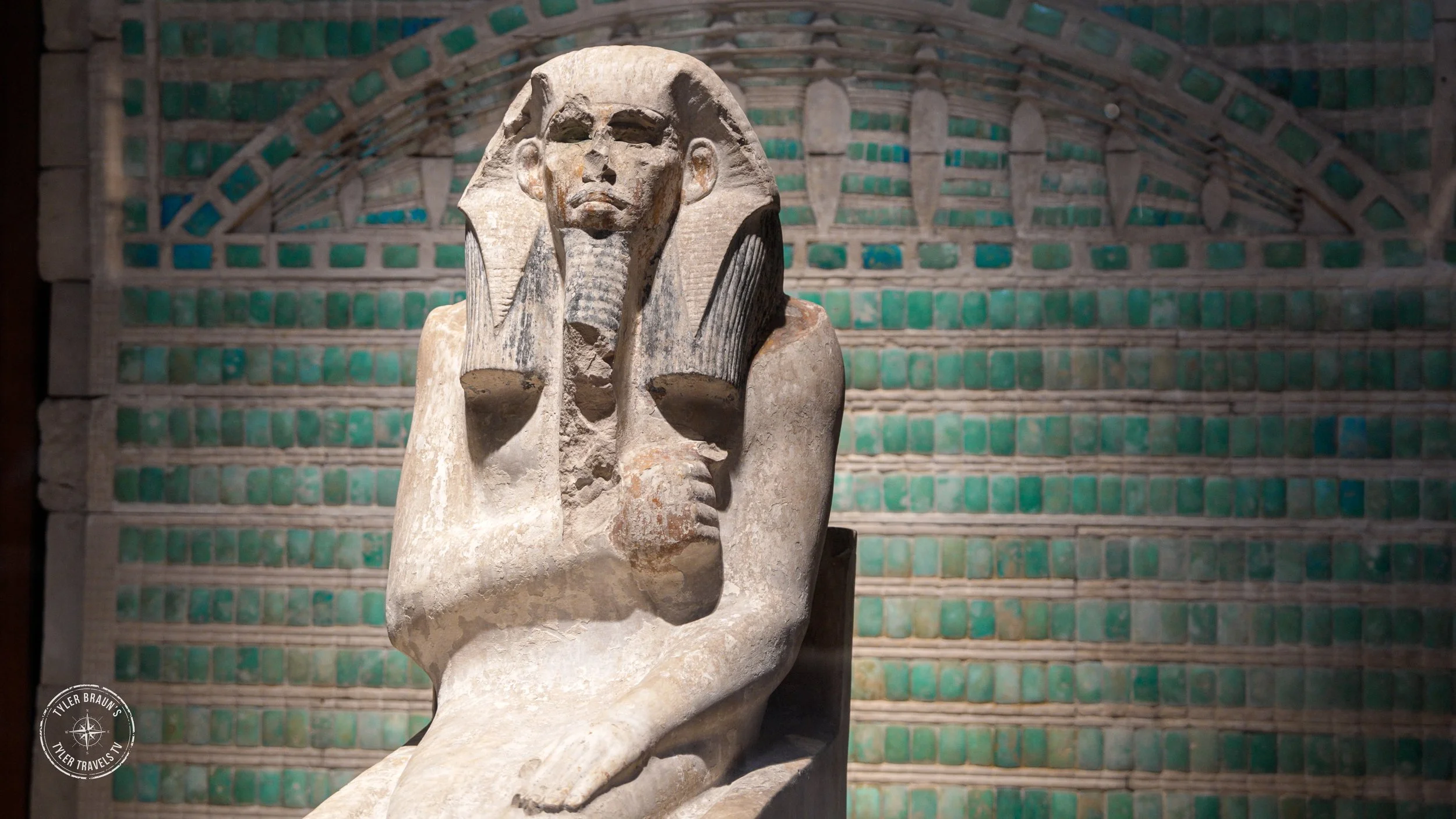
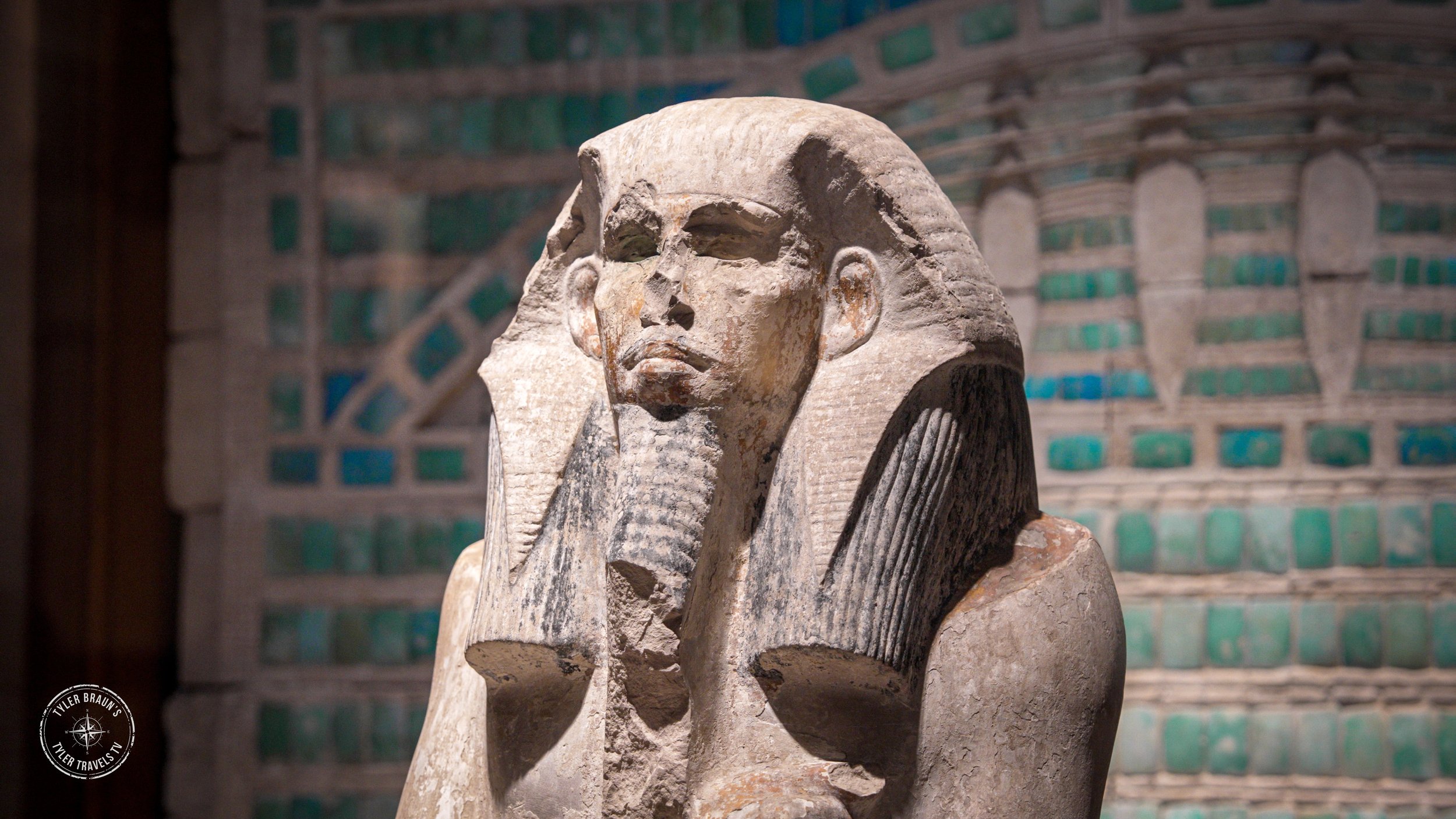
A little further along, you’ll find the oldest life-sized statue ever found in Egypt, depicting King Djoser. It was Djoser who commission the building of a revolutionary type of construction in Egypt: the pyramid. He and his architect, Imhotep, built Egypt’s first pyramid, the Step Pyramid in Saqqara.
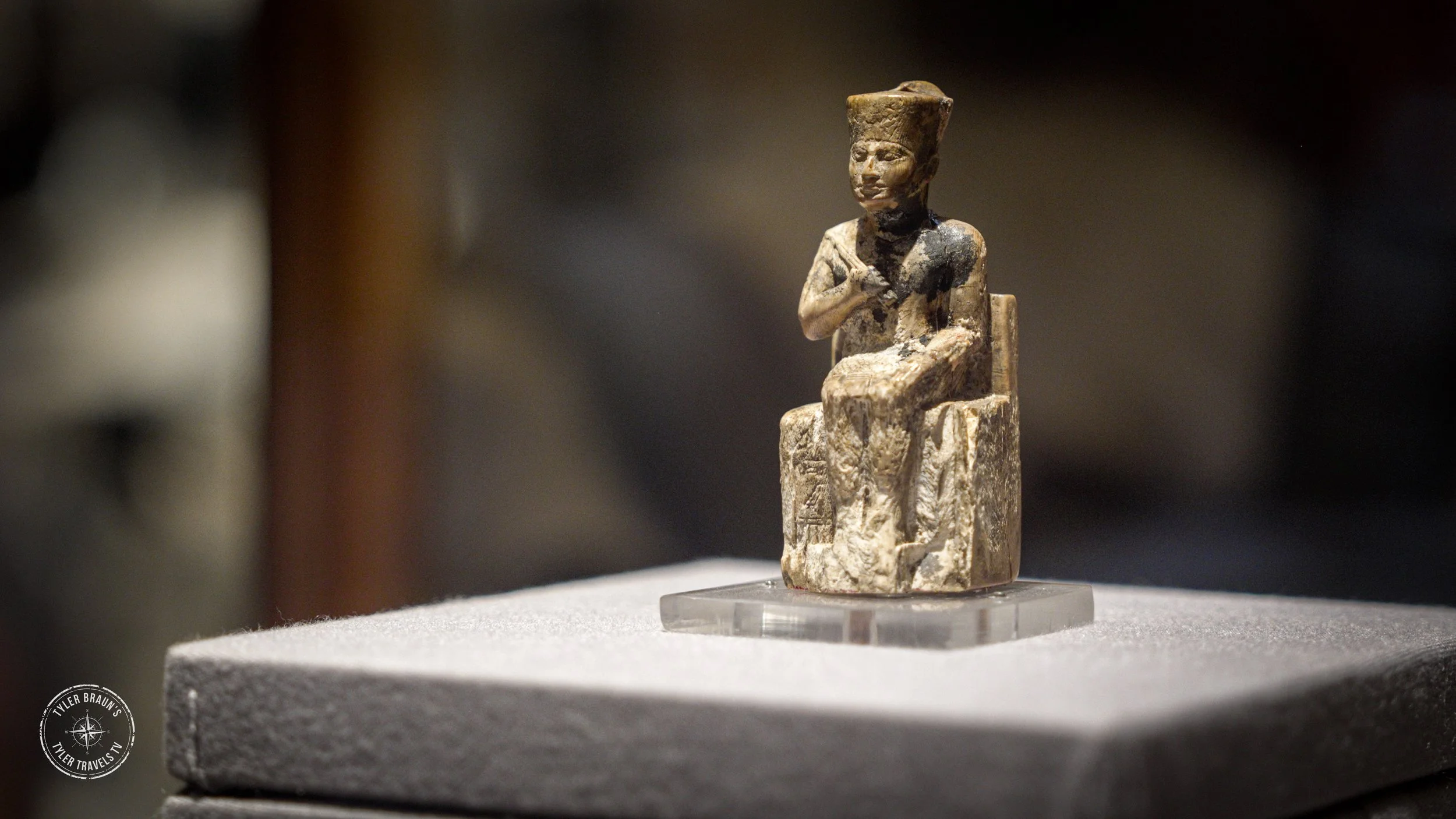
Tiny Khufu
Dynasty 4, Reign of Khufu (ca. 2589 – 2566 BC)
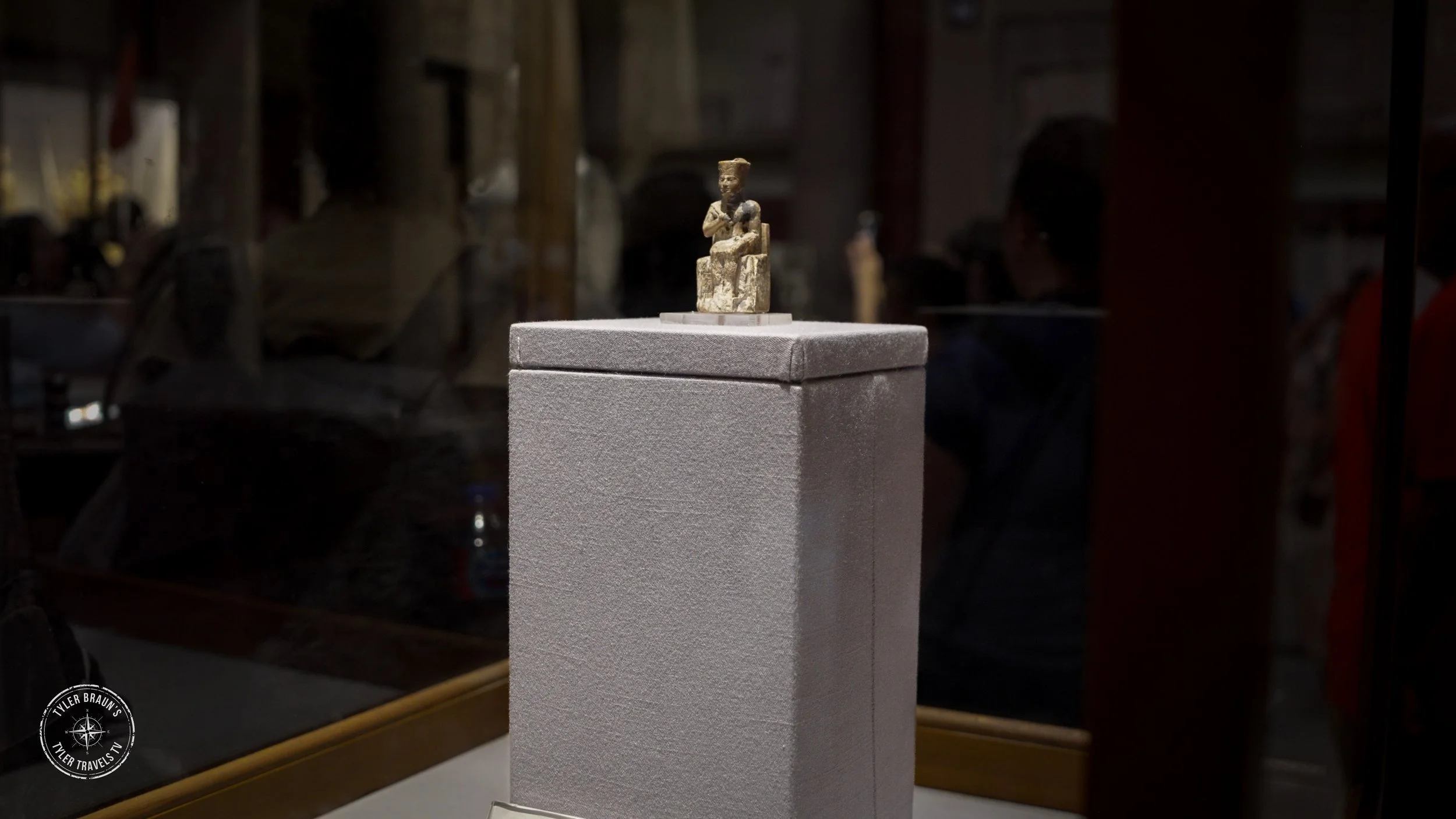
King Djoser was followed a few generations later by this pharaoh, named Khufu. Khufu was the builder of the Great Pyramid of Giza. Ironically, this minuscule ivory carving, standing only about 3 inches tall, is the only known statue of the pharaoh that built the last standing great wonder of the ancient world.
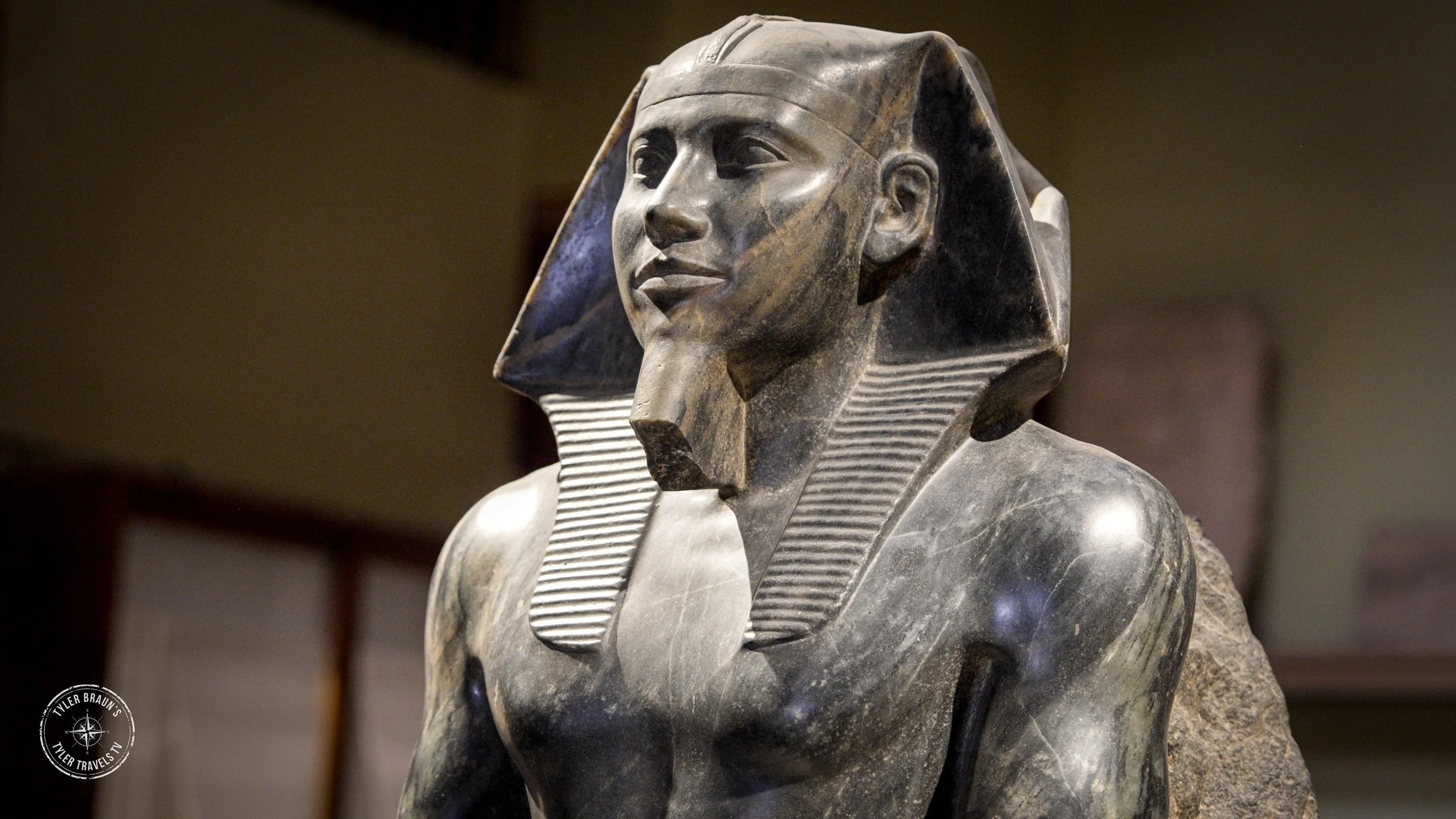
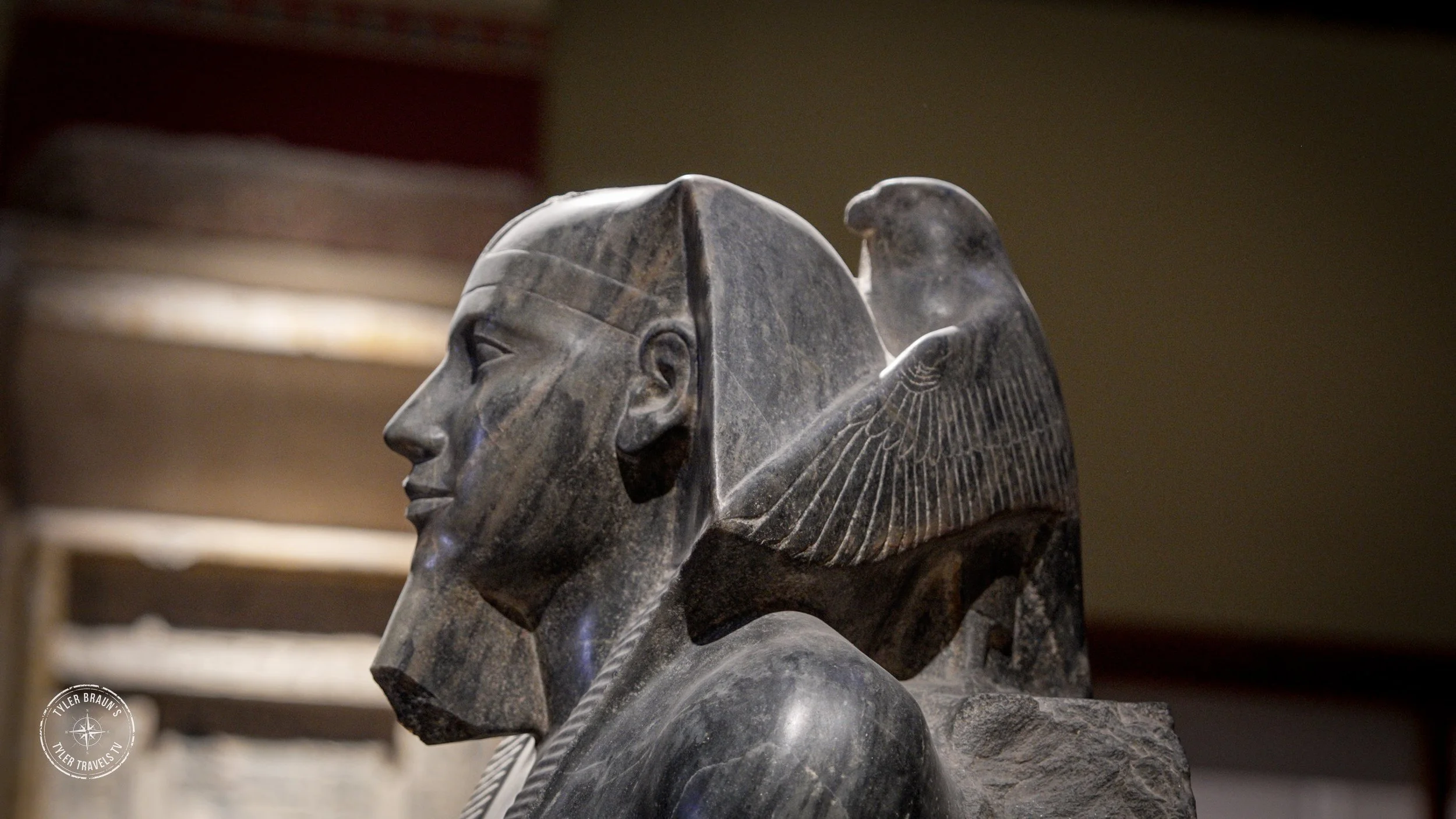
Khafre Enthroned
Dynasty 4, Reign of Khafre (ca.2472-2448 BC)
Right behind Khufu, you’ll find a full-sized statue of his son, Khafre. It was Khafre that built the second, slightly smaller pyramid at Giza. Here he’s depicted with the God Horus (portrayed as a falcon), wrapped around his head in a gesture of protection. This was one of 23 identical statues found near Khafre’s pyramid complex. It’s a little hard to tell because he has a nose here, but you may recognize Khafre’s face from another little depiction of him…the face of the Sphinx.
Colossal Statuary of Amenhotep III
18th Dynasty, Reign of Amenhotep III (1390-1353 BC)
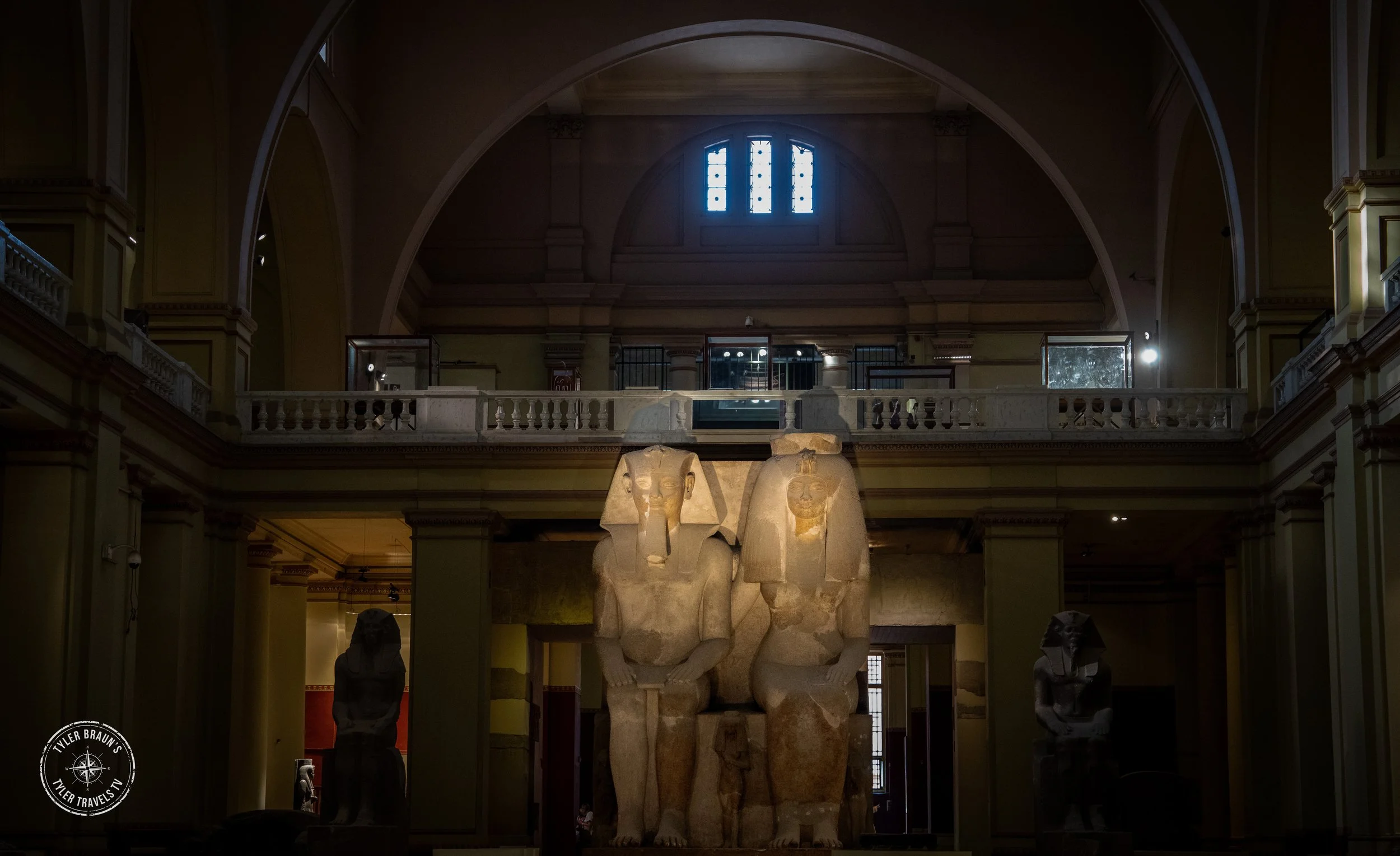
The Colossal Statue of Amenhotep III and Queen Tiy, found directly behind Narmer’s Palette in the Central Hall, is the largest artifact in the museum. Now, here’s a very short little lineage for you here about this cat named Amenhotep III. In Upper Egypt (which, ironically, is south, but it’s called “Upper Egypt” due to the flow of the Nile), there is a massive temple complex called the Temples of Karnak and the Temple of Luxor. Many Pharaohs headed up construction efforts over the several hundred years that Karnak & Luxor were built, but perhaps the Pharaoh that added the most was this guy, Amenhotep III. In addition to everything he built at Karnak & Luxor, across the Nile, close to the Valley of the Kings, he built another complex that was even larger than Karnak - the largest temple complex ever built in Egypt at 35 hectares, very little of which is left, except the Colossi of Memnon (which, fun fact, are also statues of Amenhotep III - this guy is everywhere!). However, as fascinating as Amenhotep III is, his lineage is perhaps even more interesting. Very succinctly, his son, Amenhotep IV, renamed himself Akhenaten, and he is often known as the “Heretic Pharaoh” because he tried to change the religion of Ancient Egypt from worshiping many gods to worshipping only one God, “Aten”, the god of the sun. Akhenaten also had new ideas about art and architecture, as you can see when viewing his statues (also at the Egyptian Museum). Now, why am I telling you all of this? Because Akhenaten’s son and successor was a little guy named Tutankhamun, who no one would likely have known, except for the fact that Howard Carter found his tomb in 1922, and he is now arguably the most famous pharaoh that ever lived. So yes, you’re understanding this correctly, Amenhotep III here, is the grandfather of King Tut.
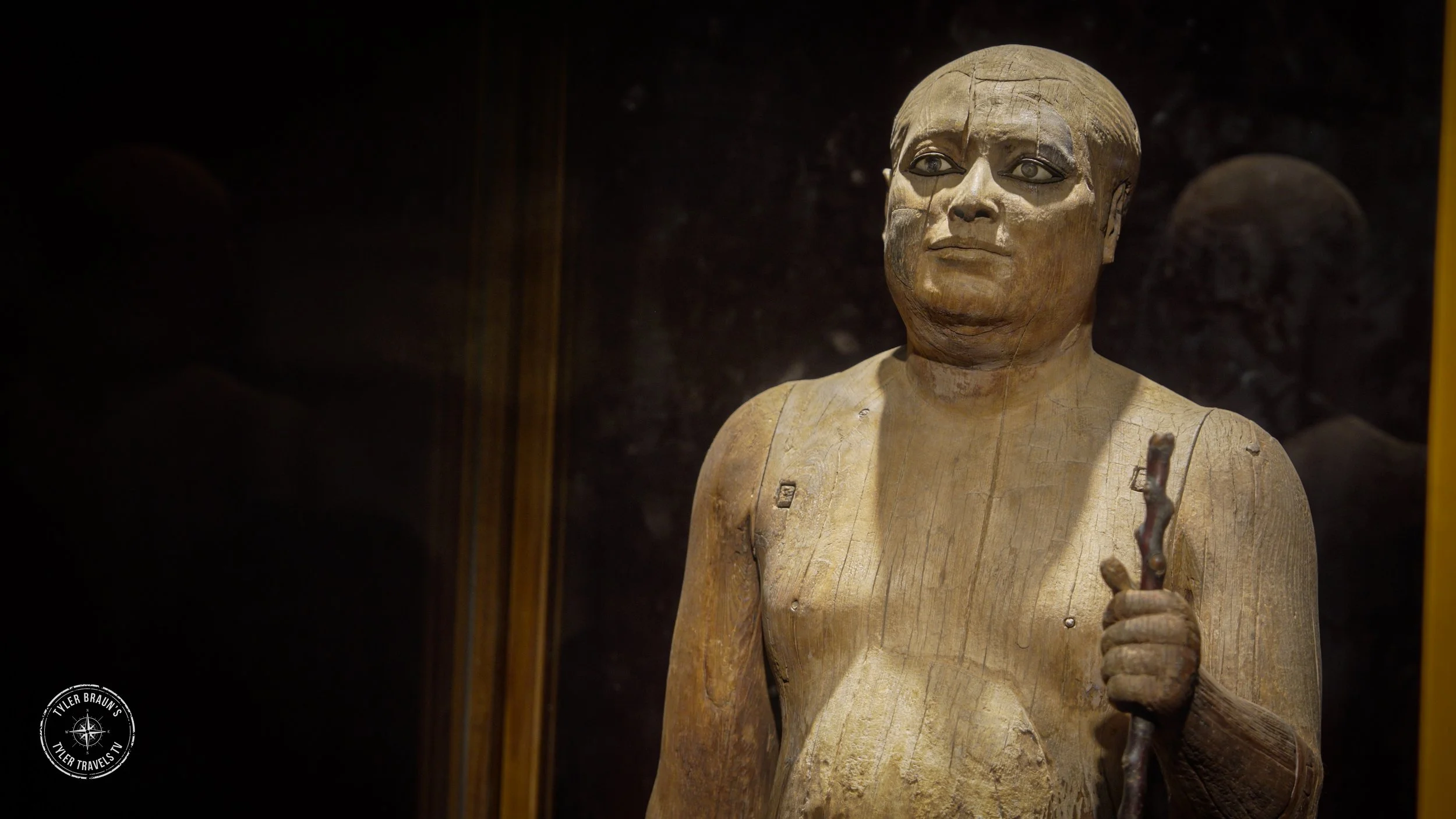
Priest Called Ka-Aper
Dynasty 5, Reign of Userkaf (ca. 2435-2429 BC)
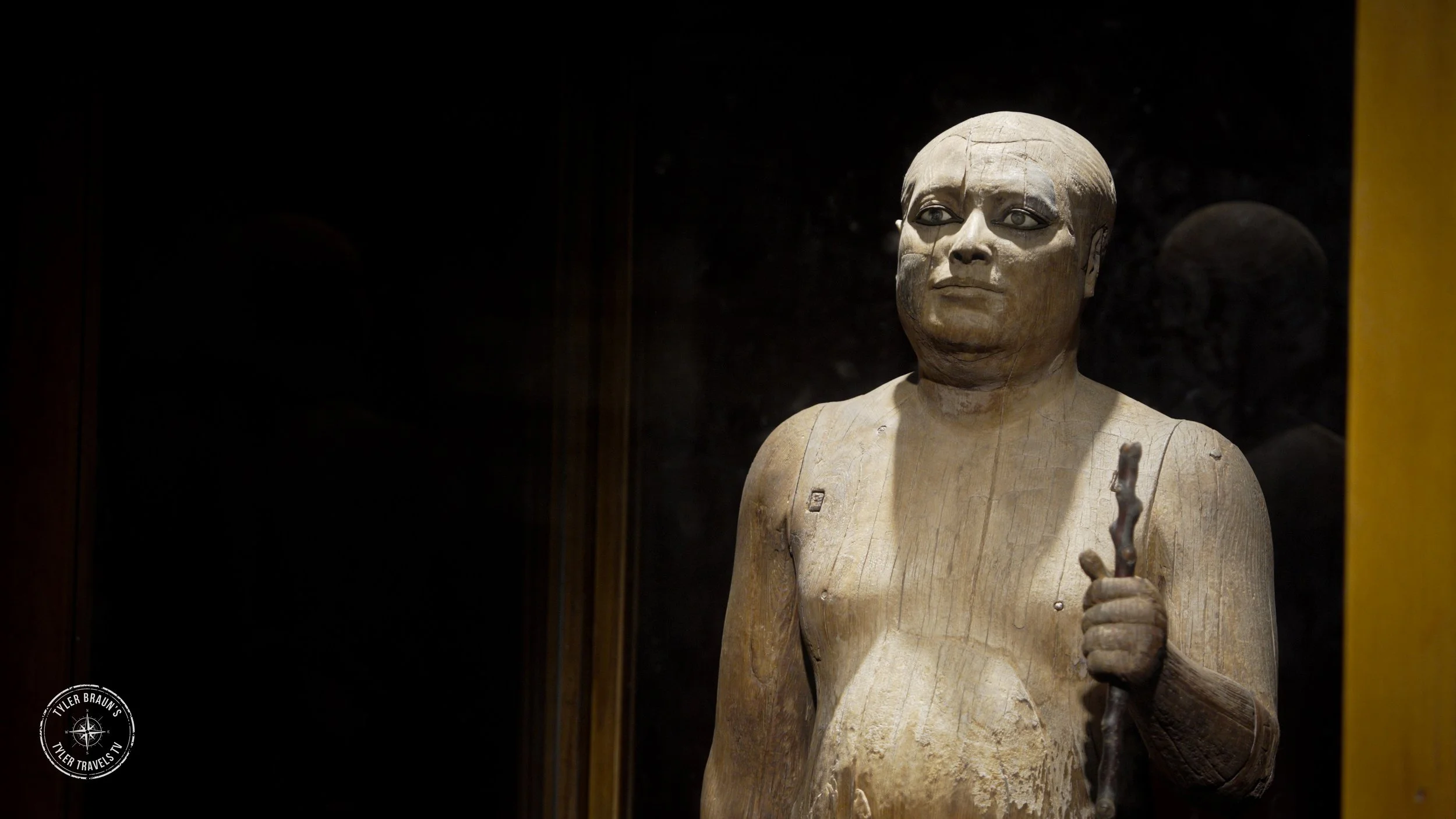
It’s not just portrayals of pharaohs you’ll find at the Egyptian Museum. You can also discover depictions of other ancient Egyptians, like this haunting statue of a priest named Ka-aper, with his terrifyingly human eyes that seem to stare right back at you. This statue is especially impressive due to the fact that it is made entirely of wood. Very few wooden statues from ancient times remain in the present day.
Scribes
Dynasty 5 (ca. 2465-2323 BC)
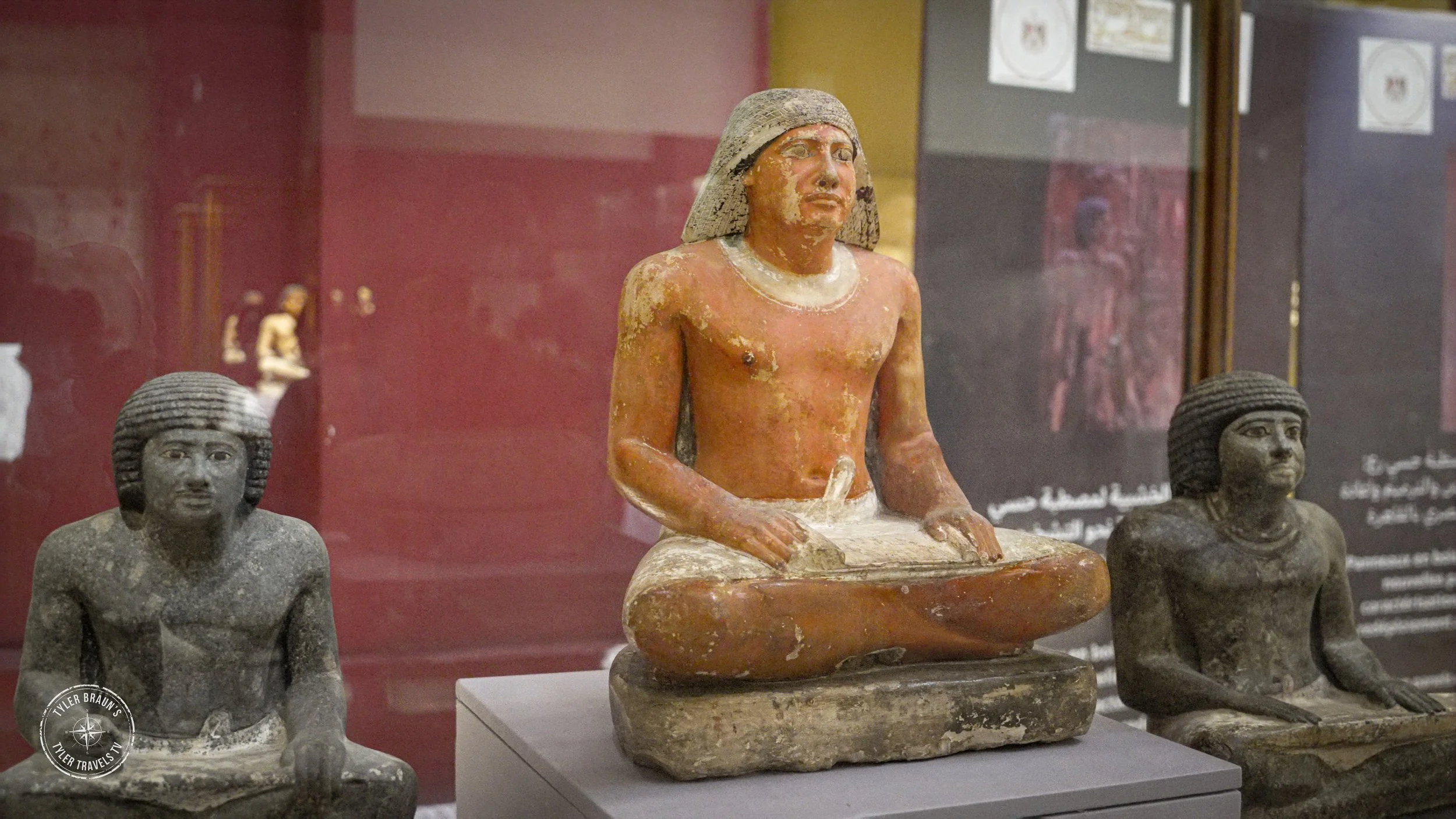
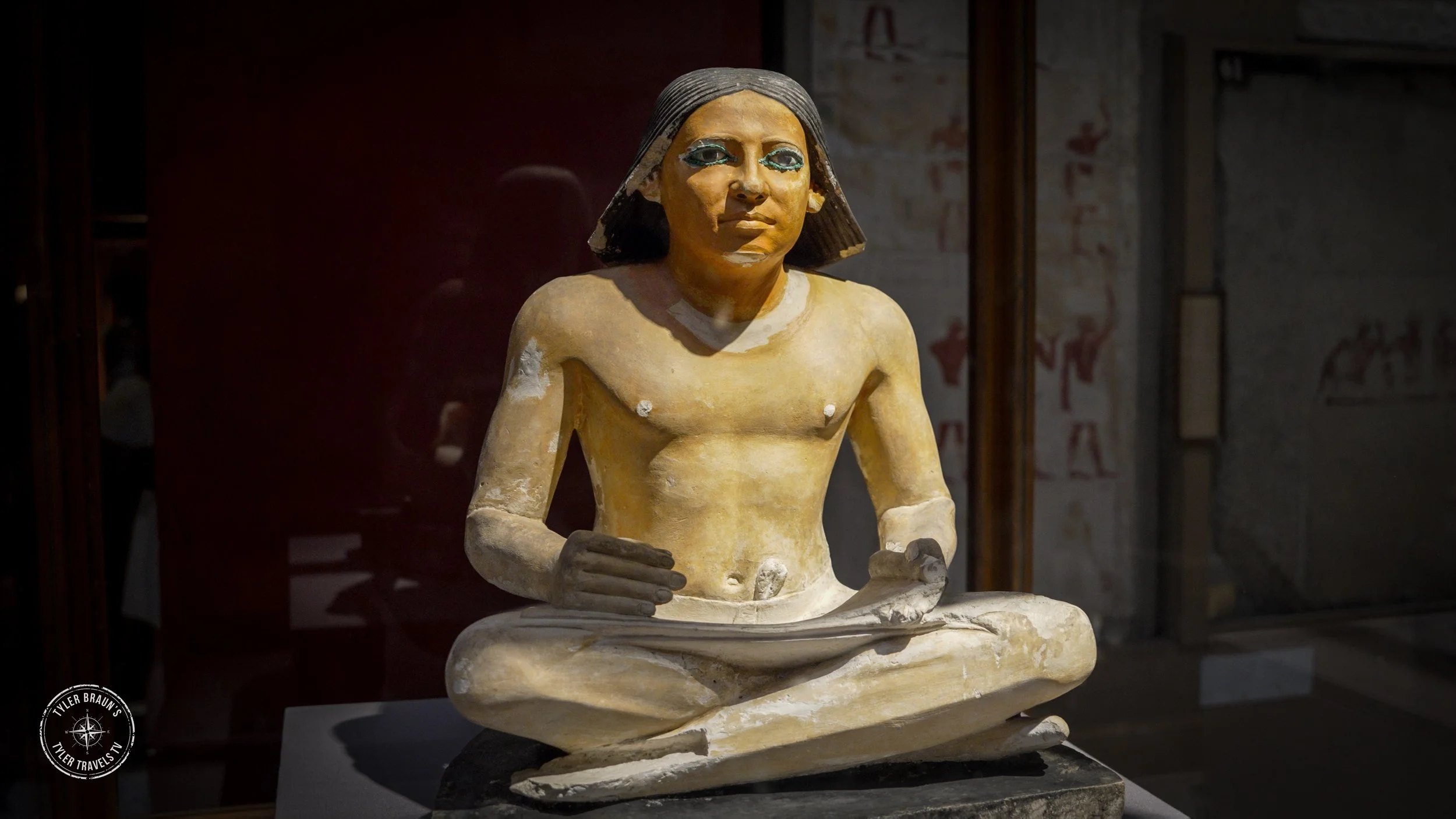
You’ll also find several statues of other revered figures like the seated scribes, each with an unrolled scroll of papyrus on their laps and hands poised to hold a pen. Scribes were highly revered in ancient Egypt, so much so that officials in ancient Egypt often commissioned statues of themselves portrayed as scribes for their tombs. At that time, very few individuals were literate, and they needed the gods to know in the afterlife that they could read and write. Think of it as an insurance policy to ensure they would be given their proper rank in the next life.
Statue of Seneb & his Family
Late Dynasty 5 – Early Dynasty 6, (24th – 23rd Century BC), Old Kingdom
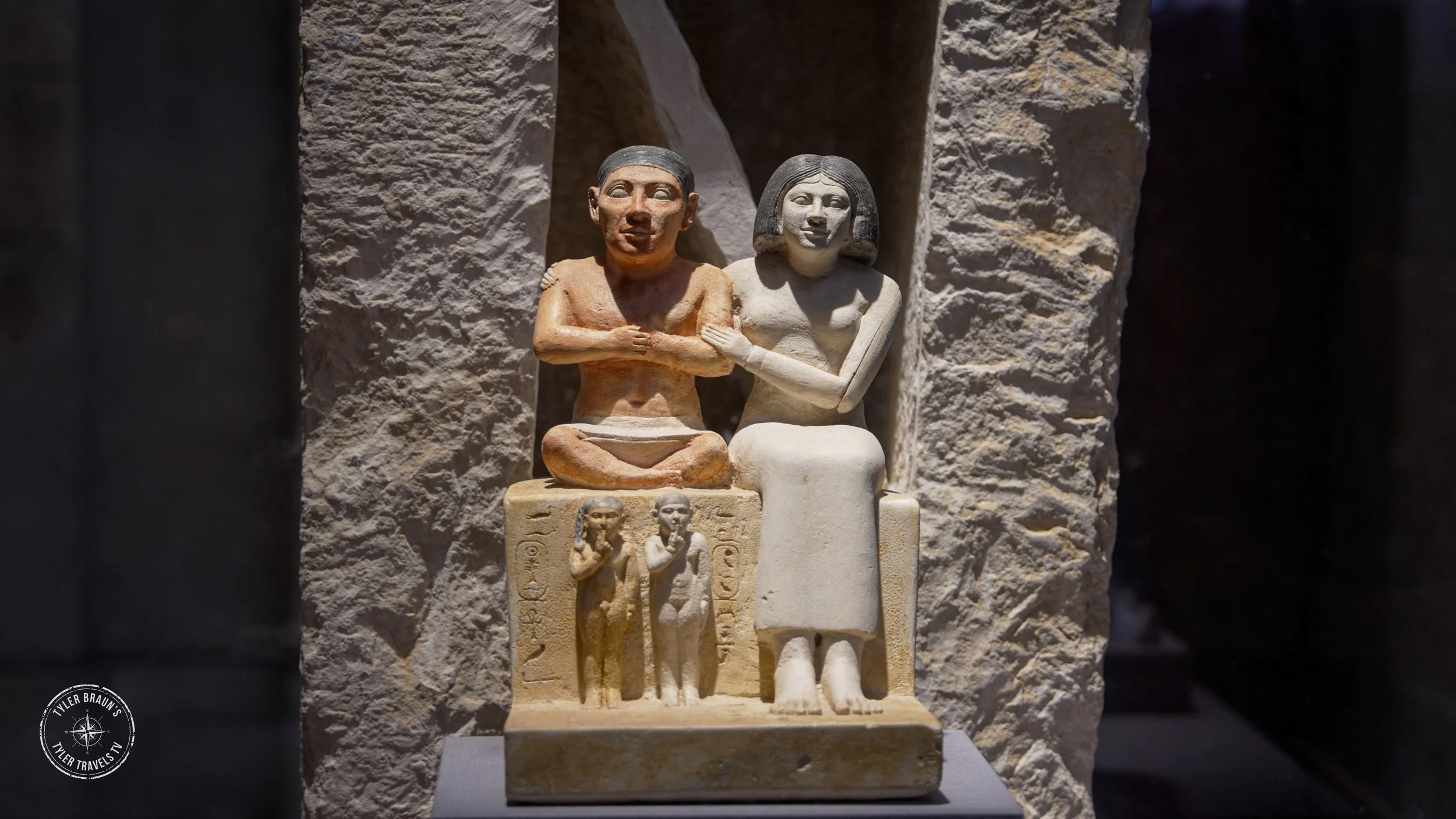
This statue of Seneb shows his wife embracing him, along with his children at his feet. Seneb was highly revered in his time, and this statue was found in his tomb. He was in charge of the royal wardrobe and was the funerary priest of Khufu (builder of the Great Pyramid of Giza) and his son, the pharaoh Djedefre (the older brother of Khafre, the builder of the second pyramid at Giza).
Rahotep & Nofret
Dynasty 4, Reign of Snofru (ca. 2613-2589 BC)
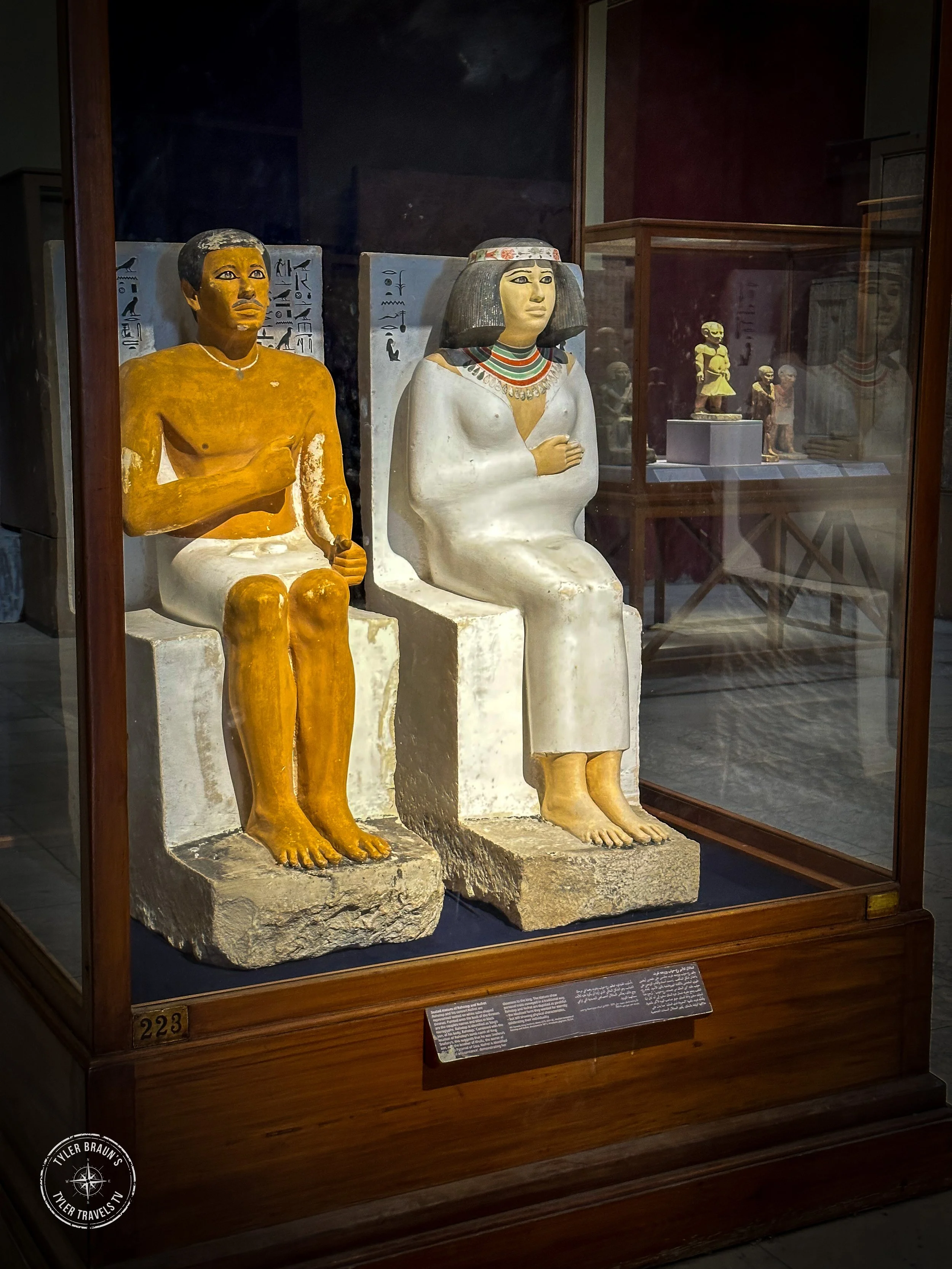
These two statues are some of my favorites in all of the Egyptian Museum because of how vibrant they are. Rahotep here sits with his wife, Nofret. Rahotep is the brother of Khufu (the builder of the Great Pyramid of Giza). It’s incredible how much color remains on these statues given that they are about 4,600 years old. The eyes specifically come across as particularly animated and alive.
Papyrus Room & Book of the Dead
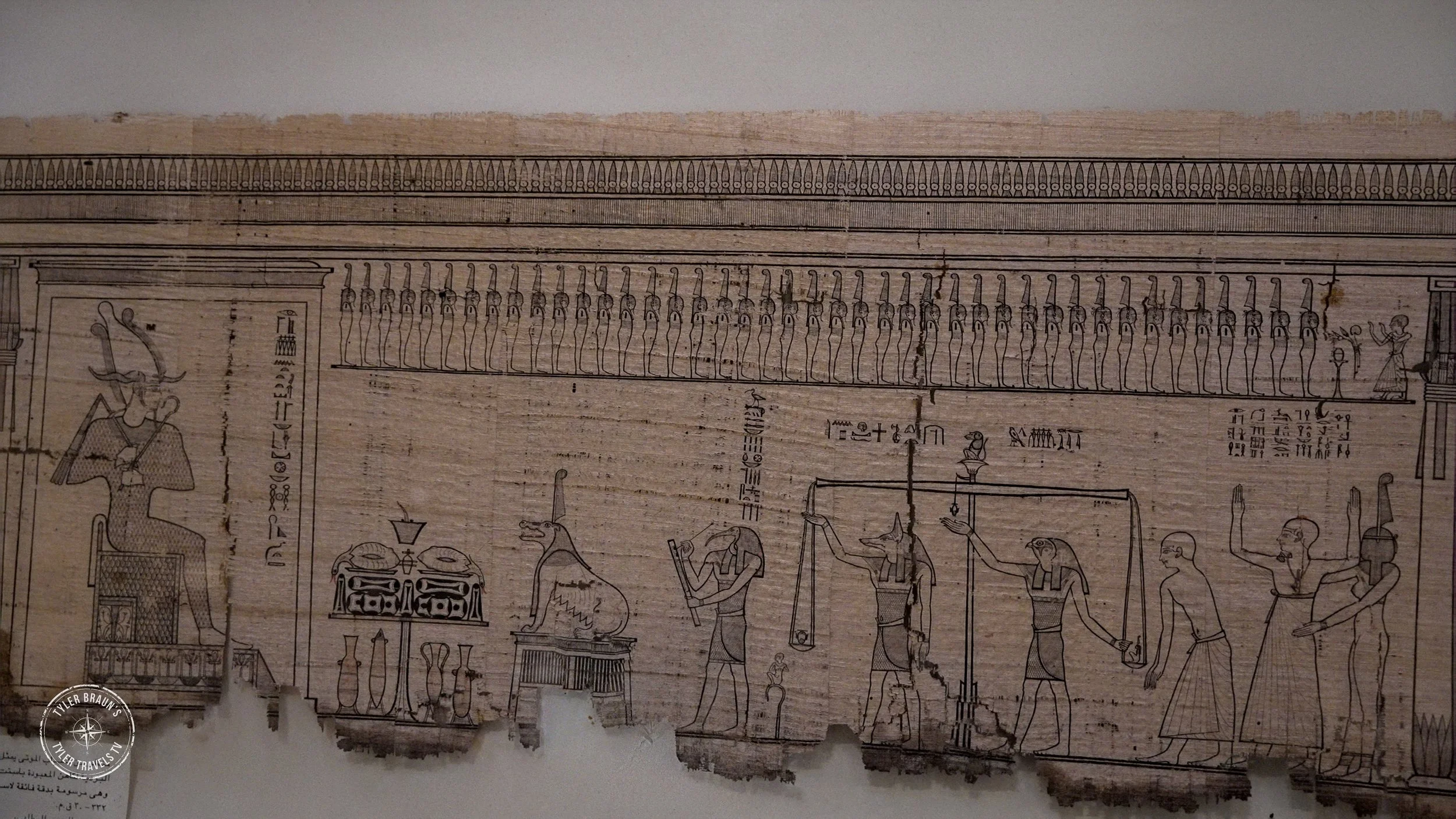
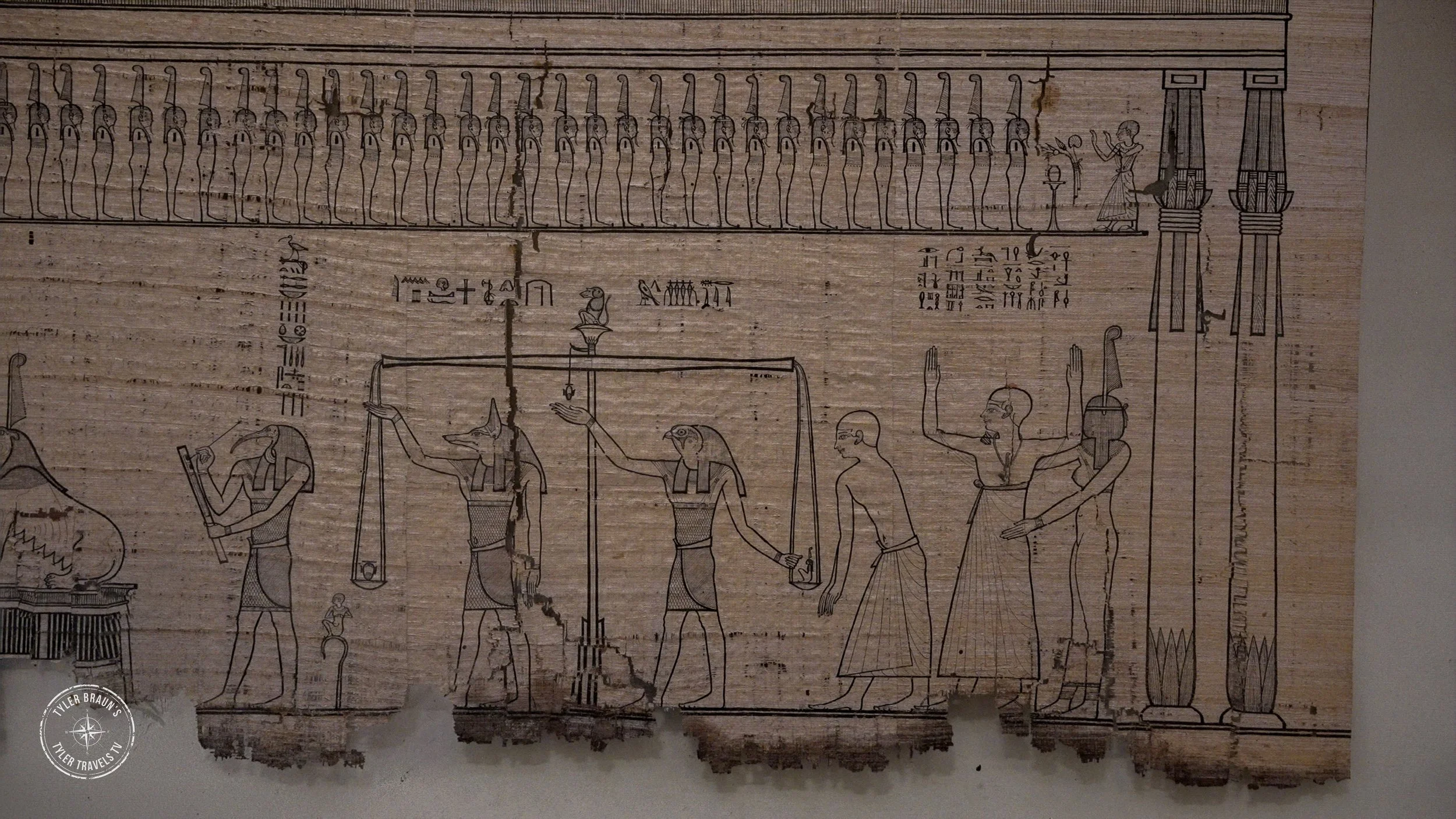
The papyrus room displays some of the ancient tools of the trade. It would be hard to overstate the importance of papyrus in Ancient Egypt, and its most important function was that of a writing surface. It was used to record histories, administrative documents, legal works, and religious texts, like the famous Egyptian Book of the Dead. The Book of the Dead served as a map and guidebook to the afterlife, including all the spells one could need in death, and provided instructions for the trials one would face, including the test to determine worthiness, “the weighing of the heart” (seen here on the right-hand side).
King Tut
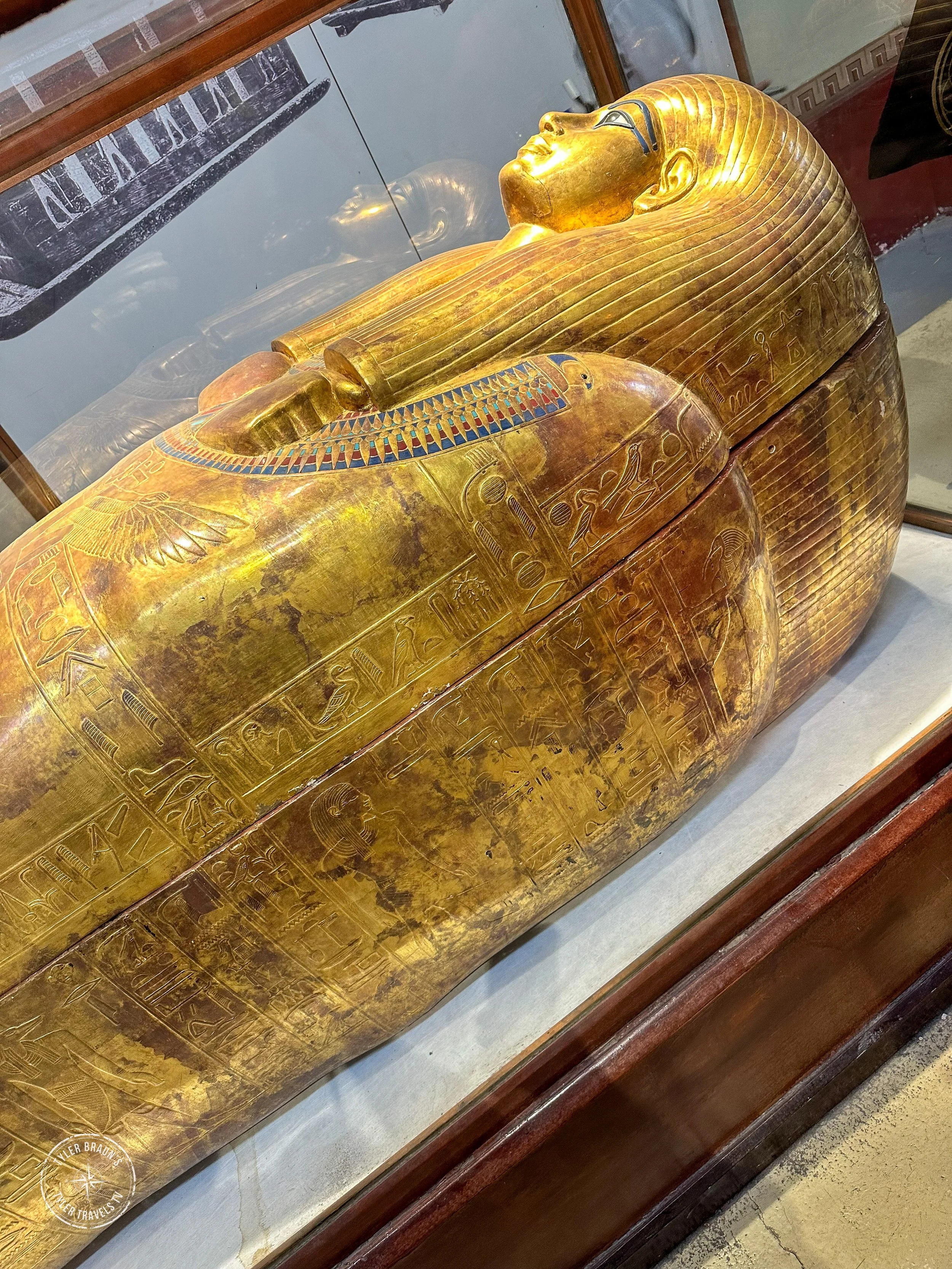
While some of King Tut’s treasure’s used to be displayed here, including, most famously his golden death mask, now all of the artifacts will be displayed together for the first time at the Grand Egyptian Museum. Only about 30% of King Tutankhamen’s artifacts have ever been displayed here, but at the Grand Egyptian museum opens, everything will be on display, including so many items that have never been seen before.
the “Egyptian storage closet”
The Egyptian Museum opened in 1902, and 20 years later, almost to the day, King Tut’s tomb was found and excavated by Howard Carter, effectively doubling the size of the museum’s collection overnight. Many Egyptians jokingly refer to the current Egyptian Museum as the “Egyptian Storage Closet”. Mummies, statues, relics, and sarcophagi all vie for space in this overcrowded museum. How do you display 5,000 years of history in one location? You can’t. Therefore, as I’ve said, a great portion of these items that are currently housed here will eventually be moving to the new Grand Egyptian Museum (GEM), including all of King Tut’s nearly 5,000 treasures - together in one place for the first time since they were all removed from his tomb. Most of the mummies will be transferred to the National Museum of Egyptian Civilization, another fabulous museum worth visiting in Cairo.
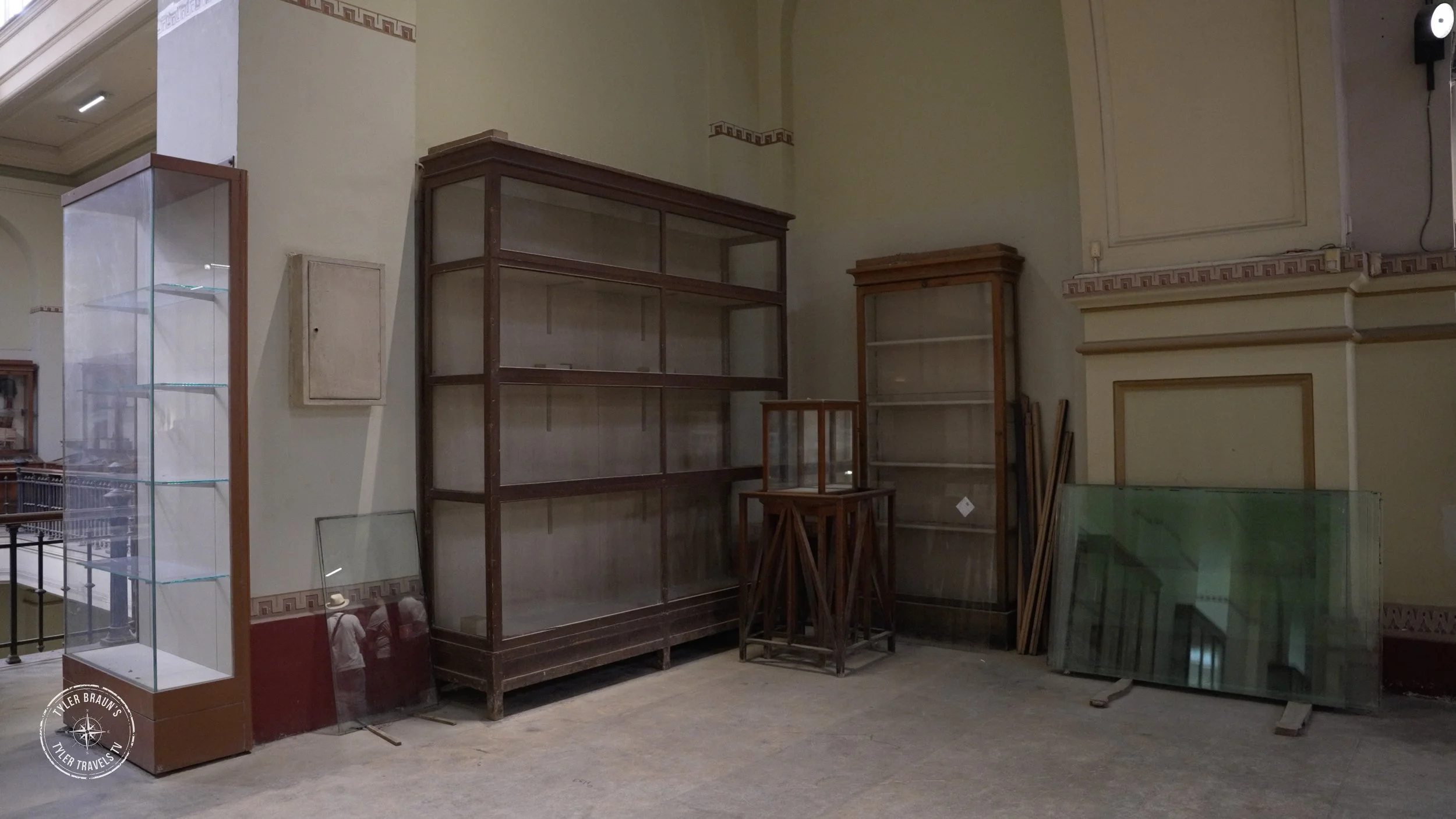
While this process is happening, there are currently lots of empty cases at the Egyptian Museum. So what is to become of this current Egyptian Museum? There are definitely some plans in the works. It’s currently undergoing renovations, and it will continue to house a collection of artifacts here, including all the artifacts I have included here. And while this 120-year-old museum doesn’t offer any modern amenities (such as air conditioning, most noticeably), and it’s definitely beginning to show its age with wear and tear, it’s sort of nostalgic in itself with its marbled railings and wooden cases. With its prime location right in the heart of Cairo, it won’t be going anywhere anytime soon. I, for one, am excited to see what they make of this space in the coming years.
With plenty of open space here, and with the opening of the Grand Egyptian Museum, there is a hope among many Egyptians that artifacts that are currently housed at museums all over the world will now return home to Egypt. Others argue that Egyptian antiquities should remain all across the world. Some believe that by having all Egyptian artifacts in one place it makes the collection vulnerable - if all artifacts are in one place, and something should happen in one museum to damage everything, then all is lost. By having items strewn across the world, even if one collection should be damaged, others remain intact. Others argue that by having Egyptian artifacts across the world in different museums, it provides access for study by both professionals and students that would never have the opportunity to see them if they were all in Egypt. Seeing a 4,000-year-old antiquity up close and personal might just encourage a young person to become an Egyptologist as an adult.
Many, however, do not agree. Pretty much since Napoleon and his gang showed up in 1798, many of Egypt’s artifacts have been taken by other countries, and there’s now a huge movement to try and bring these artifacts home. Some things were given willingly in a trade (like the obelisk that stands in the Place de la Concorde in Paris that was given in exchange for the clock tower at the Mosque of Mohammed Ali), and others were given as gifts (as in the Temple of Dendur housed at the Metropolitan Museum of Art in New York that was given to the US in gratitude for the financial aid given in exchange for helping save Abu Simbel during the construction of the Aswan High Dam), but many other artifacts were looted, stolen, or sold on the black market. Take for instance, the world-famous Rosetta Stone - the stone that helped unlock ancient Egyptian hieroglyphs and allowed us to decipher a language we thought was lost. The French attempted to steal the Rosetta Stone first, but then the British stole it from the French, so it’s now housed at the British Museum in London. Egyptians have asked for the stone to be returned, but as it’s one of the most visited pieces in the British Museum, it’s unlikely that it will be given back anytime soon. Egyptian artifacts are on display at the Louvre, at MoMA in New York, and countless other museums across the world. However, with the opening of the GEM, there is a hope by many Egyptians that many of these artifacts will finally return home.
The New Grand Egyptian Museum
Egypt has, arguably, the longest and richest history of any civilization still in existence, and in order to try and begin to show that off, Egypt has been working for about 20 years on a brand-new museum called the Grand Egyptian Museum or the GEM. It was originally slated to open around 2013, then 2018, and it kept getting pushed back. Well, it is now, finally, officially OPEN! When I go back to Egypt someday in the future, I cannot wait to see this place. I could do an entire article all about the GEM, and someday when I visit, I probably will. But for now, I’ll just tell you a few of my favorite things.
It’s going to house between 50 and 100 thousand artifacts, including for the first time ever, all of King Tut’s 5,000 or so treasures in one place.
It’s one of the largest museums in the world, at about 5.3 million square feet in total.
It cost well over a billion dollars to construct.
Right inside, there is a colossal, 3,200-year-old statue of Ramses II, and two times a year, the sun’s rays will hit his face, just like it does in Abu Simbel.
When you walk towards the back of the main atrium, there’s a gigantic panoramic view of the Pyramids.
There are inverted pyramids along the sides of the atrium covered in smooth limestone, an homage to what the pyramids themselves were once covered in.
And that’s just in the lobby! I could go on and on, but suffice it to say that it looks incredible, and I genuinely can’t wait to see it someday. If you get the chance to visit it, I definitely think you should. But don’t write off the original Egyptian Museum. As you can see, there are so many incredible artifacts that help tell the story of Egypt at the Egyptian Museum, and I think it would be considered a lost opportunity to not visit.
Note - These items were on display in the original Egyptian Museum as of October 2023. A few of these items may have since been moved to the Grand Egyptian Museum (GEM). Be sure to check the Egyptian Museum’s Official Website for a listing of all the current artifacts on display.
Watch the Video
Gallery





Travel Store
Visit my travel store for my travel essentials!

People Mover Travel Agency
Work with the incredible travel advisors at my travel agency, People Mover Travel. For 10 years, we've been making traveler's dreams come true. We are experts in destinations worldwide including Alaska, Disney Parks, Europe, Cruises, All-Inclusive Resorts, Hawaii, Asia and more! Find out how we can personally help you plan & book your next trip for FREE!

Where are you heading?
Check out my Destination Page for travel tips, must-see sights, and hidden gems from all over the world. Start your adventure today!
Related Blog Posts


Recent Blog Posts
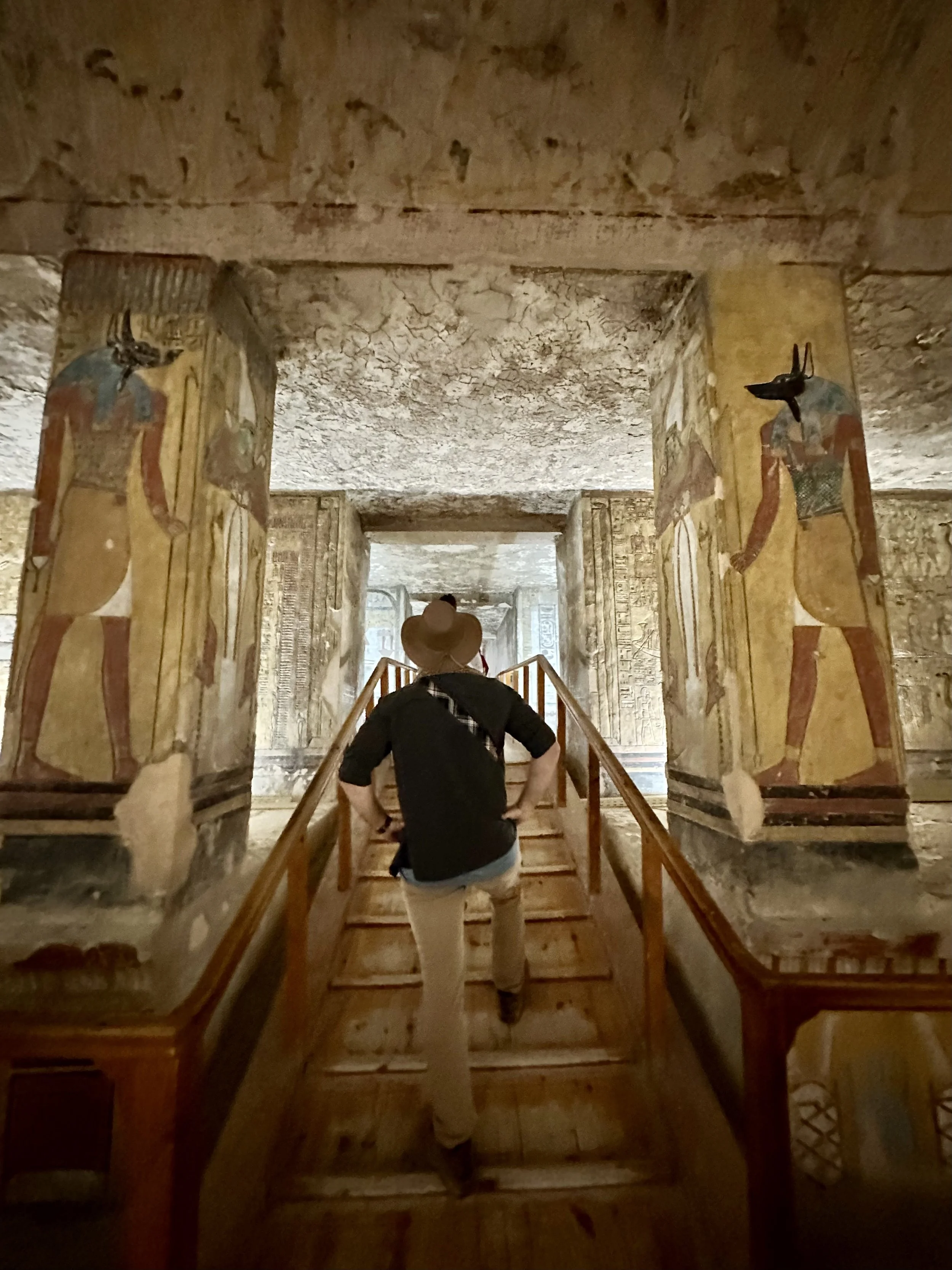
The Valley of the Kings is the place where the world changed what it thought it knew about ancient Egypt.