
Temple of Luxor, Egypt
The Temple of Luxor is smaller than the Karnak Temple Complex nearby, but it doesn’t feel minor, and it’s just as stunning.
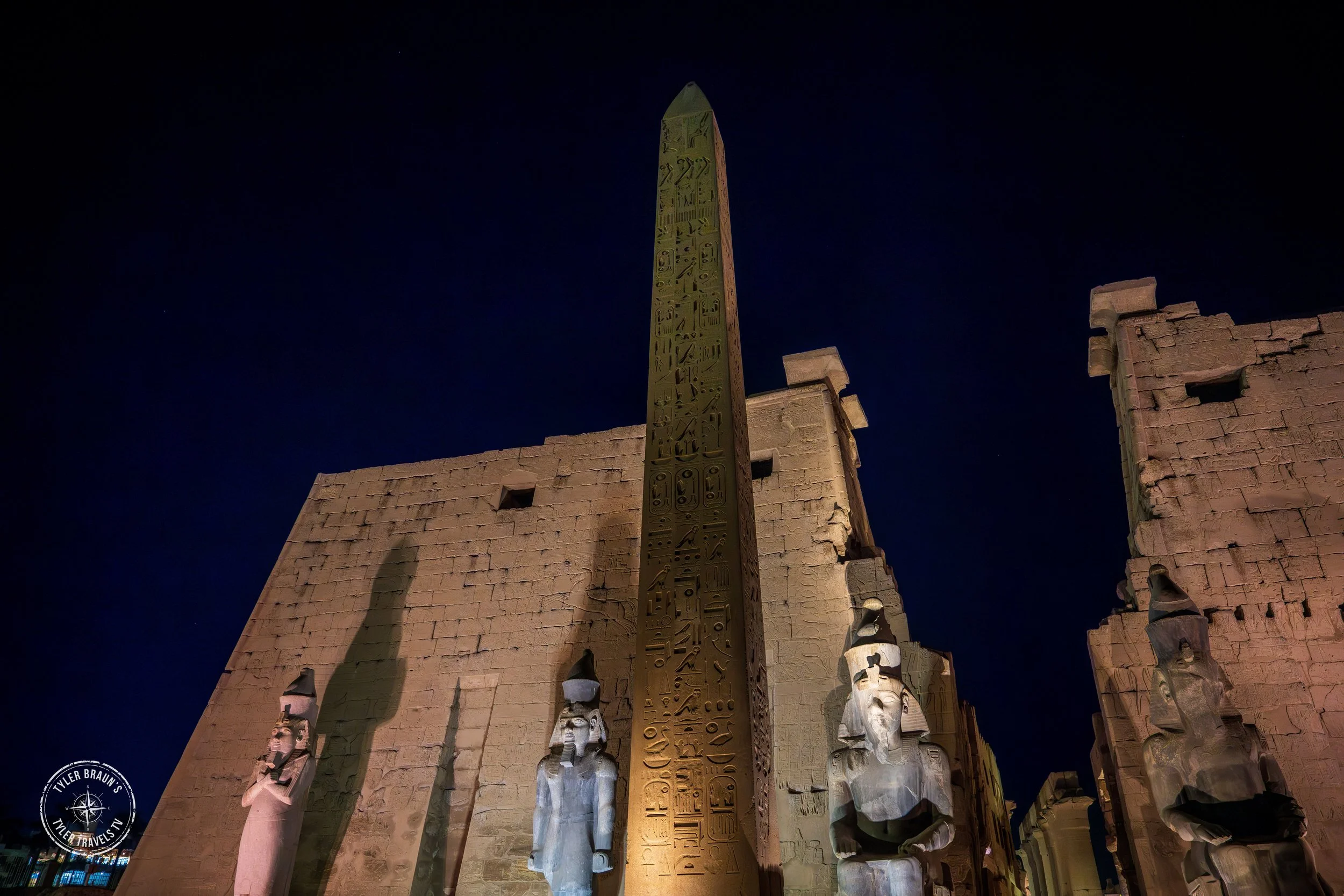
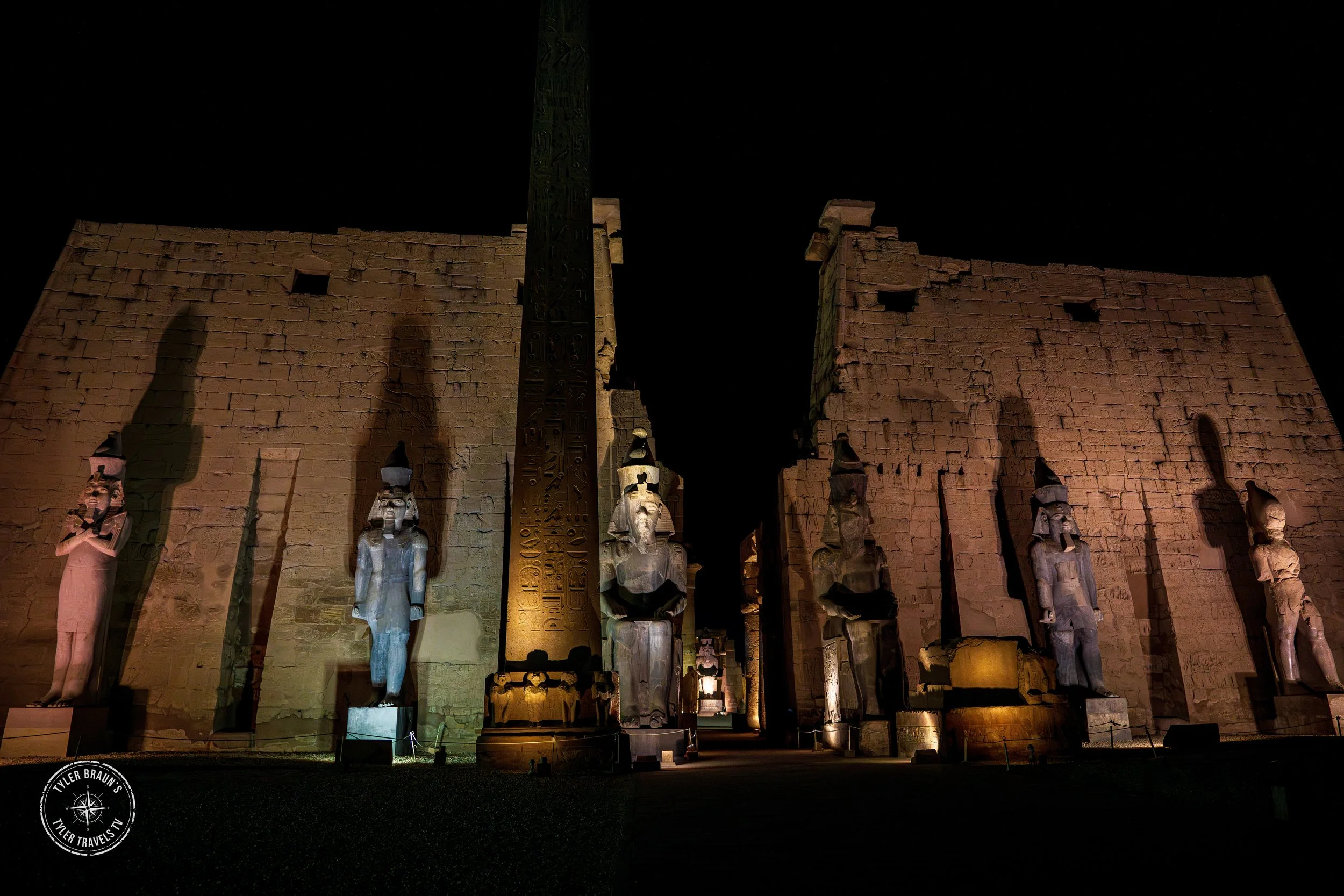
At the entrance, six statues of Ramses II greet you— two seated and four standing,
Entering the Temple
One obelisk of what used to be a pair.
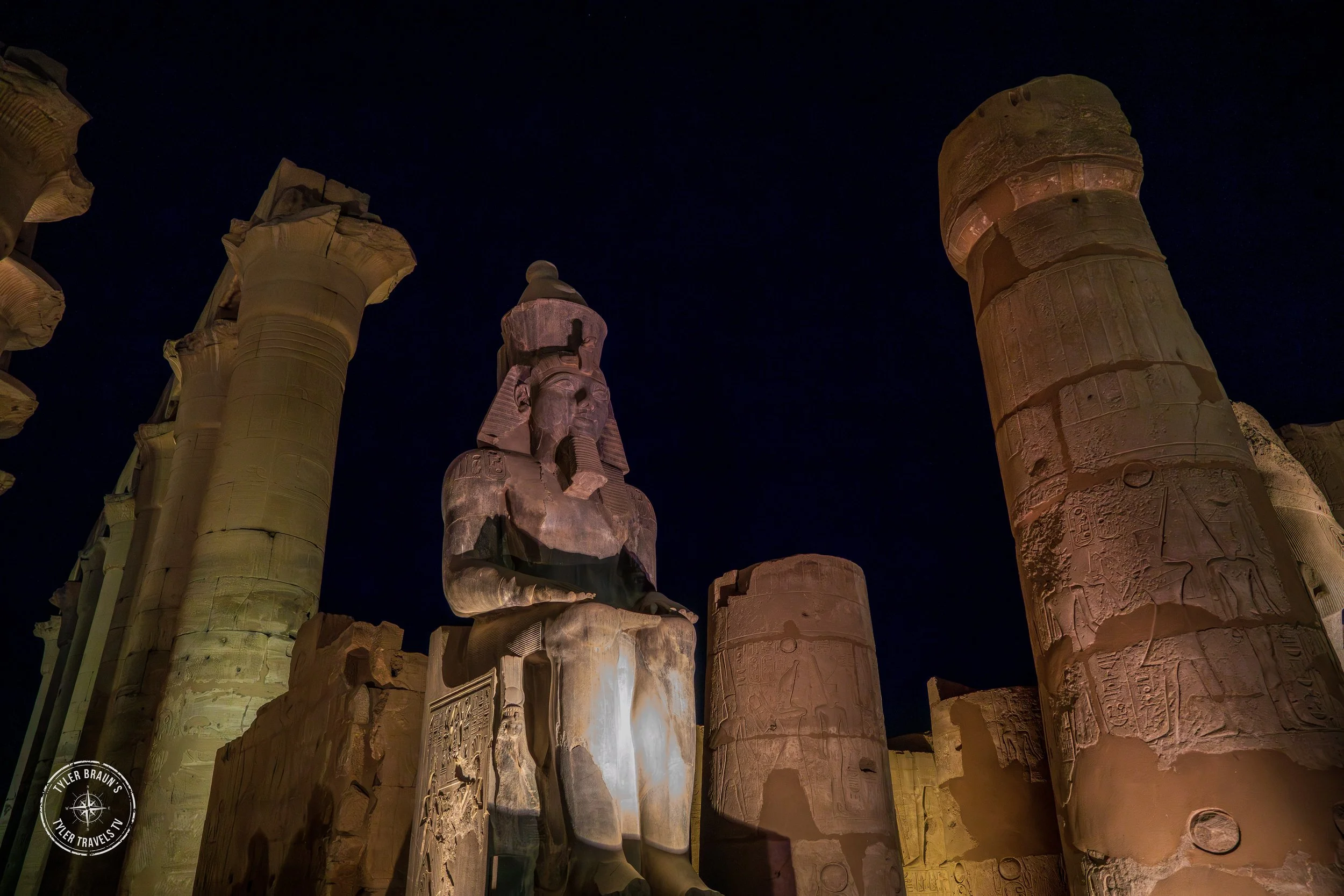
At the entrance, six statues of Ramses II greet you— two seated and four standing. If you know anything about Ramses II, you’ll recognize that these are classic— big, bold, and impossible to ignore. Modesty was not a trait that could be applied to good ol’ Ramses II. Not long ago, only three of these colossi were standing. The others had toppled and shattered during an earthquake in antiquity. Thanks to painstaking restoration work, their broken pieces have been reassembled and returned to their original spots, so you once again get the full, imposing lineup the ancient Egyptians intended.
In front of the temple, there’s a single obelisk. It used to be a pair. If you’re looking for its twin, you’ll have to head to the Place de la Concorde in Paris. That second obelisk was gifted to King Louis-Philippe of France. In return, he gifted a green clock tower to the people of Egypt that now stands at the Mosque of Muhammad Ali in Cairo. The trade has not exactly aged well: the clock tower, beautiful though it may be, has never actually worked.
A Temple Buried in Sand
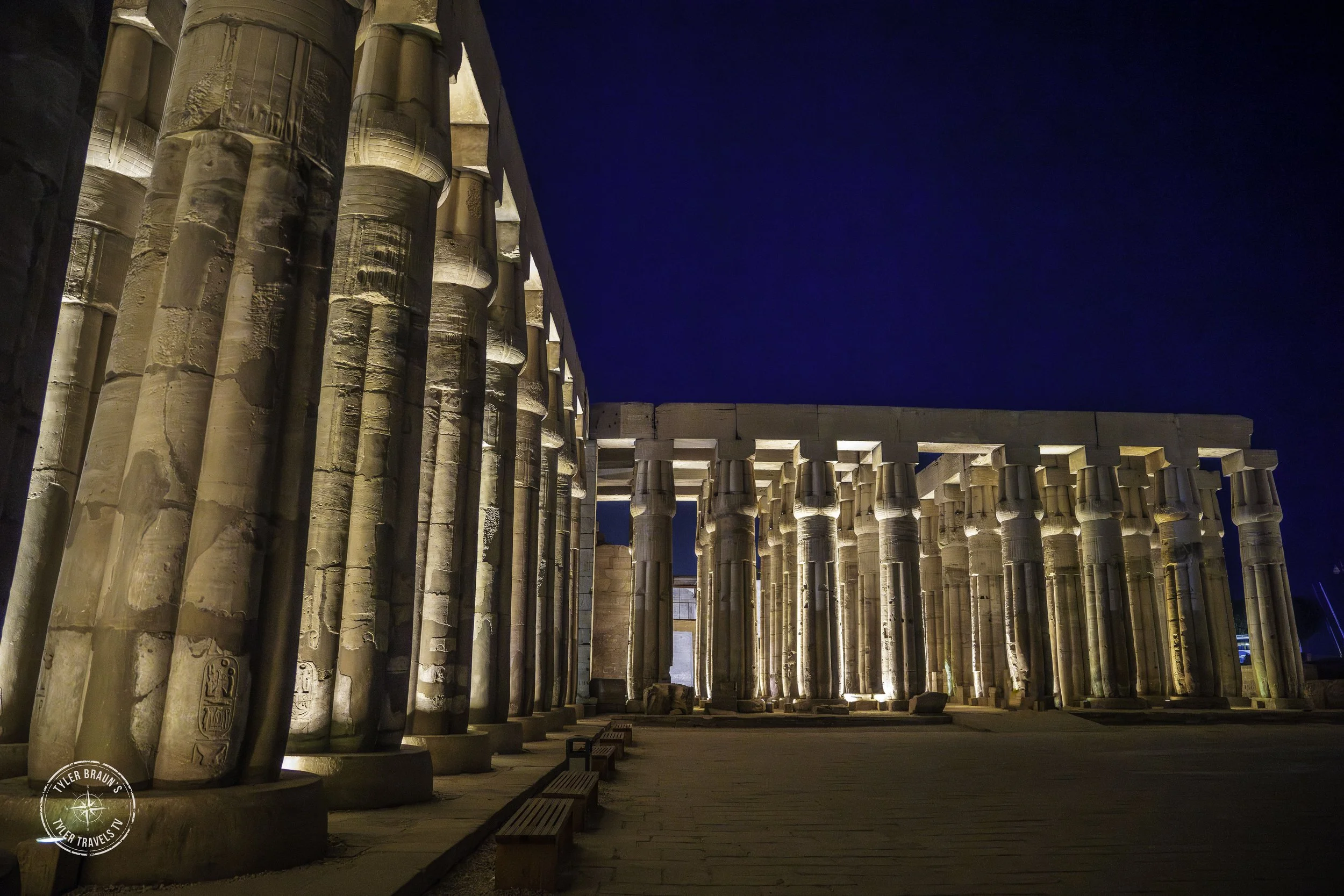
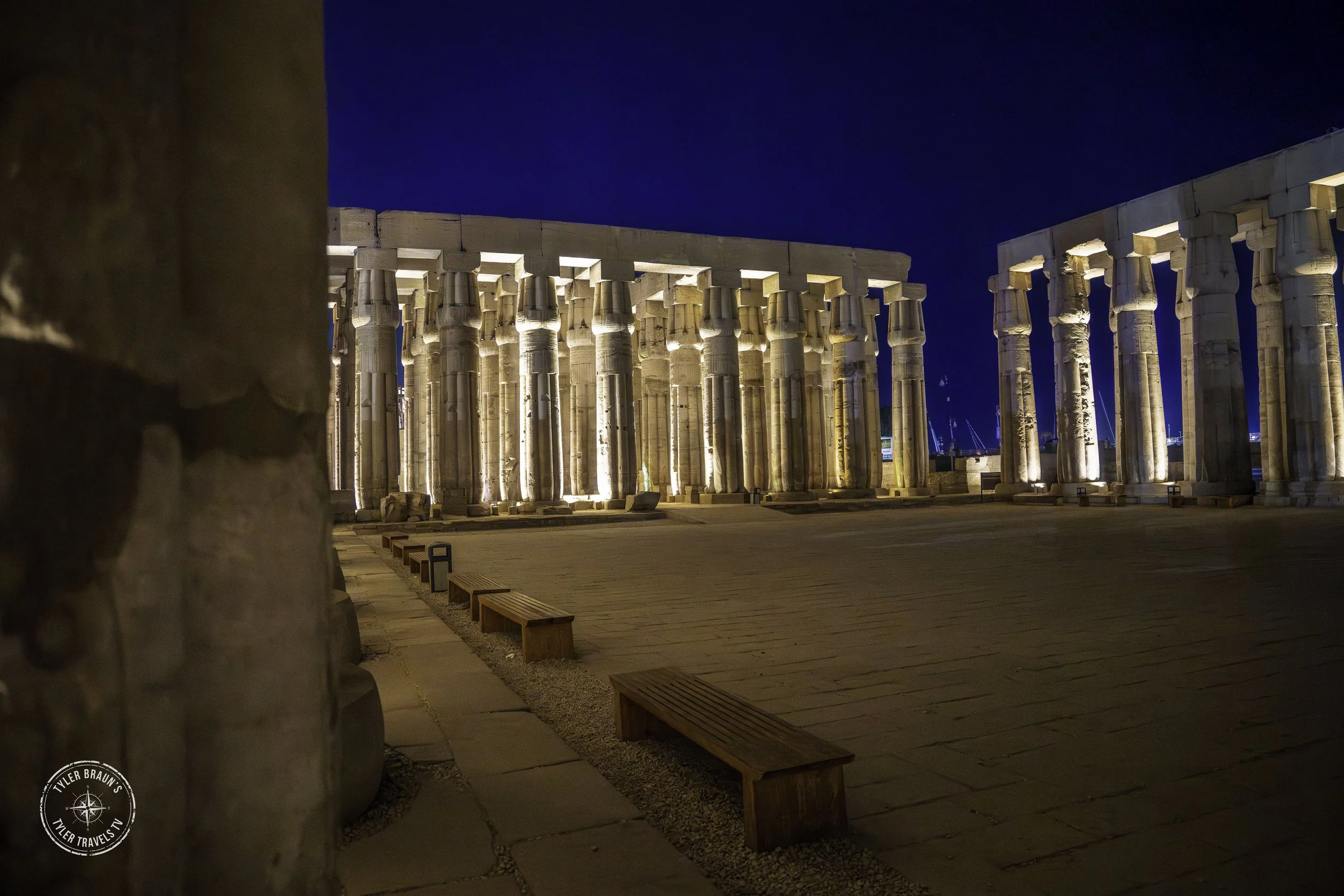
These columns were once buried under centuries of sand.
As was the case for many ancient monuments in Egypt, for centuries, this entire temple was buried under sand. Today, a 13th-century mosque perched inside the complex quietly illustrates this story for you. Its doorway sits high above the ancient stone, seemingly awkwardly elevated—until you realize that, for a long time, this mosque was simply sitting on top of this forgotten temple from which you now stare.
It’s one of those moments in Egypt where you see with your own eyes the layers of history stack up: ancient pharaohs, ransacking Romans, early Christians, medieval Muslims, and now tour buses and souvenir stands, all using the same patch of ground in completely different ways. But one thing remains the same—we humans show up and gawk.
Layers of History
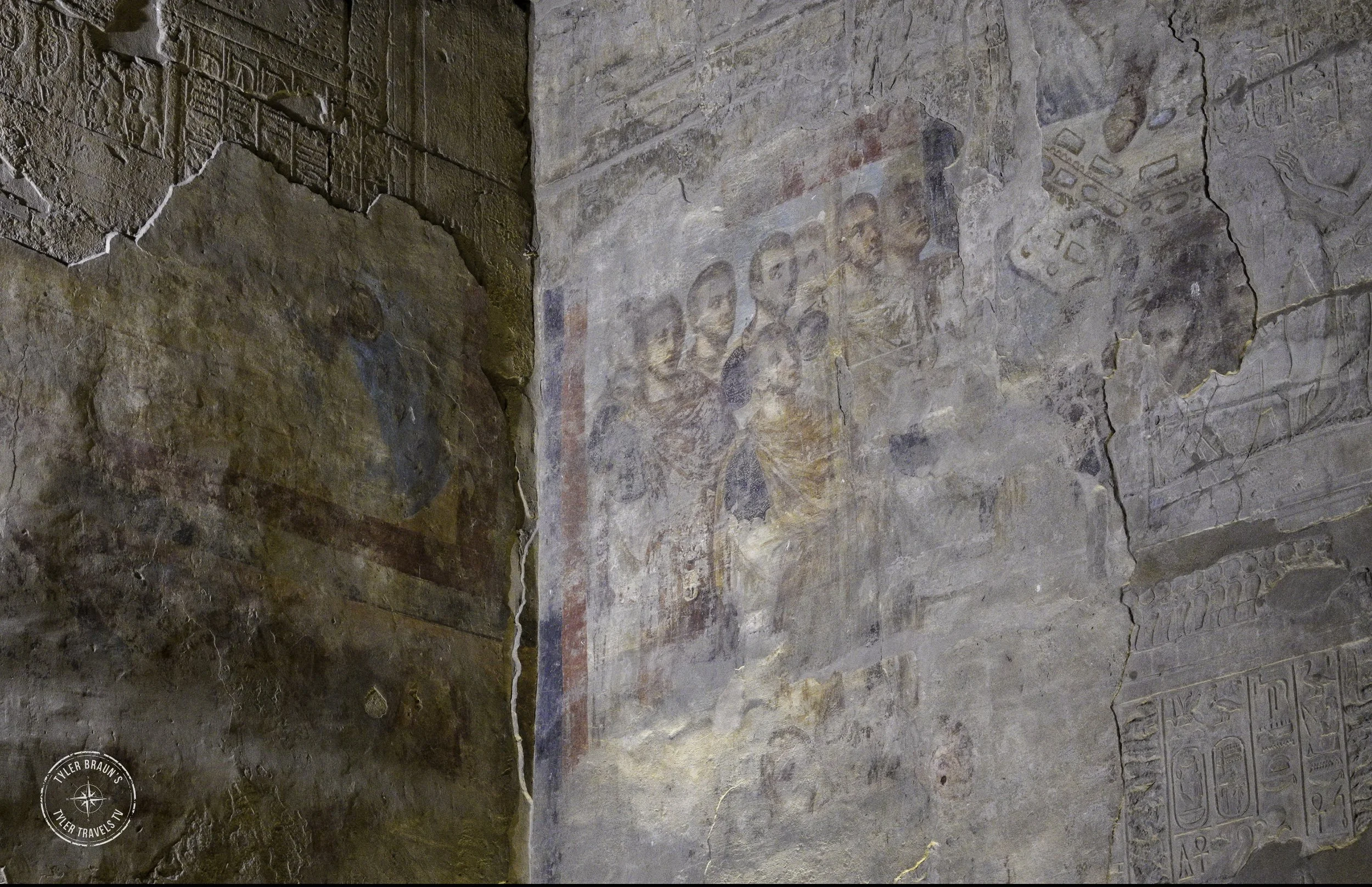
Roman frescoes peeling and revealing Egyptian hieroglyphs underneath.
Luxor Temple was constructed primarily by Amenhotep III and Ramses II, a theme you’ll find throughout all of Egypt. But other ancient pharaohs, Alexander the Great, the Ptolemies, and even the Romans all added their touch to this temple through the centuries. In the middle of the temple, you’ll find the astounding hypostyle hall filled with dozens of towering papyrus columns. Depending on where you are in your travels across Egypt, your eyes may begin to gloss over at the hieroglyphs and columns, as temple after temple, they begin to run together. But take a moment here and scan the reliefs - find details you may have missed at first glance.
Around the 4th century AD, the Luxor temple was occupied by the Romans, and they did their best to cover up the ancient pagan symbolism. They converted some antechambers into a church, plastered over the Egyptian hieroglyphs and painted their typical Roman frescoes on top. Nearly two thousand years later, much of that Roman paint has flaked away, but the older Egyptian reliefs hidden behind it are still here, stubbornly outlasting the empire that tried to erase them.
Ancient Luxor in the Modern City
Luxor Temple is located right in the heart of modern Luxor. It’s a funny contradiction as you walk through, surrounded by ancient columns and statues that are thousands of years old, and then you turn your head, and see modern conveniences right outside. A relief carved by an ancient worker can be in your eye line at the same moment as a pair of Golden Arches.
Luxor was once the capital of Egypt. Back then, it was called Thebes, and from about 1550 - 1069 BCE, it was one of the most important cities in the ancient world. The city’s Arabic name, Al-Uqsur, means either “the palaces” or “the fortifications,” and it’s the root of the modern name Luxor.
Walking the Avenue of the Sphinxes
1,057 sphinxes make up the incredible Avenue of the Sphinxes, linking the temples at Karnak with the Temple of Luxor.
In ancient times, the temples of Karnak and the Temple of Luxor—about two miles apart—were connected by the incredible Avenue of the Sphinxes. For centuries, this processional road lay buried and broken. After 70 years of excavation and restoration work, that ancient walkway finally reopened in November 2021.
Today, for the first time in roughly 3,000 years, modern travelers can walk from Luxor to Karnak along this same pathway. Lining the road are 1,057 statues: 807 human-headed sphinxes and 250 ram-headed sphinxes, guiding you between two of Egypt’s most important temples.
It’s one of those rare experiences that actually lives up to the hype. Standing here at Luxor Temple, with Ramses II at your back, the city at your side, and the Avenue of the Sphinxes stretching off toward Karnak, it’s hard not to feel like you’re straddling multiple timelines at once—ancient and modern Egypt converging in a single place.
Watch the Video
Gallery





Travel Store
Visit my travel store for my travel essentials!

People Mover Travel Agency
Work with the incredible travel advisors at my travel agency, People Mover Travel. For 10 years, we've been making traveler's dreams come true. We are experts in destinations worldwide including Alaska, Disney Parks, Europe, Cruises, All-Inclusive Resorts, Hawaii, Asia and more! Find out how we can personally help you plan & book your next trip for FREE!

Where are you heading?
Check out my Destination Page for travel tips, must-see sights, and hidden gems from all over the world. Start your adventure today!
Related Blog Posts


Recent Blog Posts
The Valley of the Kings is the place where the world changed what it thought it knew about ancient Egypt.