
Karnak Temple Complex, Egypt
A Massive Ancient Temple Complex in Modern Luxor
To walk through Karnak is to take a stroll through more than a thousand years of Egyptian history.
To give you a sense of how absolutely massive these columns are, it takes twelve tourists, arms fully outstretched, to wrap around a single one.
The Modern City of Luxor
Hot air balloons take flight over modern Luxor.
Luxor was once the capital of Egypt. In ancient times, it was called Thebes, and from about 1550 - 1069 BCE, it was the most important city in the ancient world. Today, the city is often described as the “world’s largest open-air museum”, a title it justly deserves.
This place packs a punch when it comes to ancient sites. It’s home to the temples of Karnak and Luxor, to the Valley of the Kings, to the Ramesseum, the Colossi of Memnon, Dier el-Medina, and the temples of Hatshepsut - just to name a few. Even the ancient Romans and Greeks came here to stand in awe of these Egyptian marvels.
And right at the heart of it all sits one of the most impressive temple complexes ever built: Karnak.
Stepping Into the Temple of Karnak
Ram‑headed sphinxes standing guard as they have for thousands of years.
In the heart of modern Luxor, you’ll find the temples of Karnak, dedicated first and foremost to the god Amun-Re. Notice I said “temples” and not “temple”. That is not a typo. Though it is often referred to as the “Temple of Karnak”, there are many temples located here. In fact, Karnak is an absolutely massive temple complex that would easily fit St. Peter’s Basilica from Rome AND St. Paul’s Cathedral from London within its walls.
You approach along a processional path lined with dozens of ram‑headed sphinxes, standing guard as they have for thousands of years (read more about them in my post about the Temple of Luxor). They lead you straight toward towering pylons that immediately make you feel small—in the best possible way. It’s theatrical, and that’s sort of the point. You’re meant to feel like you’re entering the domain of gods and kings.
To walk through Karnak is to take a stroll through more than a thousand years of Egyptian history. As a general rule, the further in you go, the older the buildings. Every layer, another dynasty, another pharaoh, another god. Note that this complex is called the “Karnak Temples” (plural), not “Karnak Temple” (singular), because there are multiple temples here.
As you walk through these ancient halls, sanctuaries, statues, pylons, and obelisks, you get an overwhelming sense of wonder. This is ancient Egypt at its most monumental.
The Great Court
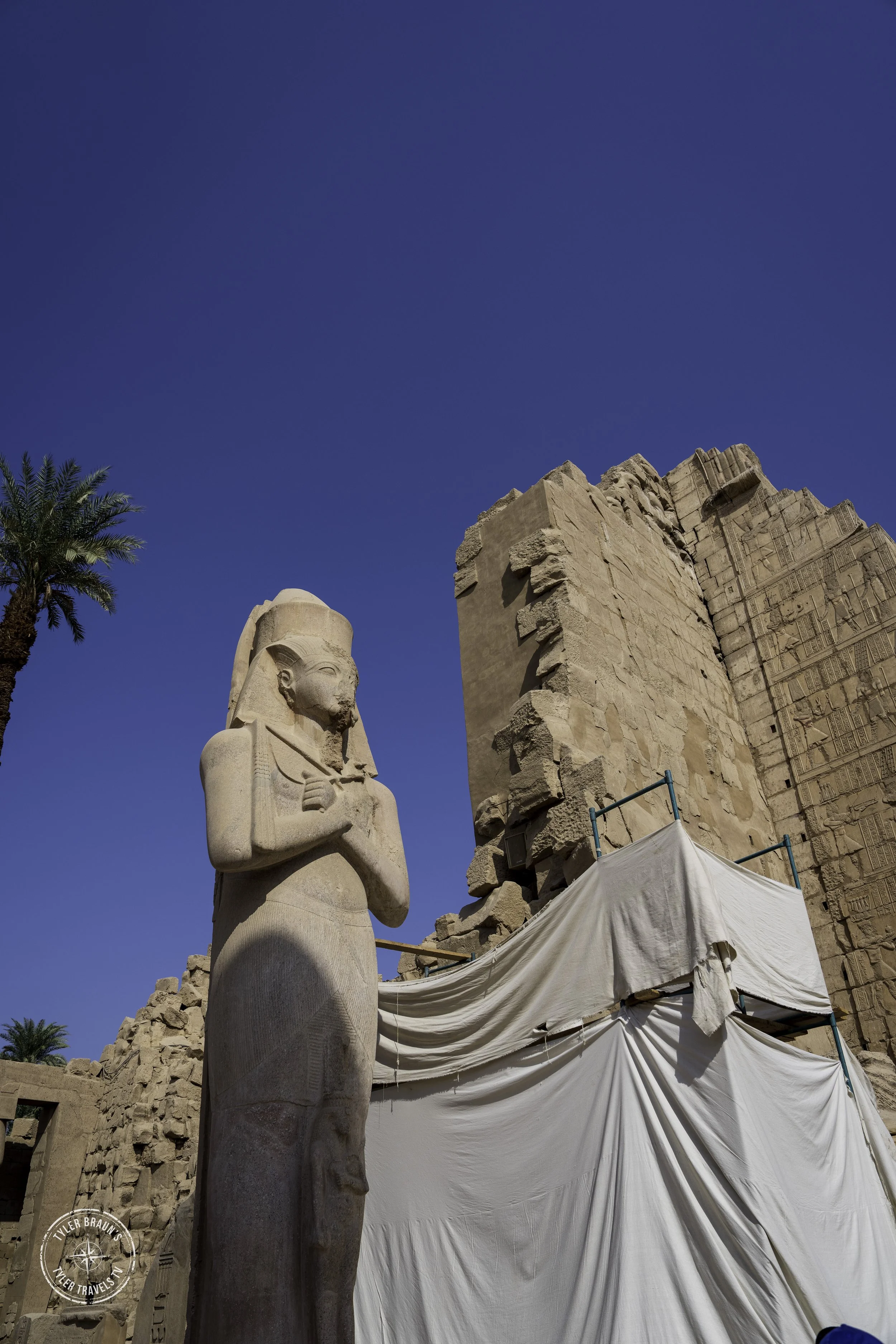
Statue of Ramses II in the Great Court of the Karnak temple complex.
The largest area of the complex, the Great Court once stood just beyond the entrance. All that’s left of it now are fragments— some ram-headed sphinxes, a single column (the last of ten that once stood here), and a statue of Ramses II.
When you first enter the Great Court, to the right, built up against the wall, there is a small hill of sorts made out of mud bricks and dirt. It looks as though it’s construction debris that’s simply not been cleaned up. It, however, has ancient roots. This ramp is how ancient Egyptians built their high walls— by piling up ramps of mud brick and earth, dragging stones up, and then dismantling the ramps when they were done. It’s a little clue that hints at how they may have built so many of their monumental sites, possibly even the pyramids.
A Forest of Stone: The Great Hypostyle Hall
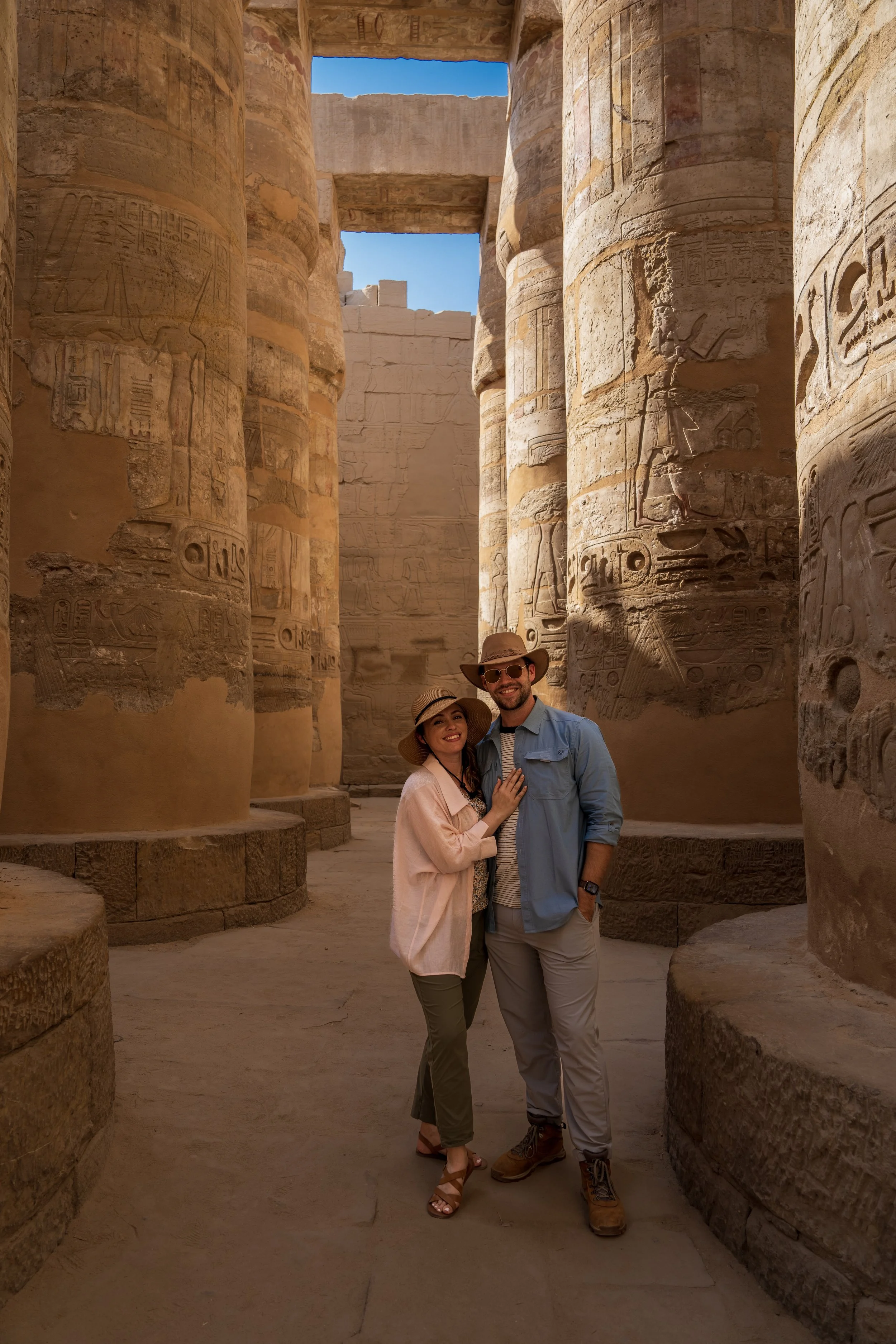
It’s fun to get a little lost in the forest of columns.
Beyond the Great Court is the most impressive area of Karnak that still stands: the Great Hypostyle Hall. One hundred and thirty-four colossal columns create a forest of stone. Each column is covered in hieroglyphics, and each is topped with the shape of the papyrus plant. In ancient times, these columns were a symphony of color. Little of that color remains today, but if you look closely, you can still spot traces of it clinging to the sides of the columns.
When the Nile flooded, this area would be filled with several feet of water. Combine that with the fact that the hall once had a roof, and you begin to understand the original atmosphere here: dark, shadowy, and swampy, like the banks of the Nile where papyrus grew thick.
To give you a sense of how absolutely massive these columns are, it takes twelve tourists, arms fully outstretched, to wrap around a single column.
It’s fun to get a little lost in here. If you can, give yourself a few minutes here without a guide talking in your ear. Let the group drift ahead. Stand in the middle of the hall, stare straight up, and imagine this space lit by flickering torches, painted from floor to ceiling, echoing with ritual chants and the sound of sandals on stone. Take your time, and wander through the columns. Crane your neck and observe the intricate etchings. Find a little space to be alone, and soak in the wonder that is the Great Hypostyle Hall at Karnak.
Amenhotep, Akhenaten, and a Kid Named Tut
One of the only female pharaohs we know of, Hatshepsut, built this towering obelisk in Karnak, the tallest in Egypt.
Here’s a very short lineage for you to ponder while you wander. Over the centuries, several different pharaohs led major construction projects at Karnak. One of the biggest contributors was Amenhotep III. He added extensively to the complex here, and across the Nile—near what we now call the Valley of the Kings—he built another temple complex even larger than Karnak. It was the largest temple ever built in Egypt. Very little of it survives today, except for the two massive statues we now call the Colossi of Memnon.
Amenhotep III’s son, Amenhotep IV, had very different ideas. He eventually changed his name to Akhenaten and is often known as the “Heretic Pharaoh” because he tried to upend the entire religious system of ancient Egypt. Instead of worshiping many gods, he pushed the worship of a single god, Aten, the sun disc. He also introduced a completely new style of art and architecture, which you can see clearly if you compare his statues to those of earlier pharaohs.
Now, why am I telling you all of this? Because Akhenaten’s son and successor was a little guy named Tutankhamun, or King Tut, who no one would likely have known, except for the fact that Howard Carter found his tomb in 1922, and he is now the most famous pharaoh that ever lived.
Amenhotep III, Akhenaten, and King Tut were far from the only pharaohs that built on Karnak. One of the only female pharaohs we know of, Hatshepsut, built a towering obelisk in Karnak, the tallest in Egypt. Seti I and the great builder himself, Ramses II, added the hypostyle hall with its 134 columns. Dozens of other pharaohs slowly added, removed, rebuilt, and enhanced this complex, culminating in this patchwork of courts, temples, obelisks, and statues.
The Holy of Holies and sacred Lakes
The innermost sanctuary, commonly referred to as the Holy of Holies, was the most sacred place in all the temple. Only the Pharaoh or the high priest was allowed to enter here. It was in this room that ancient priests would daily come and honor a statue of Amun-Re.
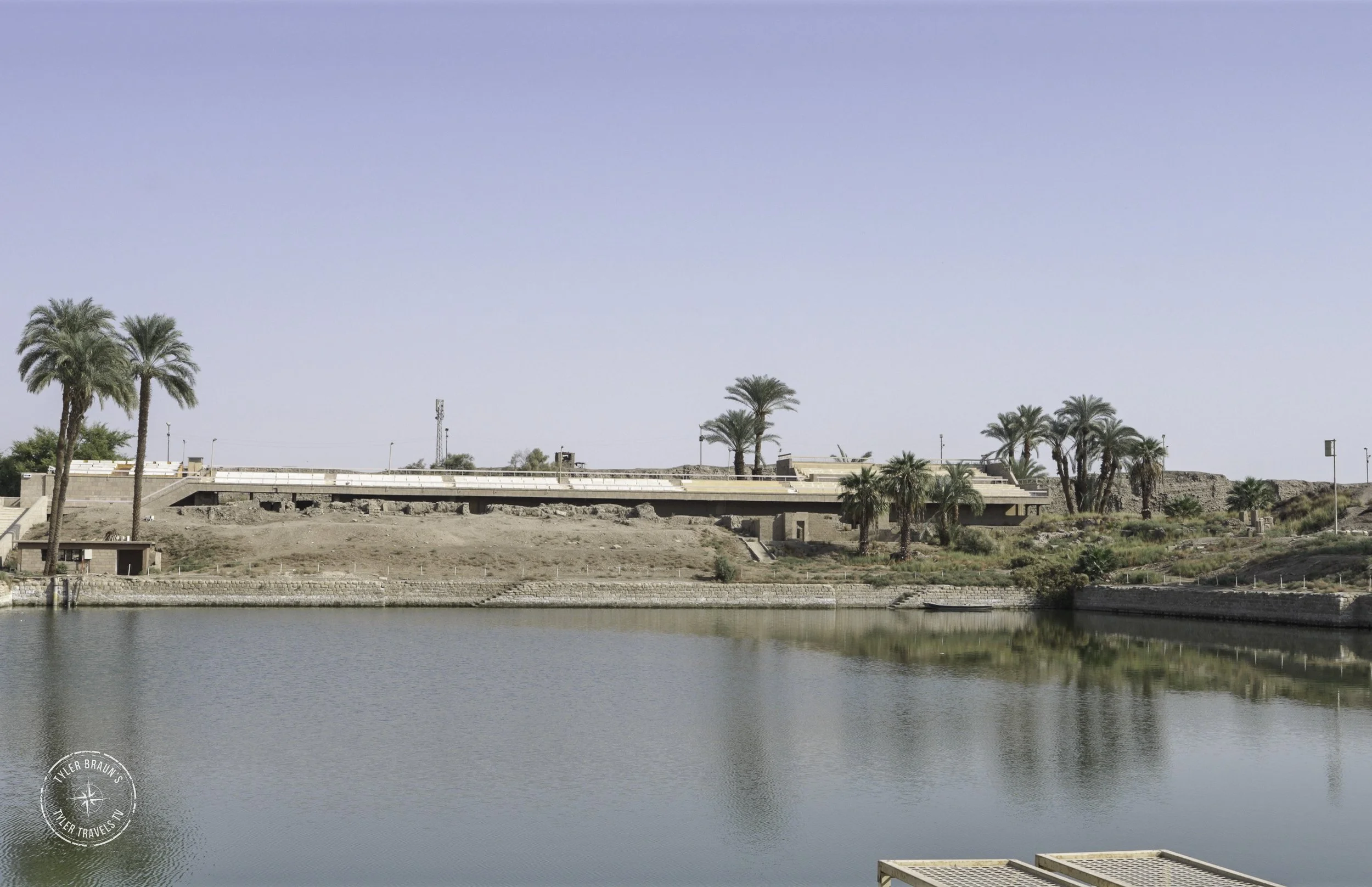
Sacred Lakes, such as the one in the back of the Karnak complex, were both sources of water for drinking and for use in purification rituals by priests.
A Quirky Scarab and the Spy Who Loved Me
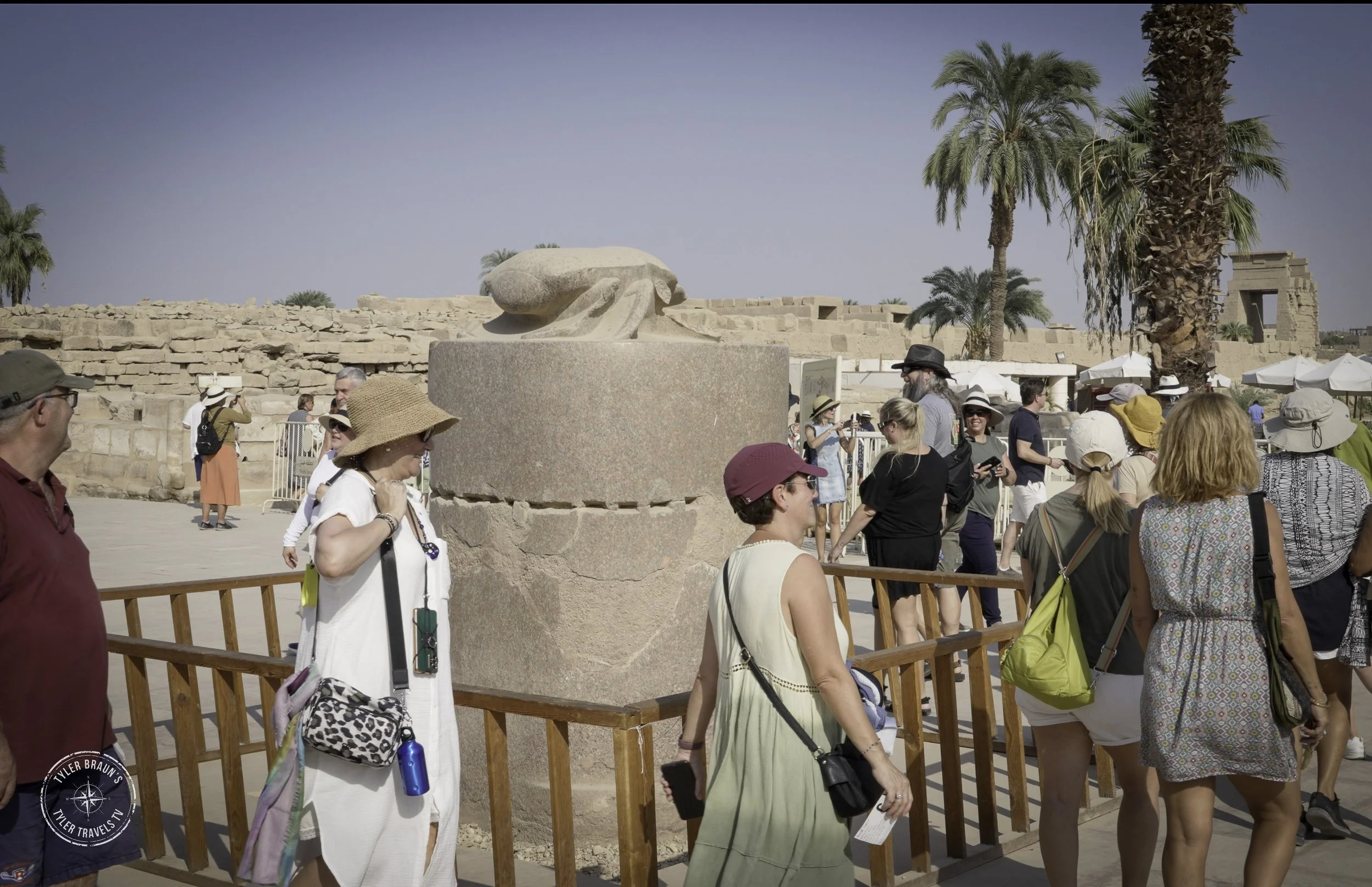
It’s not all serious ancient history here. There are also some fun, more modern happenings here at Karnak, and some downright idiosyncratic features. One of the more quirky figures at Karnak is the scarab beetle statue. Legend has it that if you walk around it 7 times, counter-clockwise, you’ll have good luck and prosperity.
Fans of the 1977 James Bond movie, “The Spy Who Loved Me” with Roger Moore might also recognize Karnak. There was a whole scene filmed here in the temple where he and Triple X are pursued by the henchman Jaws through the Hypostyle Hall and elsewhere through the temple. That movie also has other locations in Egypt like the Pyramids in Giza and Abu Simbel!
Watch the Video
Gallery





Travel Store
Visit my travel store for my travel essentials!

People Mover Travel Agency
Work with the incredible travel advisors at my travel agency, People Mover Travel. For 10 years, we've been making traveler's dreams come true. We are experts in destinations worldwide including Alaska, Disney Parks, Europe, Cruises, All-Inclusive Resorts, Hawaii, Asia and more! Find out how we can personally help you plan & book your next trip for FREE!

Where are you heading?
Check out my Destination Page for travel tips, must-see sights, and hidden gems from all over the world. Start your adventure today!
Related Blog Posts


Recent Blog Posts
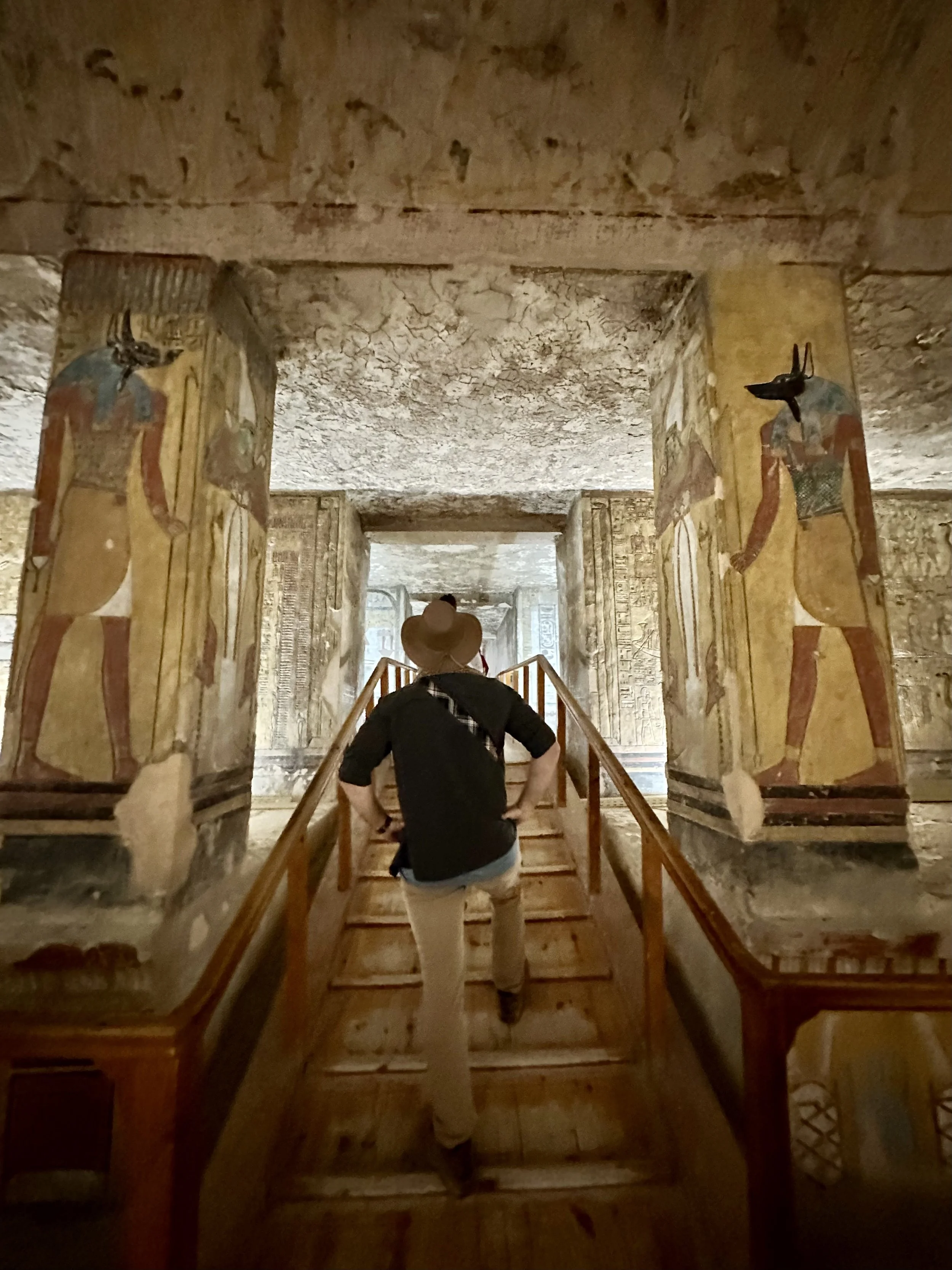
The Valley of the Kings is the place where the world changed what it thought it knew about ancient Egypt.