
Valley of the Kings
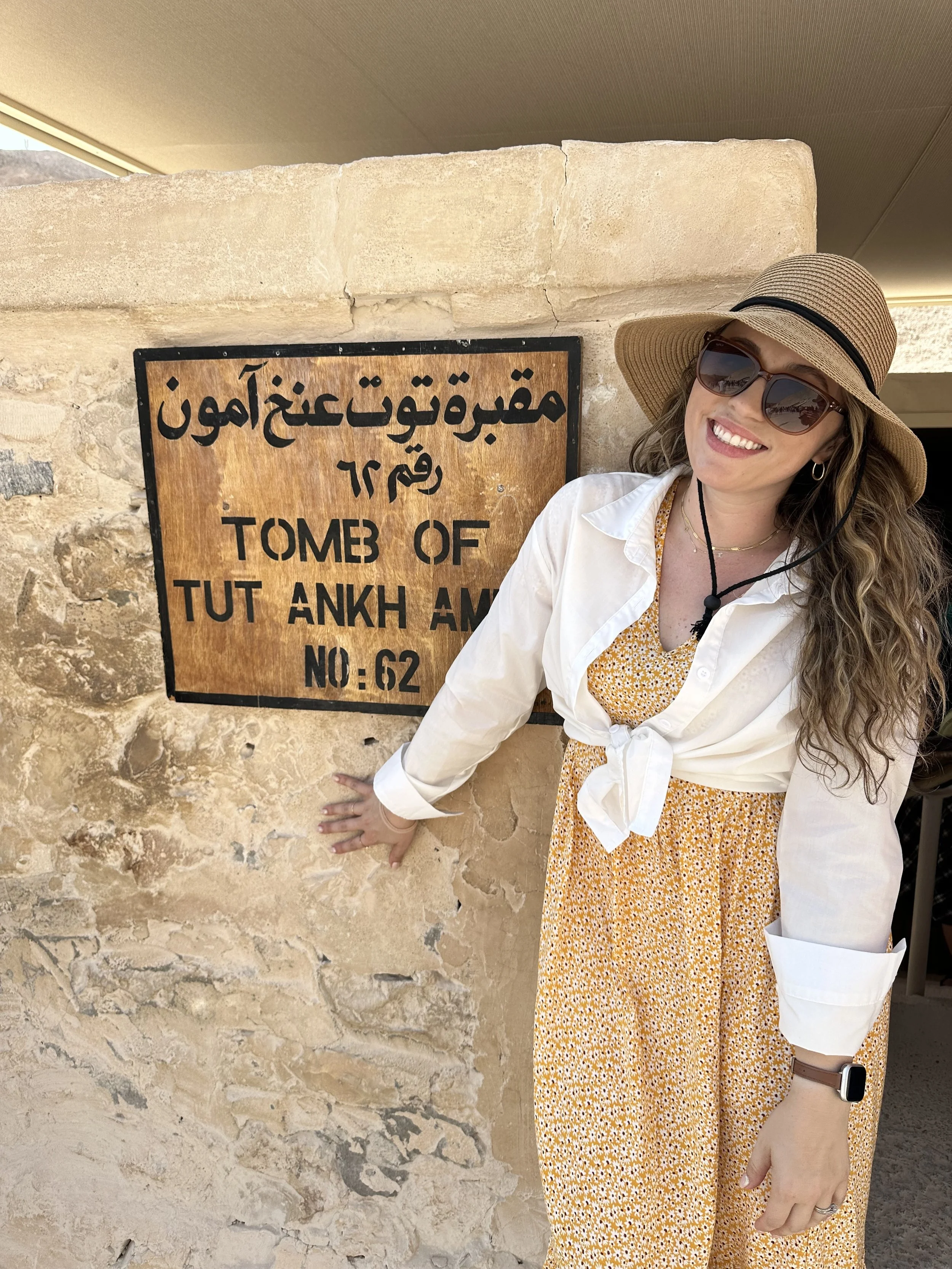
Located on the west bank of the Nile, across from the modern-day city of Luxor, the Valley of the Kings is the place where the world changed what it thought it knew about ancient Egypt. Most famously, it was here that a man named Howard Carter, in 1922, discovered the tomb of Tutankhamen, better known as King Tut.
Hot air balloons hover midair over the Valley of the Kings early in the morning, as seen from Luxor.
In Luxor, on the west bank of the Nile, other than the occasional small village, it’s mostly open space and vast desert.
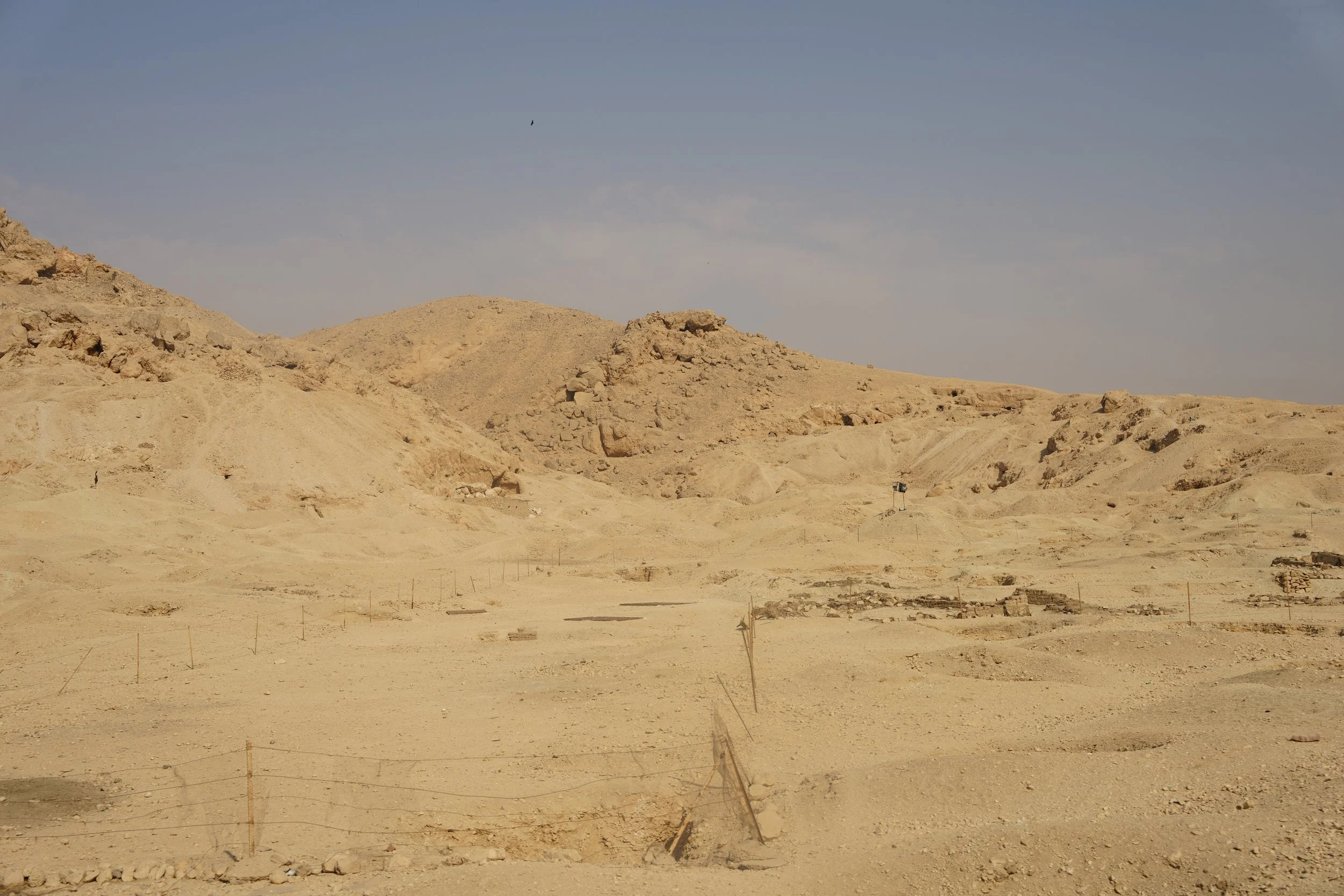
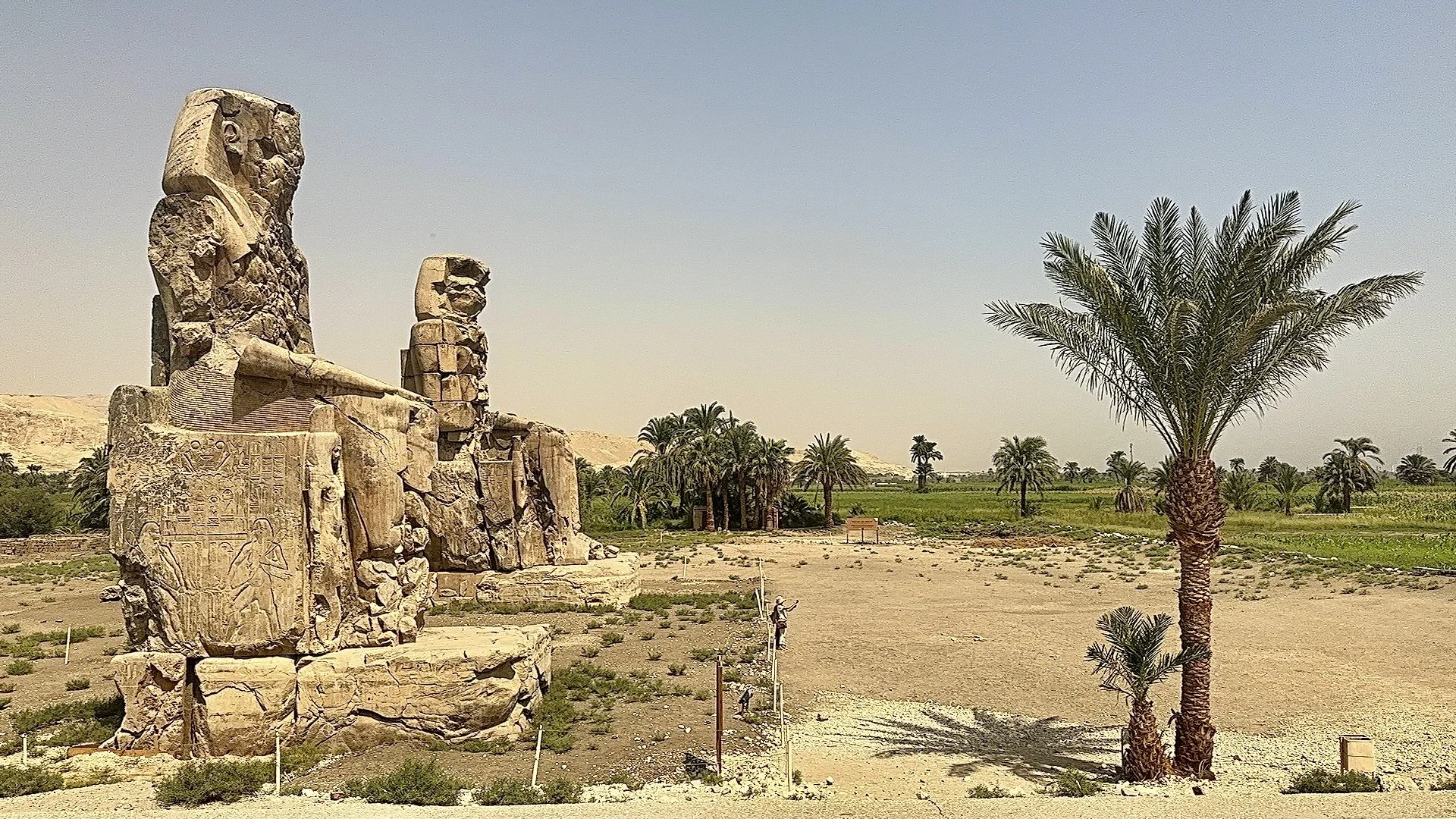
The east bank of Luxor is home to the ancient temples of Karnak and Luxor, along with the modern city of Luxor. But on the west bank of the Nile, other than the occasional small village, it’s mostly open space and vast desert. In ancient times, one of the largest temple complexes in the world stood here, although nothing of that complex still stands with the exception of the Colossi of Memnon. Scattered remains of old temples can still be found, and as you’re driving, you can still see active archaeological digs happening throughout the region.
But for the most part, there’s not a lot over here but remote, unforgiving, barren desert. That made this the perfect hiding spot for the ancient pharaoh’s most important treasure …themselves.
From Giant Pyramids to Hidden Tombs
Even today, the pyramids can be seen from miles away from all over modern Cairo. A veritable beacon for thieves and tomb raiders.
The story of the Valley of the Kings really starts many miles away, with the first pyramids in Saqqara, a small area near Giza. As you likely know, early pharaohs built massive pyramids for themselves: starting with the pharaoh Djoser who, along with his architect, Imhotep, built the Stepped Pyramid. Next was the Bent Pyramid (they just couldn’t get the math right on that one), and finally they nailed it with the Great Pyramid of Khufu. What you might not know is that these weren’t just monuments—they were meant to be eternal resting places. That’s right— the pyramids are all tombs. Or, at least, that was the plan.
When a pharaoh died, he would be buried deep inside his pyramid, surrounded by treasures and objects he hoped to take with him into the afterlife. The entrance would be sealed, and in theory, that should have been the end of the story.
But there was a problem. These pyramids, you see…well, they stick out a little bit.
Towering above the desert, pyramids acted like beacons for thieves and tomb raiders. A flashing neon sign to grave robbers saying, “Treasures Within!” Almost immediately, people began sneaking in and stealing the pharaohs’ treasures. Some experts even believe that the very workers who built the pyramids may have been the first to break back in—they knew exactly how to get inside.
For later pharaohs, this wasn’t just inconvenient; it threatened their entire vision of the afterlife. Ancient Egyptians believed they would literally use these objects in the next world, so being buried alongside their treasures wasn’t optional, it was a necessity.
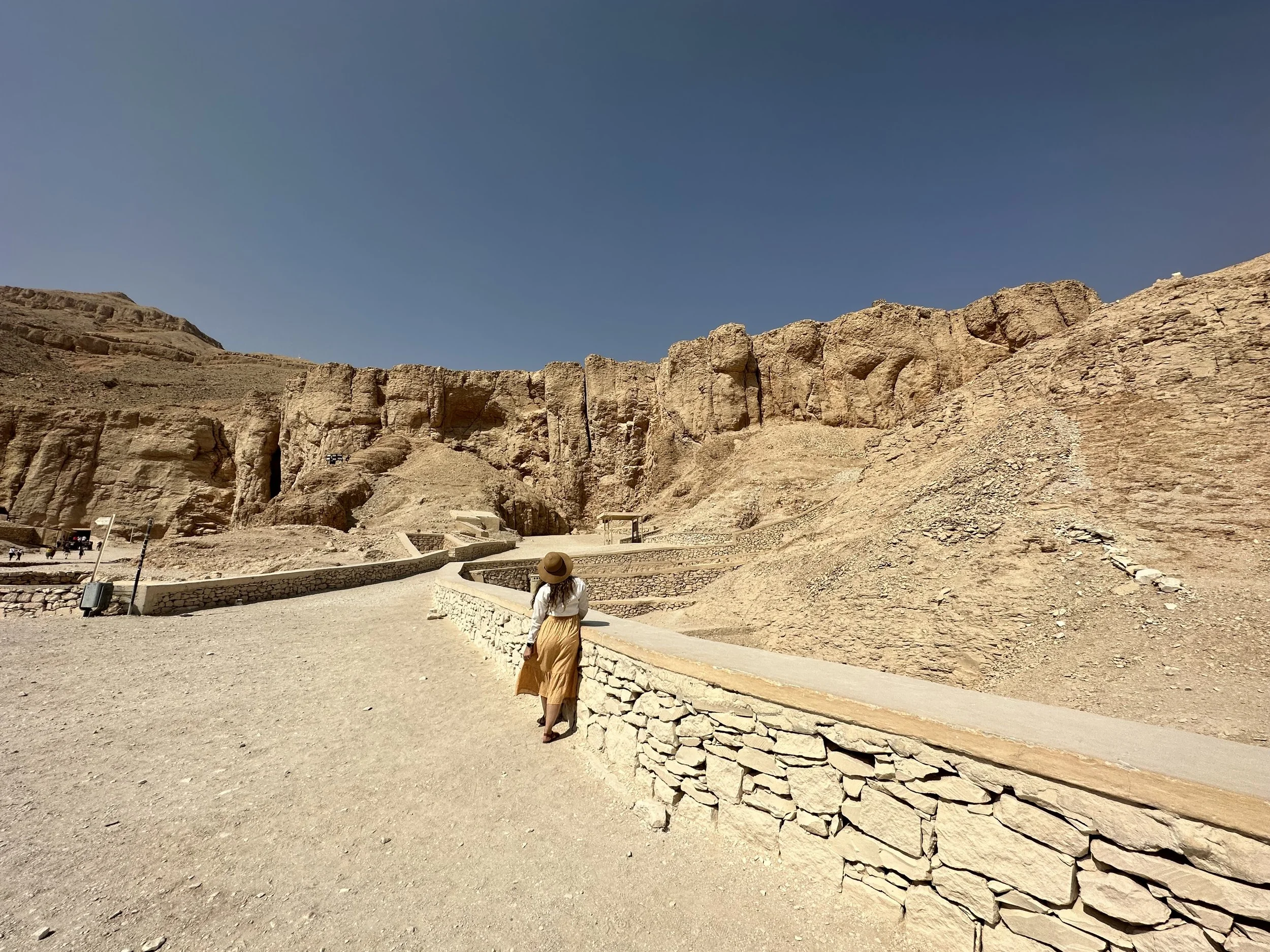
Around 1550 BCE, they decided to change the strategy. Instead of being buried in giant pyramids in the north, pharaohs began carving hidden tombs into the cliffs of ancient Thebes (modern Luxor). These tombs were meant to be invisible—cut into the rock, plastered over, covered with stones and sand. No grand entrances. No towering monuments. Just the desert.
Thus, we have the Valley of the Kings.
So far, more than 60 tombs have been discovered here, although some archaeologists suspect there are still more hidden in the cliffs waiting to be found.
A Valley Full of Hidden Tombs
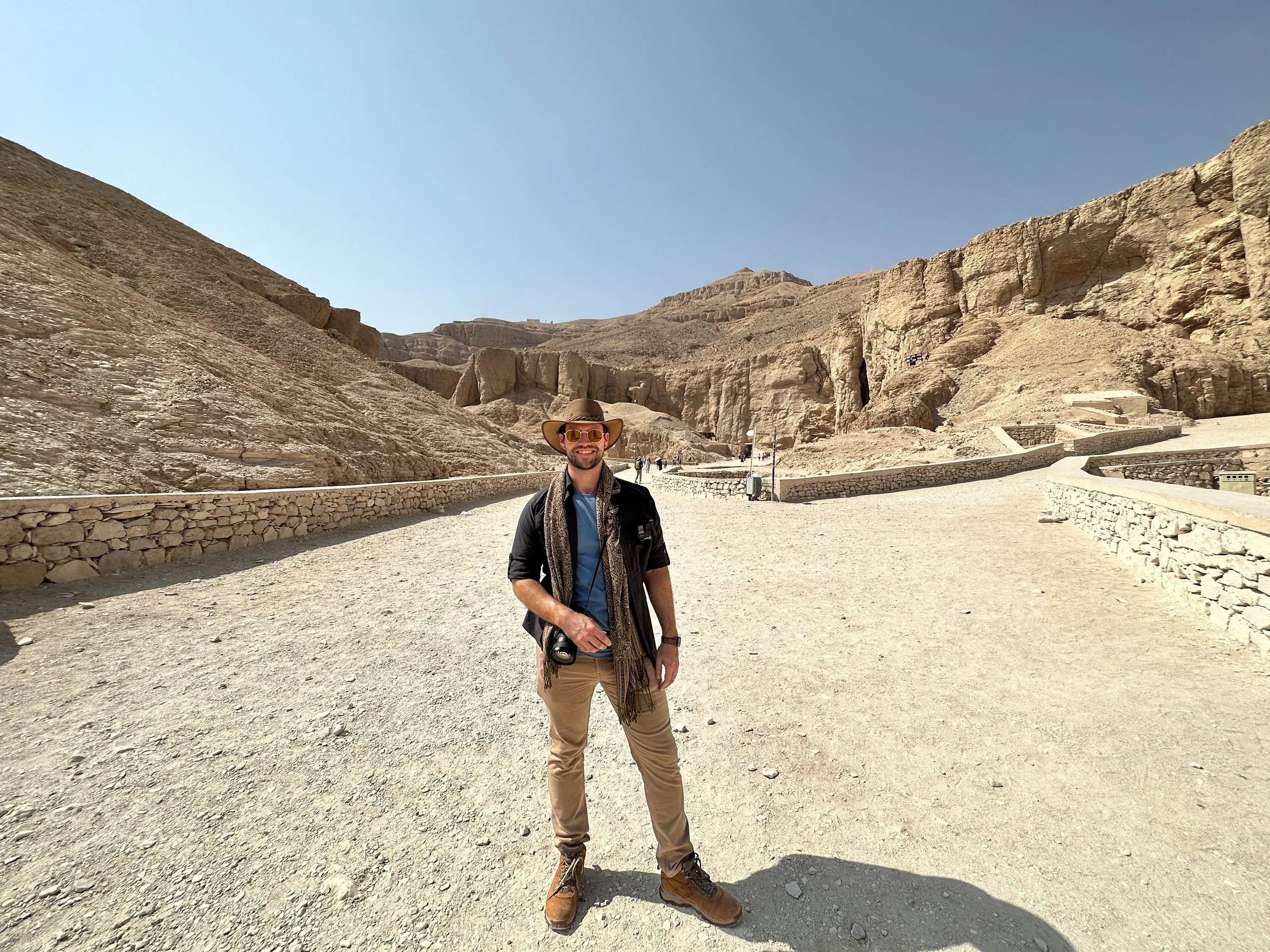
Standing in the middle of the Valley of the Kings, you can see how it would be hard to discern the entrances to the tombs in the cliffs. Unfortunately, it wasn’t hard enough.
Once a tomb in the valley was finished and the pharaoh was laid to rest inside, workers would seal it shut. The doorway was plastered over and then buried beneath rocks and sand until the entrance disappeared back into the face of the cliff. But unfortunately, for all the effort that went into hiding them, the pharaohs’ plan was done in vain.
Every tomb that has been opened in the Valley of the Kings has been found devoid of its original treasures. All of them except one. In 1922, a single tomb was found remarkably intact: the tomb of the Pharaoh Tutankhamun— better known as King Tut.
Descending into Tutankhamun’s Tomb
As you descend into the tomb of King Tut, it’s hard not to imagine Howard Carter and his British patron, Lord Carnarvon being here, opening the passage for the first time, peering into the dark, and seeing, in Carter’s words:
"Wonderful things!"
“Strange animals, statues, and gold—everywhere the glint of gold.”
It was from this very place that so much changed for Egypt, and for the world. It’s quite wild to think that the same short passage you’re shuffling down, shoulder to shoulder with other tourists, is where that very scene unfolded.
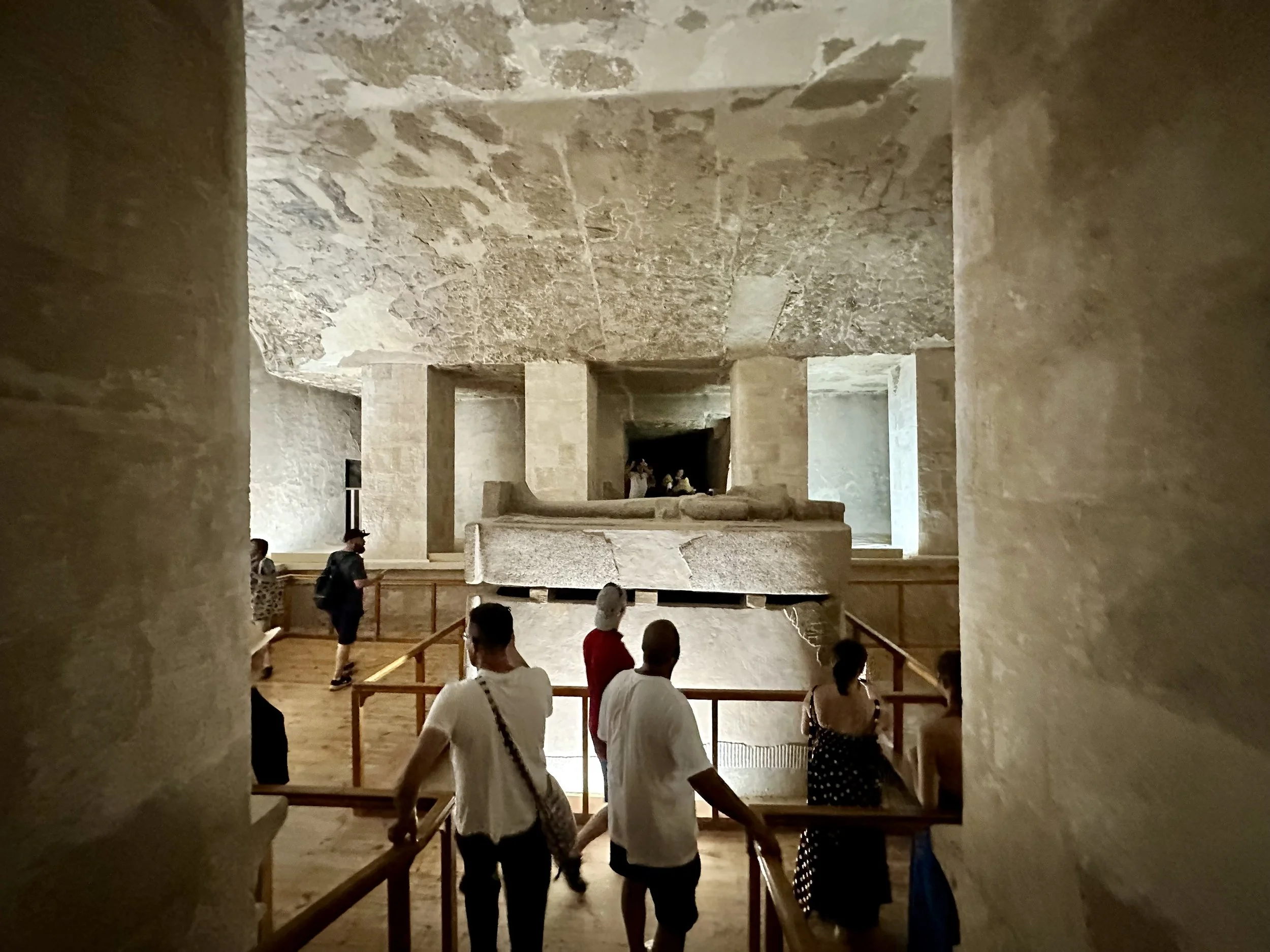
In person, the space itself is surprisingly small. For all the hype and history, the tomb feels almost modest. It’s packed with people, and it takes some imagination to picture what it must have looked like right after Carter broke through—filled wall to wall with treasures that hadn’t seen light in over 3,000 years.
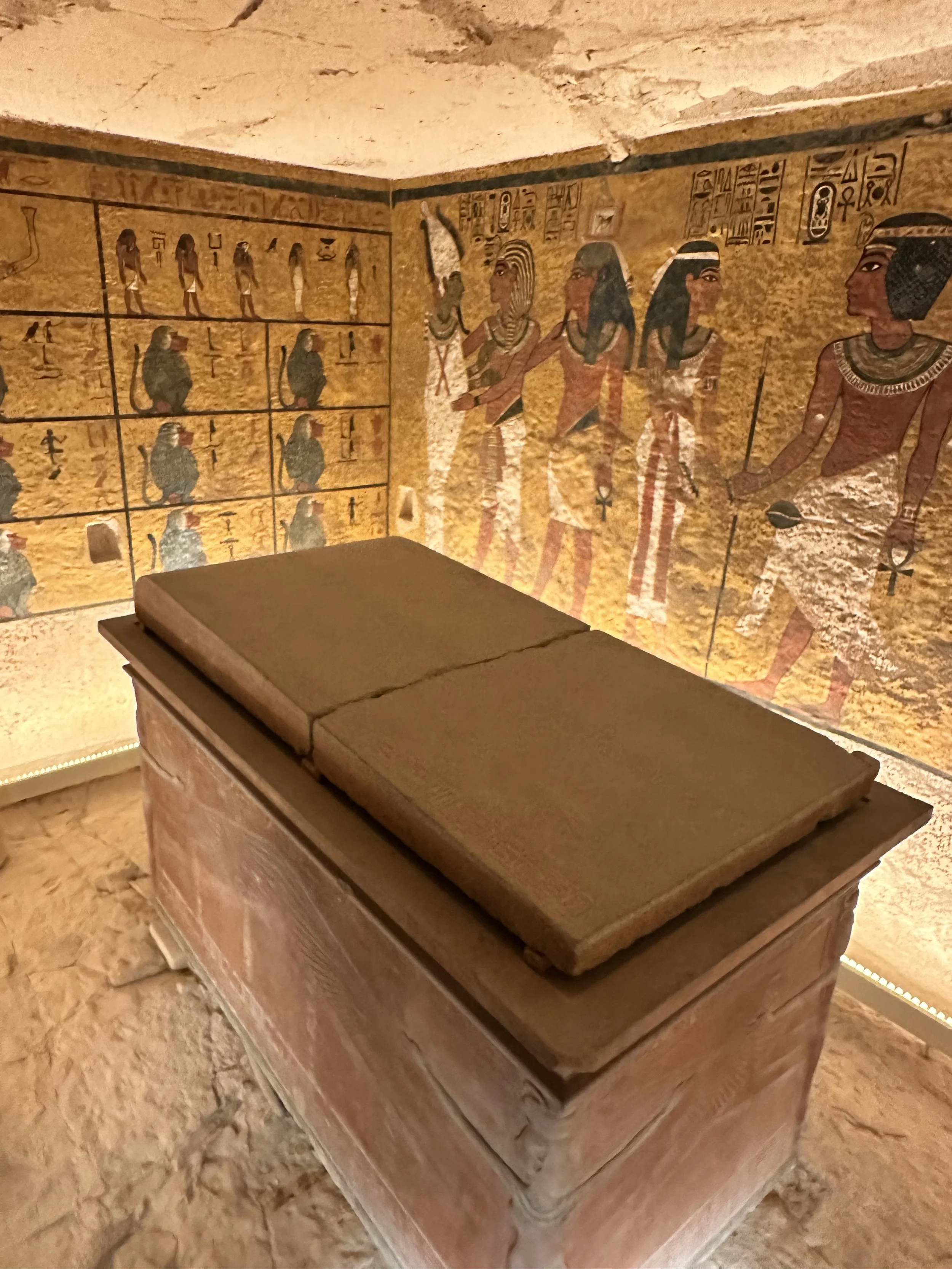
On one side of the burial chamber, you’ll find Tutankhamun’s sarcophagus, still in place. The walls around the burial chamber depict Tutankhamun, alongside images of the gods, performing various ceremonies in preparation for the afterlife.
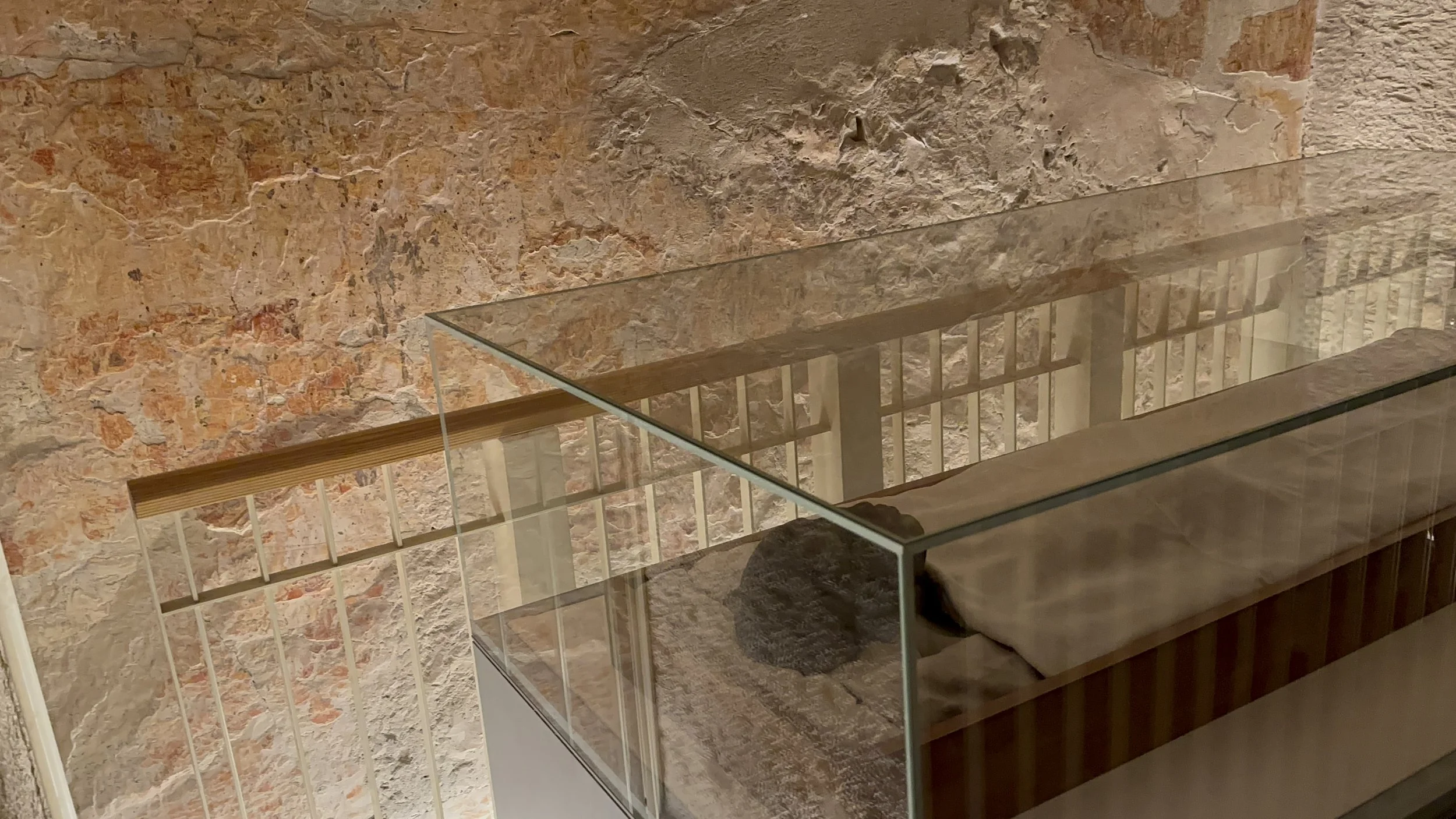
On the opposite side of the room, in a climate-controlled glass case, lies the boy king himself: the mummy of Tutankhamun. He is the only pharaoh in the Valley of the Kings who still remains in his tomb. All the others have been moved to museums in Cairo.
Tutankhamun is the only pharaoh in the Valley of the Kings still remaining in his original tomb.
The Tomb of Tausert and Setnakht
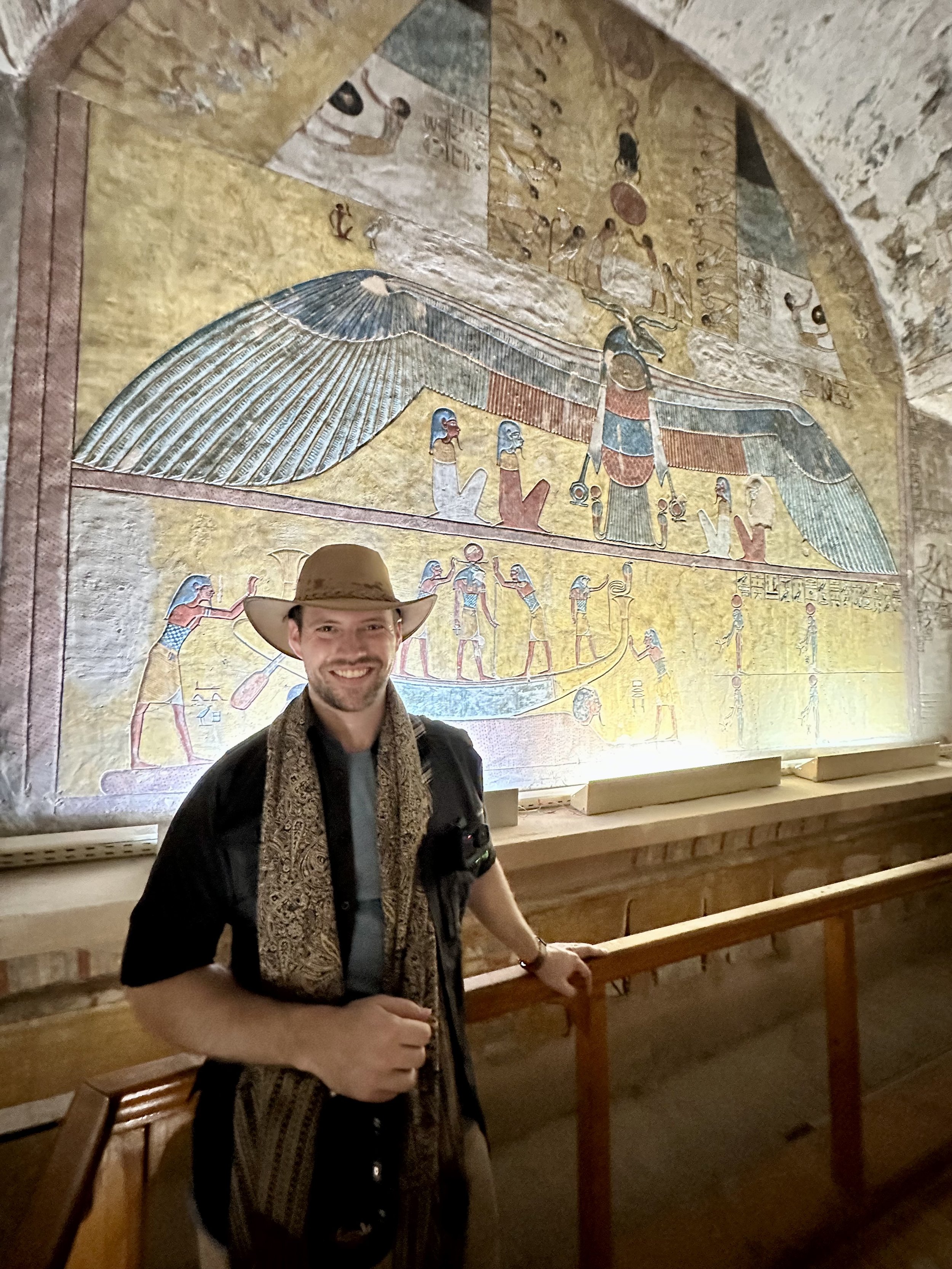
Jessica in the tomb of Tausert and Setnakht.
Every one of the tombs in the Valley of the Kings tells its own story.
Take the tomb of Tausert and Setnakht, for example. Tausert was the wife of Pharaoh Seti II, and after his death, she briefly ruled in her own right. She began building a tomb for herself here in the valley. But her successor, Setnakht, ultimately took that tomb for himself, ejecting her from her own resting place. Even in death, politics had the final say.
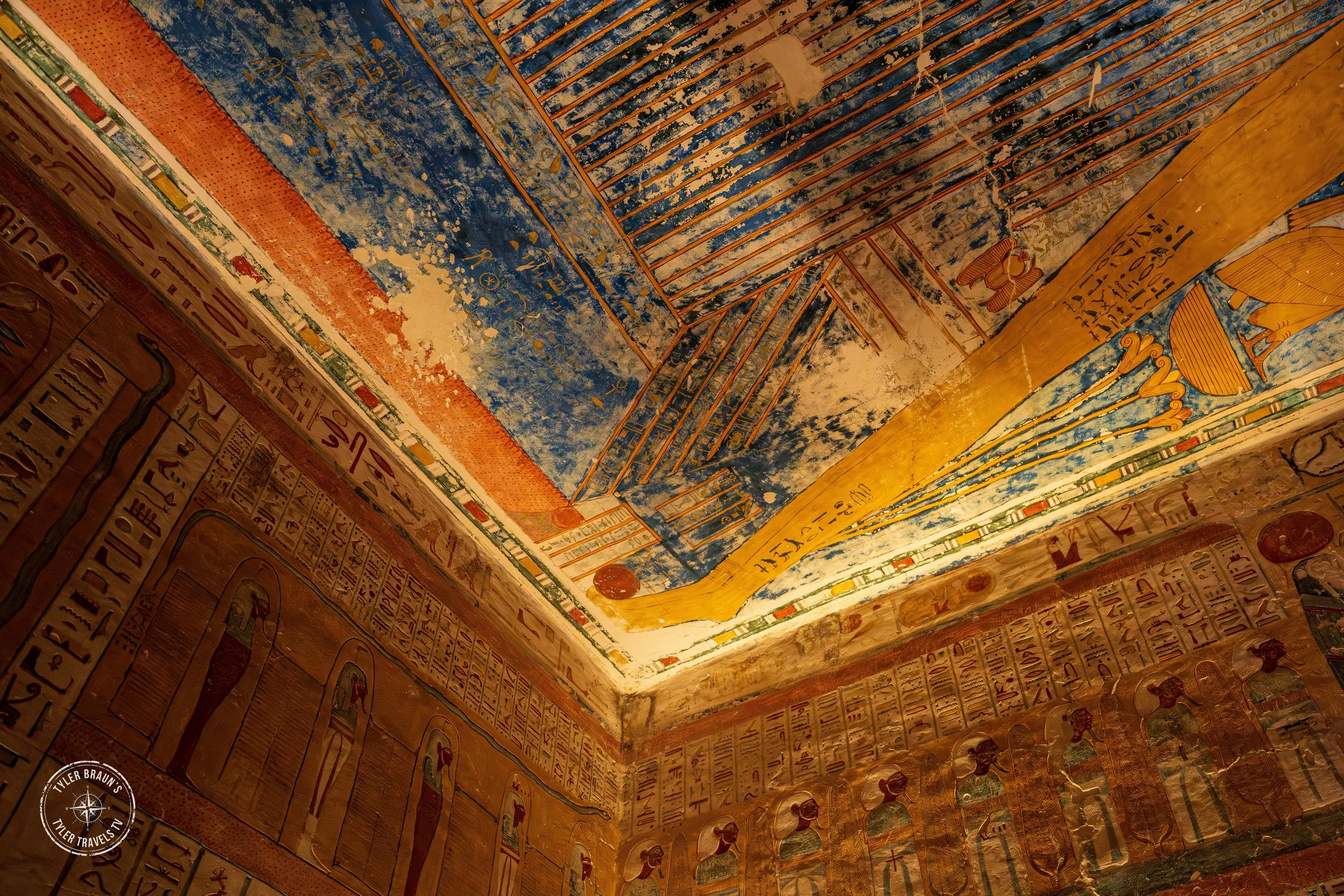
Color That Survived Millennia
Notice all the color in the wall behind me. When it hasn’t been battered by wind and sand for thousands of years, the paint withstands the test of time.
One of the most shocking things about the Valley of the Kings is just how colorful it is.
Because these walls were all buried underground, much of the color remains. All the ancient temples above ground would have been painted like this when they were first built, but sun, sand, wind, and time have slowly worn away that color over the last several thousand years. Here, you can get a sense of just how colorful ancient Egypt would have been.
It’s also fascinating that over the course of about 3,000 years, Egyptian art didn’t change much. You can look at something painted in 2500 BCE, 1500 BCE, or 500 BCE, and while all of them might look somewhat different, they would all still look like Egyptian art. You can’t do that in modern day. Looking at art from even a few hundred years ago and comparing it to today would be vastly different.
Egyptian artists painted and carved walls using a grid system. First, someone would mark out the wall with lines, then artists would paint within that framework. It kept the proportions consistent from one era to another.
Rameses IV: A Tomb Turned Hotel
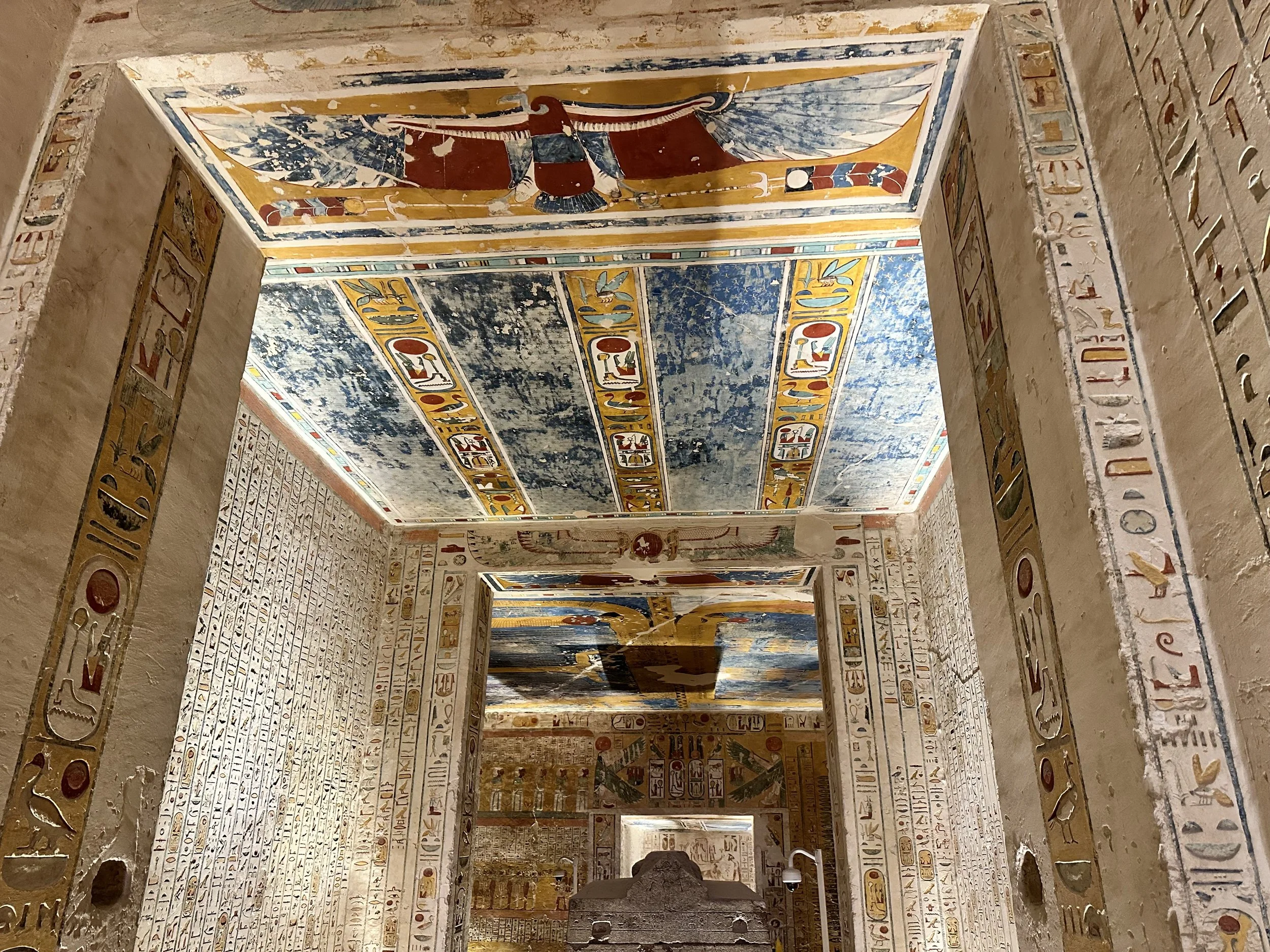
The tomb of Rameses IV was originally meant to be much larger, but his death at a relatively young age cut construction short. What remains is still incredibly impressive—long corridors, richly decorated ceilings, and more of that vivid color.
In a strange twist, however, this royal tomb actually doubled as a kind of hotel in the 18th and 19th centuries. Early travelers to the Valley of the Kings would sleep inside the tomb, surrounded by ancient art, using what was once a pharaoh’s final resting place as their overnight accommodation.
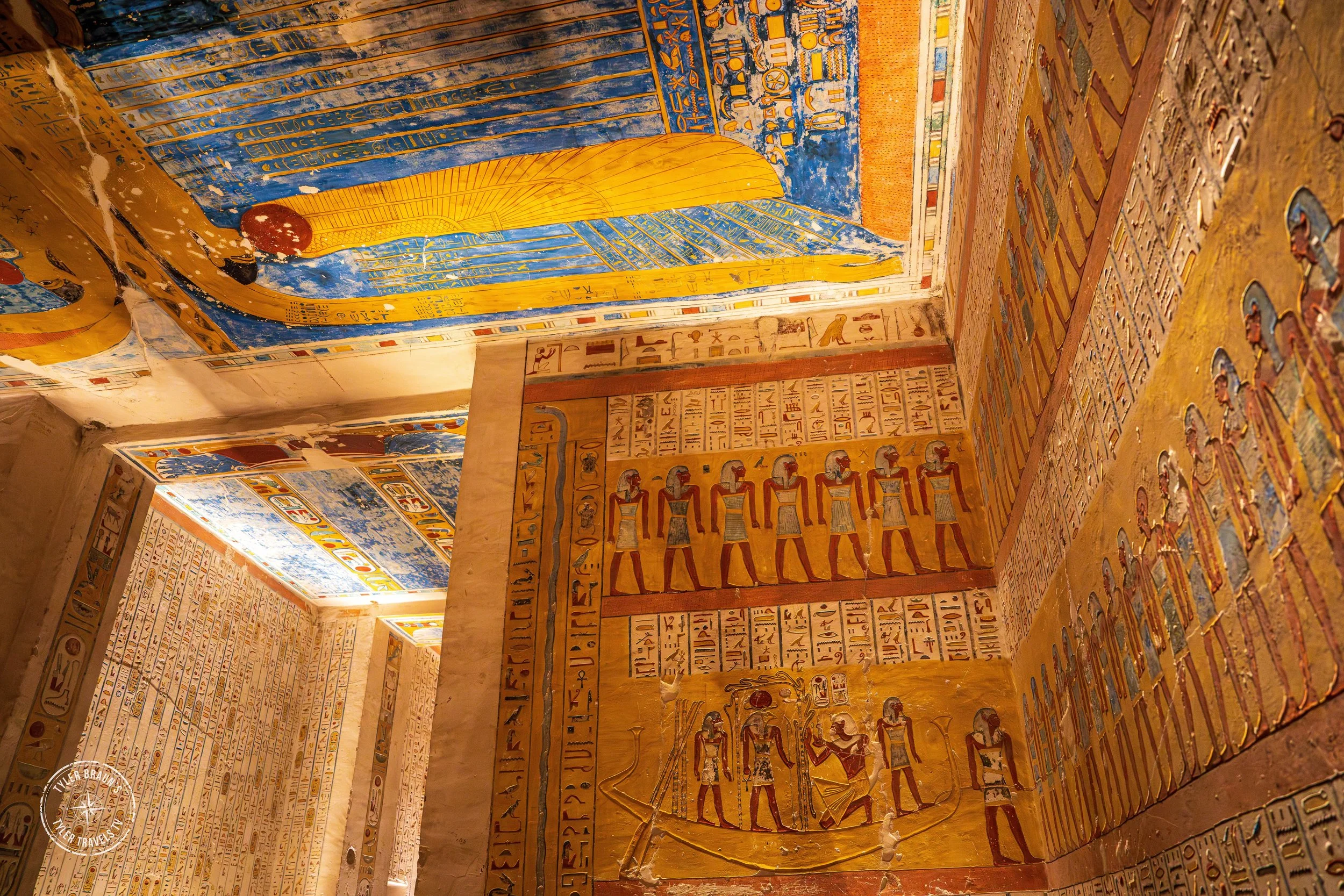
The tomb of Rameses IV was at one time, believe it or not, a hotel.
A Valley Built for Eternity
The Valley of the Kings serves as a reminder that man’s quest for immortality is a pursuit as old as civilization itself.
The ancient pharaohs found themselves in a bit of a contradiction. They ruled as gods, but were man enough to fear death and what it may bring. Through these intricate tunnels, armed with the ancient road map of the Book of the Dead, and their endless treasures, they hoped to find themselves in the good graces of whatever lay beyond death.
In the Valley of the Kings, you feel a sense of eternity weighing down on this scorched earth. The entire place is a reminder that man’s quest for immortality is a pursuit as old as civilization itself.
Why do we know so much more about ancient Egypt than we do about the Mayans or other ancient cultures? Part of it comes down to climate. The desert doesn’t devour cities the way the jungle does. But it’s also because of how Egyptians thought about life after death.
They believed the physical body would one day rise and move again, so they built with stone, carved deep into rock, and buried their dead with everything they might need: furniture, art, beds, games, even makeup.d
But through this preparation for the afterlife, in some ways, they inadvertently granted themselves immortality.
Although the Egyptian empire effectively ended more than 2,000 years ago with the death of Cleopatra, the idea of ancient Egypt is more alive than ever. It lives on in museum galleries, in places like the Valley of the Kings, and in the imaginations of people around the world who still dream about walking down into a tomb and seeing, for the first time, their own version of "wonderful things."
Watch the Video
Gallery





Travel Store
Visit my travel store for my travel essentials!

People Mover Travel Agency
Work with the incredible travel advisors at my travel agency, People Mover Travel. For 10 years, we've been making traveler's dreams come true. We are experts in destinations worldwide including Alaska, Disney Parks, Europe, Cruises, All-Inclusive Resorts, Hawaii, Asia and more! Find out how we can personally help you plan & book your next trip for FREE!

Where are you heading?
Check out my Destination Page for travel tips, must-see sights, and hidden gems from all over the world. Start your adventure today!
Related Blog Posts


Recent Blog Posts
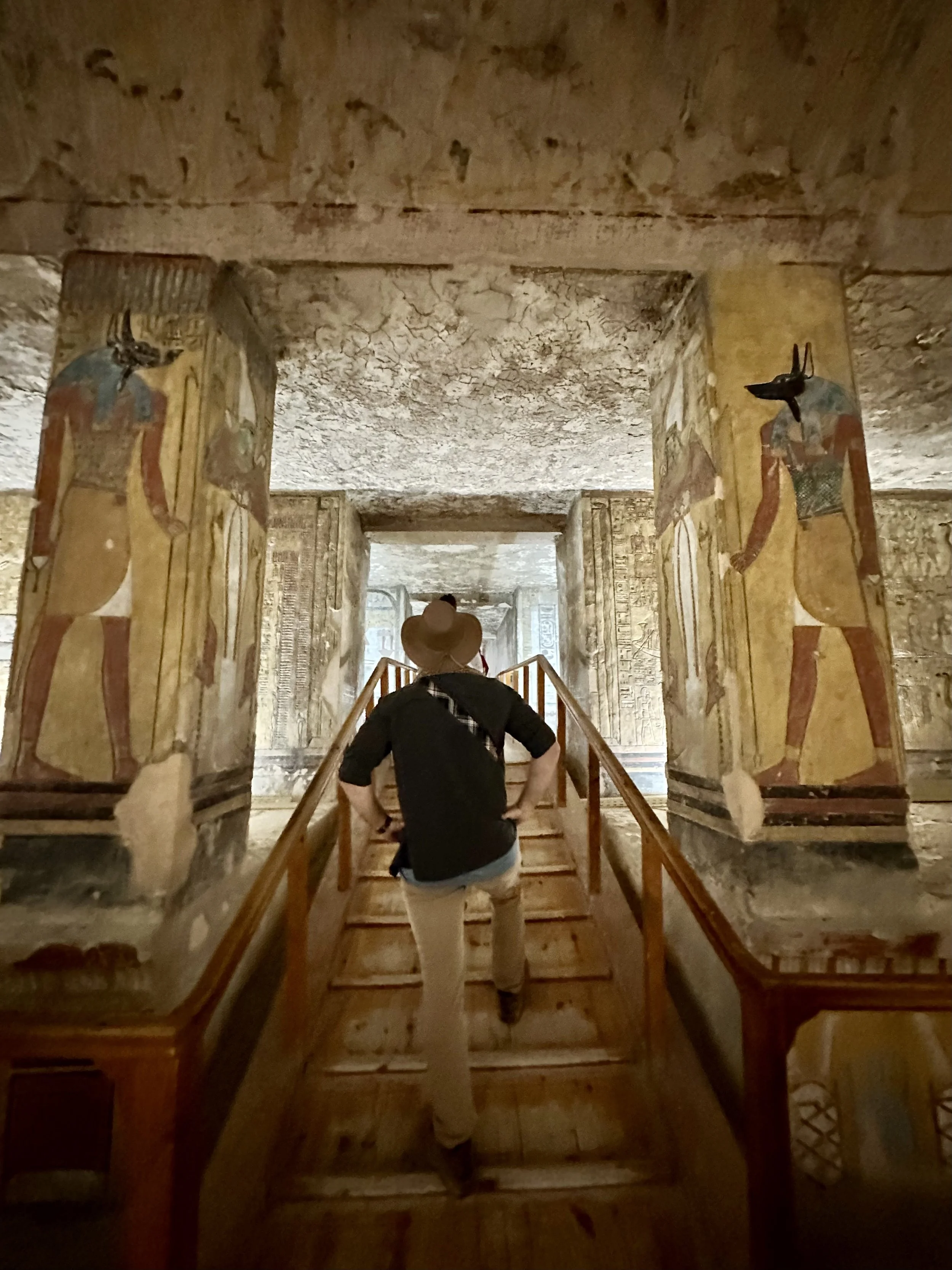
The Valley of the Kings is the place where the world changed what it thought it knew about ancient Egypt.